City council approves PUD rezoning at Rest Haven campus to add 24 assisted‑living units
Loading...
Summary
The Holland City Council voted unanimously to rezone about 3 acres at 740 College Ave. to a planned unit development, clearing the way for a three‑phase expansion of the Rest Haven care campus that includes 24 units in phase one and larger expansions in later phases.
The Holland City Council voted unanimously to approve a planned unit development (PUD) rezoning for about 3 acres at 740 College Avenue, the Rest Haven/Maplewood campus, enabling a three‑phase expansion of the care facility.
The rezoning, which council members approved after a staff presentation and discussion, allows Rest Haven to add 24 assisted‑living units in phase one; future phases described by staff include a phase two addition of about 96 units and a phase three replacement building estimated at 24–32 units. Anna Minnebow, historic and department planner, told council the PUD “is to allow for an expansion of the care facilities” and that phase one’s site plan has already been approved by the Planning Commission contingent on tonight’s action.
Nut graf: Council members framed the request as an expansion of housing options for older residents that is aligned with the city’s land‑use goals. The PUD is intended to provide flexibility on setbacks, screening and parking to make higher‑density care uses compatible with the surrounding low‑density residential neighborhood.
City staff and applicants said the PUD will regulate future construction on the site. Minnebow explained the PUD approach lets the city require a larger setback and an 8‑foot screening fence (where a 6‑foot fence would otherwise be permitted) and to adjust parking rules because care facilities have different daily parking patterns than typical high‑density housing. She said the PUD seeks to reduce the number of parking spaces required relative to the HDR standard of 1.25 spaces per care unit to better match the facility’s daytime/overnight demand.
Council discussion focused on housing benefits and neighborhood fit. Councilmember Scott Corbin, who said he generally resists rezoning low‑density residential property, praised Rest Haven’s stewardship and said the site is appropriate for this type of higher‑density housing on an arterial corridor. “I do not like to vote on changing LDR,” Corbin said, “However, you have done a wonderful job at Resthaven.” Councilmember Shea emphasized housing impacts, calling the project “housing” and arguing the new units will create downstream housing opportunities by freeing up existing homes.
There were no public speakers on the item during the council hearing. A point of order was raised to confirm that the council would offer an opportunity for public comment on the ordinance on second reading; the mayor opened that opportunity and, seeing no speakers, the council proceeded.
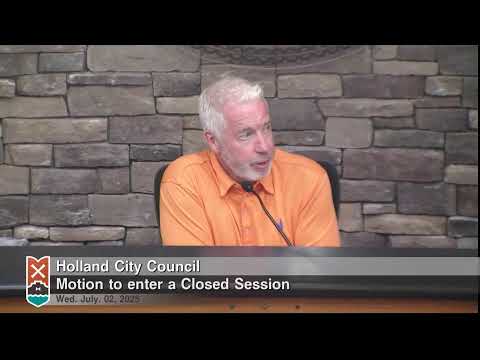
The motion to approve the rezoning was moved by Councilmember Shea and supported by Councilmember Raymond. Roll call recorded all present members voting yes: Freeman, Raymond, Corbin, Soule, Rowan, Shea, Bird and Mayor Nathan Bock; Councilmember Scholteis was absent. The motion carried.
Ending: The PUD approval for phase one clears the rezoning hurdle; Minnebow and staff noted that subsequent phases will each return to the Planning Commission for site‑plan review and additional approvals before construction proceeds.