Citizen Portal

Forest Service chief defends FY26 budget request, outlines planned transfer of wildfire suppression to Interior; senators press on staffing, fuels and roadless‑

5356867 · July 11, 2025

Get AI-powered insights, summaries, and transcripts

Subscribe
AI-Generated Content: All content on this page was generated by AI to highlight key points from the meeting. For complete details and context, we recommend watching the full video. so we can fix them.

Summary

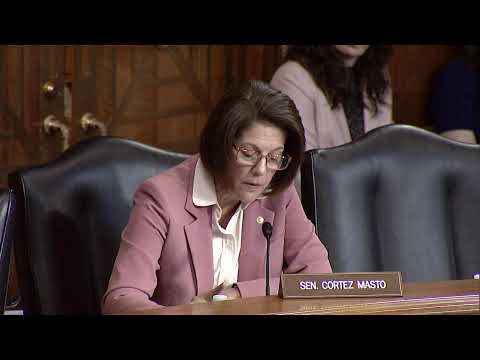
Tom Schultz, Chief of the U.S. Forest Service, told the Senate Energy and Natural Resources Committee the administration—s FY26 budget proposes consolidating federal wildfire suppression into a new U.S. Wildland Fire Service under the Department of the Interior and refocusing the Forest Service on active forest management, while senators pressed him on staffing losses, hazardous fuels shortfalls and the rescission of the 2001 roadless rule.

Tom Schultz, Chief of the U.S. Forest Service, told the Senate Energy and Natural Resources Committee that the administration—s fiscal year 2026 budget request refocuses the agency on active forest management and proposes consolidating federal wildfire suppression into a new U.S. Wildland Fire Service within the Department of the Interior.

Schultz said the budget —refocuses forest service efforts on active forest management, critical minerals permitting, recreation, energy development— and that the request —emphasizes efficient and effective fire management by consolidating the federal suppression response apparatus into the new US Wildland Fire Service under the Department of Interior.—

Why it matters: Lawmakers and witnesses said those changes could affect how fires are fought, how hazardous fuels are treated and which entities deliver grants and technical assistance to states and localities ahead of an intense fire season.

In his opening testimony, Schultz described the scale of the agency—s responsibility and economic contribution: —The Forest Service manages 154 national forests and 20 grasslands, covering 193,000,000 acres in 43 states and Puerto Rico— and, he said, —recent analysis shows that in fiscal year 23, the forest service programs contributed approximately 390,000 jobs and $45,000,000,000 in gross domestic product.—

Senators used the oversight hearing to press Schultz on several topics that repeatedly came up during questioning:

- Consolidation of firefighting functions: Schultz said the administration has asked for an internal plan under an executive order and that —in 90 days we—ll have a plan of what this would look like.— He also told Senator Ron Wyden, —So this fire season, we do not intend to implement any changes in the structure of the fire program. Nothing is gonna take place this fire season.— That assurance did not satisfy all members, who asked for written confirmation and fuller detail on the plan before budget decisions are finalized.

- Staffing and red cards: Senators raised staff losses after the agency—s recent early‑departure programs. Schultz said the Forest Service—s typical maximum hiring for GS‑9 and below firefighters is about 11,300 and that —Today, we—re at 11,250, roughly— — about 99% of that hiring target. He acknowledged the agency lost other categories of personnel, noting —we had about 4,000 [employees] took DRP and another thousand that retired outside of DRP— and that —there was about 1,400 that did have red cards— among non‑firefighting staff. He said the agency has invited and encouraged those employees to return for the season and that the agency is collecting return‑to‑duty numbers.

- Hazardous fuels treatments: Committee members cited targets and shortfalls. Senators said the Forest Service had identified roughly 63,000,000 acres at high or very high wildfire risk, and that last fiscal year the agency treated about 4,000,000 acres. Members pressed Schultz on current performance; one senator said the agency had treated about 1,700,000 acres so far this year and asked how the agency would meet its fuels objectives. Schultz said funding for fuels would be retained but that the FY26 request shifts the fuels program—s funding and some operations to Interior as part of the proposed reorganization.

- State and local assistance programs: Multiple senators asked about State Fire Assistance (SFA) and Volunteer Fire Assistance (VFA) funding for FY25 and FY26. Schultz said the agency was still finalizing FY25 allocations with the Office of Management and Budget and expected a decision in the coming weeks. He also said the FY26 budget proposes transferring responsibility for some state assistance programs to states and that the administration—s intent is to —transfer that responsibility to the states.— Senators repeatedly warned that many states face tight budgets and that shifting funds could reduce local capacity.

- Roadless rule rescission and timber production: Schultz confirmed the administration announced a rescission of the 2001 roadless rule and is beginning a rulemaking process this fall; he said two states would be exempt from repeal. On timber, Schultz and senators discussed recent legislation intended to increase timber outputs; Schultz said the agency will prioritize implementation and pointed to litigation and predictability as barriers. He said the agency recently signed a 20‑year agreement with the state of Montana to assist in managing federal lands.

- Litigation and the Cottonwood decision: Several senators urged a legislative fix to Ninth Circuit precedent identified as a barrier to some projects. Schultz said litigation is among the hurdles the agency faces and that he would work with the committee.

- Minerals and local controversies: Senators raised the reversal of proposed mineral leasing withdrawals for areas including the Ruby Mountains in Nevada and asked what critical minerals potential the Forest Service expects. Schultz replied that the agency—s role is to make land available for evaluation and leasing if a resource is identified and said he would improve communications with affected senators.

- Law enforcement and rural impacts: Senators from rural jurisdictions asked whether the Forest Service law enforcement presence is adequate and how local counties are compensated when sheriffs provide response on federal lands. Schultz acknowledged federal officers are —stretched thin— and said the agency would follow up offline on possible strategies and reciprocity agreements.

Quotes from the hearing illustrated the tone of concern from lawmakers and the agency—s stance. Senator Ron Wyden warned of gaps in emergency preparedness in his state and said, —These infernos are not your grandfather—s fires. They—re bigger and they—re hotter.— Chief Schultz replied on resources this season, —So this fire season, we do not intend to implement any changes in the structure of the fire program. Nothing is gonna take place this fire season.—

What happens next: Schultz said the administration will begin formal rulemaking on the roadless rule this fall (with Idaho and Colorado excluded from repeal) and that a 90‑day plan to structure the proposed Wildland Fire Service will be submitted under the executive order timeline. Senators submitted a series of follow‑up requests for written data on acres treated, red‑card return rates and timelines for grant distributions.

Ending: The hearing was an oversight review of the FY26 budget request and broader policy changes rather than a venue for formal committee votes. Senators said they intend to continue detailed oversight and to seek written updates on staffing, fuels accomplishments, SFA/VFA allocations and the DOI consolidation plan.