Get Full Government Meeting Transcripts, Videos, & Alerts Forever!
Get email alerts on the Open Meetings topic
No spam. Unsubscribe anytime.
Baker City Council receives briefing on open meetings law, public-comment and executive-session rules
Summary
A presenter briefed the Baker City Council on open-meeting requirements including public comment timing, executive-session limits, notice and agenda rules, recording retention, electronic access and enforcement under state statutes.
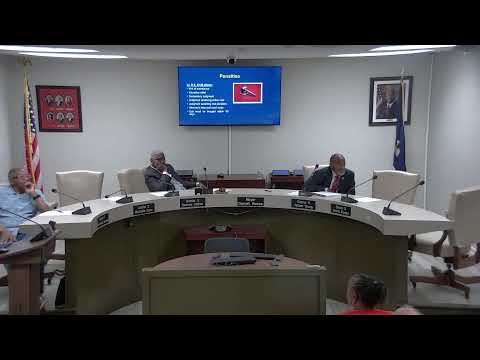
A presenter briefed the Baker City Council on the requirements and limits of the state open meetings law, stressing that "every single meeting of a public body has to have public comment" and that no final binding action may be taken in an executive session.
The presenter outlined why the rules matter for Baker: public bodies must post reasonably specific agendas at least 24 hours before regular meetings; provide public comment opportunities before votes on agenda items; read agenda items aloud before taking action; and maintain minutes that list those present and the substance of decisions. The presenter said recordings of meetings must be made available for two years if the body records proceedings.
The presentation covered executive-session procedures, noting the requirement of a two-thirds vote of members present to enter executive session and that "no final binding action shall be taken during the executive session." The presenter listed permissible executive-session topics discussed in the presentation: character or professional competence of an individual (with that person given 24-hour notice and the option to require the matter to be public), collective-bargaining strategy, attorney-client privileged legal strategy, security-procedure discussions and certain investigative proceedings. The presenter cautioned that when an executive session concerns the character or health of an identified person, that person is entitled to notice and may choose a public hearing.
The trainer explained notice and agenda rules: copies of notices should be left at the public office or posted on the public body's website; agendas must include date, time, place and reasonably specific descriptions of items; and additions to the agenda within 24 hours require unanimity of the public body and must be entered into the minutes with specificity. For emergency meetings tied to a declared disaster affecting the council's geographic area, the presiding officer must limit the agenda to matters directly related to the emergency unless a two-thirds vote approves other time-sensitive items.
Electronic access and accommodation obligations were addressed. The presenter said municipalities with populations above 8,000 (citing Baker's population estimate) must provide live broadcast access and must include instructions for accessing that broadcast in the meeting notice. Electronic participation rules for members and public commenters were explained; the trainer noted boards must adopt rules to accommodate persons with disabilities who request electronic participation under the Americans with Disabilities Act and must provide a way to receive electronic public comment during electronic meetings.
On enforcement, the presenter cited "Revised statute 42 25" and said remedies for violations can include writs of mandamus, injunctive relief, declaratory judgments, voiding of actions, attorney's fees and civil penalties. He noted a $500 civil penalty per violation for a member who knowingly and willfully participates in a meeting that violates the open meetings law and that suits generally must be filed within 60 days.
Council members and attendees asked clarifying questions during the roughly 40-minute session; the presenter gave sample practices such as recommending a consistent per-speaker time limit (two to three minutes as an example) but stressed the board may set its own reasonable limits. The meeting concluded with a motion to adjourn.