Get Full Government Meeting Transcripts, Videos, & Alerts Forever!
Get email alerts on the Board Structure topic
No spam. Unsubscribe anytime.
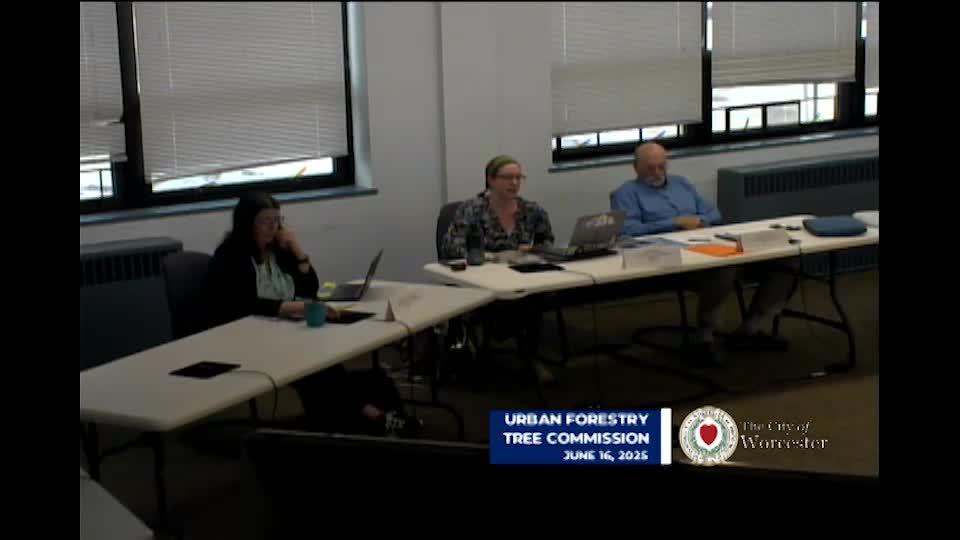
Tree commission votes to ask City Council to add two at-large seats
Summary
The Worcester Tree Commission voted to request that the City Council amend the commission’s ordinance to add two at-large members, a change supporters said would ease quorum problems and broaden membership; the request must be enacted by the City Council to take effect.
The Worcester Tree Commission voted to ask the City Council to amend the commission’s ordinance to add two at-large members, a change commissioners said would make it easier to fill seats and reach quorum.
Commissioners said the commission has struggled to fill district seats and sometimes lacked a quorum. The requested ordinance change would expand the commission from five members to seven and would raise the quorum from three to four if approved by the City Council.
Commissioners discussed pros and cons over multiple agenda items and public comments. Supporters argued at-large seats would broaden the pool of applicants and create flexibility for subcommittees; others urged caution, noting the change requires a City Council ordinance and cannot be reversed by the commission alone. Staff described the process as an ordinance amendment that the council would have to draft and approve, and estimated it would take several months to a year to complete.
A formal motion was made at the meeting to ask the City Council to add two at-large members to the Worcester Tree Commission. The motion was seconded and the recorded vote was unanimous among the commissioners present: Commissioner Elton — yes; Commissioner Johnson — yes; Commissioner Caraway Waterhouse — yes; Commissioner Winburn — yes. The motion’s implementation depends on a City Council ordinance and subsequent administrative steps.
The commission recorded several implementation details during discussion: if the commission expands to seven members, the quorum would change from three to four; terms on the commission are staggered (initial setup used one- through five-year terms to avoid simultaneous vacancies); and reversing the change later would require another ordinance action by the City Council. Commissioners agreed to transmit the request to the City Council rather than delay the decision.
Next steps: staff will prepare the ordinance language and submit the request to the City Council for its review and adoption. The commission retained the item’s paperwork for its records and will monitor council action.