Get Full Government Meeting Transcripts, Videos, & Alerts Forever!
Get email alerts on the Urban Forestry topic
No spam. Unsubscribe anytime.
West Miami adopts tree-trust option allowing pay-in-lieu for required landscape when planting not feasible
Summary
Commissioners adopted amendments and passed a second reading adding an optional pay-in-lieu to a new City Tree Trust Fund; the ordinance caps payment schedules at 20 years and sets per-acre prorated rates for commercial parcels. The vote was unanimous.
The City Commission of West Miami approved the second reading of an ordinance establishing a City Tree Trust Fund and permitting an optional pay-in-lieu when required on-site landscape cannot be installed.
City Manager explained amendments requested after the first hearing, saying staff had “capped the period of pay of the payments at 20 years” and adjusted the per-acre prorated payment schedule. Under the amendment, payments for projects smaller than one acre use a specified per-percentage rate and higher fractions apply to parcels over one acre (the ordinance text as amended sets the figures cited by staff).
The ordinance creates a deposit account — the Tree Trust Fund — to collect in-lieu payments and directs those funds to tree-planting projects in city rights-of-way. The ordinance establishes payment schedules, enforcement mechanisms, and an expiration framework for credits and payments. Commissioners debated the amendments and confirmed the measure applies in the commercial zoning district context where landscape requirements sometimes cannot be met because of site constraints.
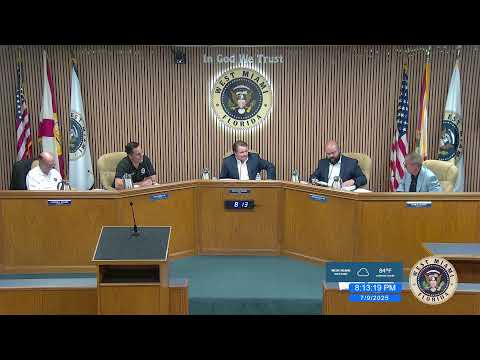
Commissioner Ceballos moved the amendment; the motion as amended passed on a 5-0 roll call (Ceballos, Buenas, Suarez, Vice Mayor Ivan Chavez Jr., and Mayor Eric Diaz Padron voted yes). City staff said funds collected will be used for tree planting in public rights-of-way and that the 20-year cap makes pay schedules predictable for developers while ensuring the city funds urban canopy improvements.
The ordinance becomes effective as provided in the code following the second-reading adoption.