Get Full Government Meeting Transcripts, Videos, & Alerts Forever!
Get email alerts on the Housing Production Plan topic
No spam. Unsubscribe anytime.
Planning committee advances Haverhill housing-production plan, outlines zoning and funding steps
Summary
The Planning & Development Committee voted to send the updated Haverhill housing production plan and economic development director Andrew Pillsbury’s recommended refinements to the full City Council for discussion and possible vote.
The Planning & Development Committee voted to send the updated Haverhill housing production plan and economic development director Andrew Pillsbury’s recommended refinements to the full City Council for discussion and possible vote.
Ian Burns, community and economic development planner with the Merrimack Valley Planning Commission, presented a five‑minute overview of the draft plan, describing the state‑required update and the document’s major sections. Burns said the commission “is a public agency that supports the 15 cities and towns of the Merrimack Valley region” and has worked with Haverhill over the last two years to refresh its housing production plan to meet state guidelines.
The plan’s data chapters, Burns said, highlight three trends the commission considered in drafting strategies: projected population growth, an increasing share of residents age 65 and older, and fluctuating school enrollments. Burns also flagged local affordability pressures: homeowner incomes are substantially higher than renter incomes, rents and home values have risen faster than incomes over the past 20 years, and many households are cost‑burdened (spending more than 30% of pre‑tax income on housing).
Public testimony and expert commenters reinforced those findings and pressed the committee for concrete steps. Developer David Tregorth of Causeway Development told the committee higher interest rates and rising construction costs are constraining projects, saying interest rates “are well over double where they were” in earlier cycles and that construction costs and tariffs have added uncertainty. Essex County Habitat for Humanity’s Megan O’Neil described a financing gap on small affordable homeownership projects: she said current construction costs run roughly $450,000 per home while Habitat’s sale price target is about $230,000, creating “a $200,000 gap” that local subsidies must close for projects to be viable.
Residents urged the committee to prioritize homeownership and senior housing. Nate Robertson of Haverhill Homes for All called the housing production plan “an aspirational document. It’s nonbinding,” and urged more aggressive timelines and zoning to allow small, incremental infill such as three‑deckers and modest condo projects. Other speakers described long senior‑housing waitlists and sharply rising rents and home prices in Haverhill.
Pillsbury summarized a set of recommendations the administration intends to fold into the draft plan. He said the city should focus on preparing the regulatory and site “battlefield” to receive development when market conditions improve: streamline ADU (accessory dwelling unit) approvals and assemble a list of city‑owned or surplus parcels for targeted affordable development; prepare zoning language to allow vertical three‑deckers by right in neighborhoods where that form already exists; and ready local regulations to take advantage of forthcoming state tools such as starter‑home ("40Y") provisions. “What we can do is we can prepare the battlefield, if you will, for the opportunities that come before us,” Pillsbury said.
Other specific actions Pillsbury proposed or discussed: 1) forming a housing trust board (appointments by the mayor are forthcoming) though no local trust funding has yet been identified; 2) pursuing Housing Choice designation and other state programs to increase grant competitiveness; 3) exploring a local “good landlord” tax credit via a home‑rule petition to incentivize lower rents; 4) expanding the city’s first‑time homebuyer assistance and better promoting existing state first‑time buyer programs; and 5) working with the inspectional and fire departments to identify state code or sprinkler requirements that impede small ADU projects and to seek state changes where feasible.
Committee members and speakers noted practical constraints. Pillsbury and others cautioned that many affordability solutions depend on outside funding and market shifts — federal and state grants, lower interest rates, or deep subsidies for affordable homeownership. Habitat and nonprofit builders emphasized that without local funding tools such as a capitalized housing trust or Community Preservation Act (CPA) funds it will be difficult to close the per‑unit financing gap for deeply affordable homeownership.
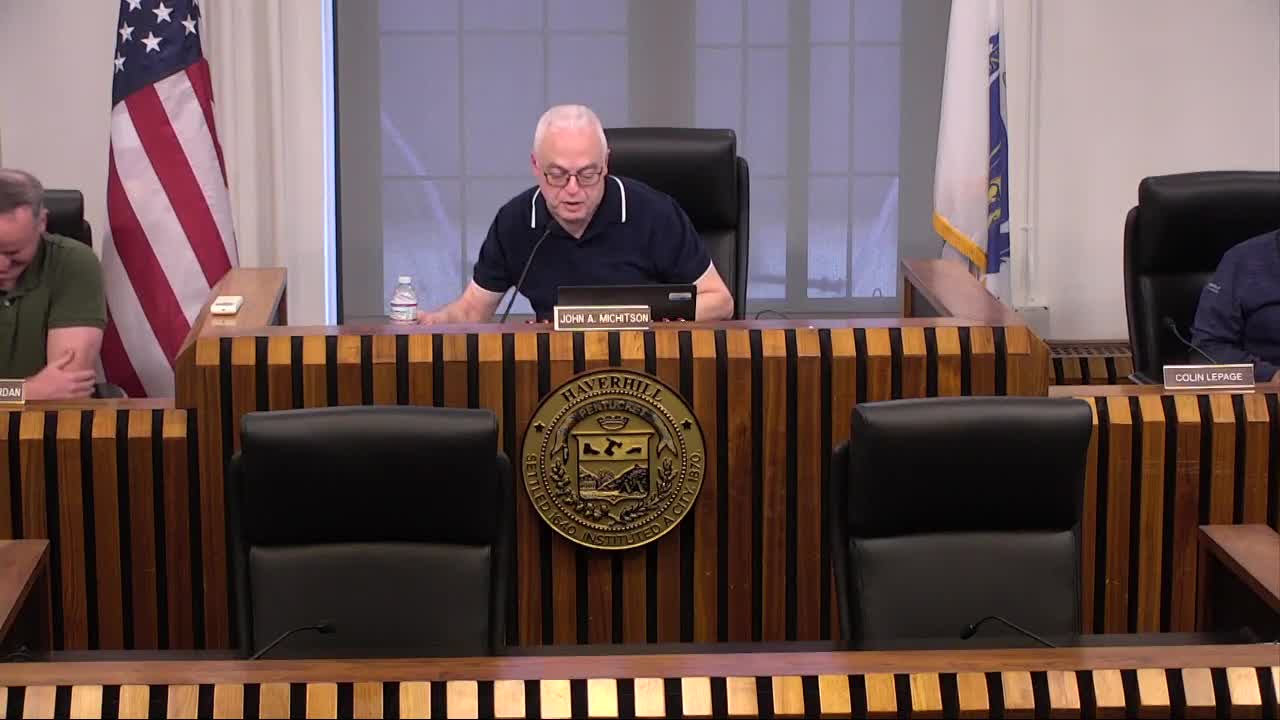
The committee’s initial procedural motion — to forward Burns’s presentation and Pillsbury’s recommendations to the full City Council — was moved by a councillor identified as Kat and seconded by Councilor Rogers; roll call recorded Councilor Hobbs Everett (yes), Councilor Rogers (yes) and Councilor Mitchison (yes). The committee chair then said the materials and the refined recommendations will be returned to the council for formal consideration, and staff will incorporate tonight’s refinements into a revised plan for the planning board and council.
The meeting closed after several hours of testimony and discussion; Pillsbury indicated staff will prepare draft text and timelines incorporating ADU streamlining, the city‑owned parcel RFP approach, zoning adjustments for three‑deckers in appropriate districts, and an operational plan for the housing trust for council review.
Votes at a glance: The committee recorded one procedural motion to forward the draft housing production plan and Pillsbury’s recommendations to the full City Council for discussion; the motion was moved and seconded and recorded as supported by the three members who responded to roll call.