Get Full Government Meeting Transcripts, Videos, & Alerts Forever!
Get email alerts on the Fire Victims Fund topic
No spam. Unsubscribe anytime.
Boston council committee weighs creating fire victims fund to speed aid after home fires
Summary
City officials, nonprofits and survivors told a City Council hearing that existing emergency aid—Red Cross payments, hotel stays and neighborhood mutual-aid—helps immediately but leaves gaps. Witnesses urged a centralized, trauma-informed fund and clearer landlord and insurer accountability.
Boston City Council Committee on City Services and Innovation Technology members and city and nonprofit witnesses on July 10 discussed a proposed model for a municipal fire victims fund to provide faster, more flexible aid to people displaced by home fires and other emergencies.
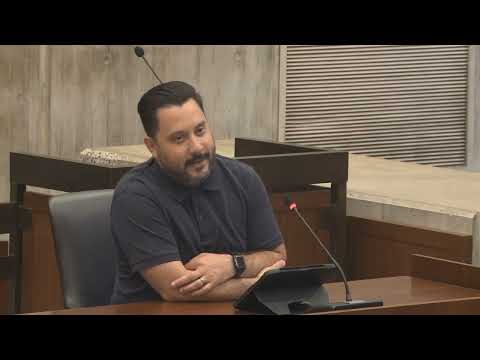
The hearing focused on how survivors quickly lose housing, documents and personal belongings and on delays in assistance from insurance or other systems. "We lost about 85% of what we had in our home," said Fabricio Pice, an East Boston resident who described his family's April 2024 fire and the months of housing, insurance and trauma work that followed. He and other panelists urged a centralized relief resource that could coordinate donated goods, cash and services.
Why it matters: Witnesses and city staff said fires are frequent and recurring across Boston neighborhoods and that current emergency aid is piecemeal. The American Red Cross said it responded to 105 home fires across Boston in the prior 12 months, affecting 584 residents and providing about $154,000 in cash assistance. Panelists said that cash and short-term hotel funding often cover only one or a few nights and that survivors need immediate lump-sum support, help replacing documents and furniture, and ongoing mental-health care.
City and nonprofit roles
Danielle Johnson, director of the mayor's Office of Housing Stability, described the city’s multiagency response: Boston Fire Department secures the scene and provides victim lists; the Office of Neighborhood Services (ONS) and Office of Emergency Management collect initial needs and contact data; the Red Cross and community organizations meet immediate needs; and the Office of Housing Stability coordinates housing search and deposit assistance. "Our coordinated response begins immediately," Johnson said. She also warned the committee that state law limits use of city operating dollars for an externally funded relief pool, meaning start-up funding would likely need to come from philanthropy or private donations.
Nonprofit providers described how they plug gaps. "We do intake. We do assessments. We ask to see their documentation. Well, they were in a fire. They don't have any documentation," said Linda Foster, director at NOAH (Neighborhood of Affordable Housing), explaining why rapid flexible cash and case management are essential. Phil Giffey, NOAH’s executive director, and other panelists said long housing searches and low vacancy rates push many displaced households outside Boston.
The American Red Cross’s regional leader, Holly Grant, described the agency’s rapid on-scene work and its limits: "Here in Boston, over the last 12 months, we responded to 105 home fires, which impacted a total of 584 city residents...we provided just over $154,000 in cash financial assistance." Grant said the Red Cross uses a national formula (average about $723 per client in the recent period) and can issue emergency funds on scene, but the organization relies on private fundraising for larger responses and cannot cover longer-term housing needs alone.
Local mutual-aid groups and service providers described neighborhood fundraising and rapid material response. The East Boston Social Center’s emergency fund raised more than $50,000 in a week for one recent multi-family fire. Michael Kenny of Katie’s Closet described a rapid clothing-and-basic-needs program that can deliver supplies within 24–48 hours; he said the group provided about $400,000 in product to clients in the 2024–25 school year and that its urgent-response program answered about 1,000 requests.
Barriers and points of friction
Panelists and city staff identified recurring obstacles: delays while insurance claims are processed, privacy and documentation barriers for victims (including mixed-immigration-status households that avoid sharing personal data), limited affordable rental availability, and uneven landlord responsiveness.
Commissioner Burke and ONS staff cited state requirements that landlords share homeowner insurance information with displaced tenants and a statutory $750 insurance reimbursement that can apply immediately in some cases; city staff said enforcement and complaints about noncompliant landlords often require a separate legal process. Chief Adrian Jordan, director of emergency preparedness, said the city’s reliance on public services is strained and urged a combined strategy of improved preparedness and community education (for example, door-to-door outreach about renters insurance).
Policy options discussed
Witnesses discussed several possible elements for a city-linked victims fund: a centralized intake and disbursement process; trauma-informed case management; eligibility rules tied to existing program thresholds (for example, participation in SNAP or fuel assistance) to speed verification; a board or governance body to adjudicate discretionary cases; and partnerships with trusted fiscal sponsors or nonprofits for rapid administration. San Francisco’s model and other municipal examples were cited as reference points.
City limits and next steps
City staff and several witnesses noted legal constraints on using city operating funds (the so-called anti-aid limitations under Massachusetts law) and said initial capital would likely need to come from philanthropic or external donations. Danielle Johnson and Lindsay Santana (ONS) described an ongoing effort to compile a disaster resource network of local organizations and shelter partners to improve coordination.
Panelists called for clearer landlord and insurer accountability, faster information-sharing among city agencies, expanded mental-health follow-up beyond the first weeks, and more public education about renters insurance as a preventive tool.
No formal vote was taken at the hearing. Councilors said they will continue discussions with city departments, the treasury office and community partners to examine legal, operational and funding paths for a municipal or municipally partnered victims fund.
Quotes from the hearing are verbatim from participating speakers.
(See sidebar below for numbers and provider roles cited at the hearing.)
Ending
Committee members said they would follow up with city departments and outside partners to develop proposals for legal structure, governance and funding sources for a survivors’ relief vehicle. The committee adjourned after public testimony from survivors and community members who urged fast action and trauma-informed, survivor-centered administration.