Get AI Briefings, Transcripts & Alerts on Local & National Government Meetings — Forever.
Planning board recommends removing northern M‑83; public urged council to follow suit
Loading...
Summary
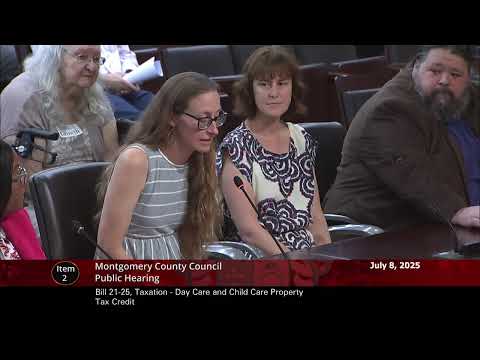
The Montgomery County Planning Board recommended deleting the unbuilt northern five‑mile section of the Mid County Highway (M‑83) from the county’s Master Plan of Highways and Transitways, and dozens of residents and environmental groups urged the County Council to follow that recommendation at a July 8 public hearing.
Artie Harris, chair of the Montgomery County Planning Board, told the council the board’s draft technical update to the Master Plan of Highways and Transitways recommends removing the northern extension of Mid County Highway (M‑83) between Montgomery Village and Ridge Road and updating classifications and target speeds for master‑plan roads.
“The plan is intentionally multimodal, focused on serving the people of Montgomery County,” Harris said, describing the board’s work sessions and public hearings and noting the board’s recommendation to remove the M‑83 northern extension.
Why it matters: speakers at a long public hearing pressed the council to delete the unbuilt five‑mile northern section, arguing M‑83 would fragment interior forest, harm streams and wetlands, and deliver limited congestion relief while encouraging more driving — a phenomenon experts call induced demand.
Environmental and community groups, church representatives, scientists and students described specific impacts they say would follow construction: fragmentation of the North Germantown and Great Seneca greenways; permanent filling or conversion of approximately 3.6 acres of wetlands; piping or relocating about one‑third of a mile of tributaries; a 500‑foot bridge over Seneca Creek; and the permanent loss or alteration of roughly 100 acres of interior forest cited in testimony. Several speakers also cited a roughly $1 billion estimated construction cost and questioned whether the travel‑time savings would justify those environmental and community costs.
Opponents urged investments in transit alternatives — bus rapid transit (BRT), expanded Ride On service, MARC improvements and better bicycle and pedestrian infrastructure — as better solutions for Up‑County mobility and climate goals. Youth speakers said the corridor is important habitat and public open space used by children and families. Some speakers also argued that communities along the corridor contain higher shares of disadvantaged residents and would suffer disproportionate impacts.
Not all testimony opposed removal. A smaller group of speakers urged retaining the plan alignment to preserve future rights‑of‑way, to protect potential multimodal solutions and to avoid misleading future homebuyers about commute options. Some technical witnesses said a portion of the right‑of‑way is already in public ownership and described past environmental mitigation efforts and prior studies.
What the council will do next: the Planning Department and Transportation, Infrastructure and Environment committee work sessions are the next steps in the master‑plan update process; the public hearing record will inform upcoming committee review. No council vote was taken at the July 8 hearing.