Get Full Government Meeting Transcripts, Videos, & Alerts Forever!
Get email alerts on the Harm Reduction topic
No spam. Unsubscribe anytime.
Baltimore public testimony splits on harm reduction: advocates call for overdose-prevention centers and low-barrier housing; some neighbors oppose mobile needle
Summary
Public testimony at a Baltimore City Council hearing on the opioid crisis showed a split: harm-reduction advocates urged overdose-prevention centers, low-barrier services and housing; some neighborhood residents said mobile clinics distributing syringes and medication have increased litter and safety problems.
Public testimony at a Baltimore City Council hearing on the opioid crisis featured sharply divergent perspectives on harm reduction: service providers and advocates urged expansion of syringe service programs, overdose-prevention centers and low-barrier supportive housing, while some neighborhood residents said mobile clinics and syringe distribution have increased needle litter and neighborhood harm.
"Sterile syringes reduce the transference of HIV and hepatitis C," Darcy Kerwin Garber said. Garber, policy manager at the Baltimore Harm Reduction Coalition, told the committee state law that classifies syringes as controlled paraphernalia discourages people from using syringe programs because of fear of policing and confiscation.
Several advocates called for overdose-prevention centers (also called supervised consumption sites) and more low-barrier drop-in centers offering case management, showers and immediate access to treatment. Ricardo Burks, a case manager with Health Care for the Homeless, said stable housing is fundamental: "If we want to reduce opioid-related deaths, we must treat housing as a health care problem," he said. August Page, a social worker at Spark, and Kola, a Bridges Coalition leader, echoed the call for low-barrier services and same-day access.
Service providers described existing programs. Health Department officials said the city's syringe services program operates mobile services at 12 sites and that the department has partnered with eight additional community syringe programs. The department reported distributing more than 13 million syringes and collecting about 8 million syringes between January 2014 and June 2024, and said a harm-reduction vending machine and sharps drop boxes have been piloted.
Not all public testimony supported expanding mobile services. Angela Cruz Williams, president of the Morrow Park Community Association, said mobile clinics distributing needles, Suboxone and paraphernalia have caused needle litter and medication diversion in her neighborhood. "Needle litter has become a huge concern," she said, describing incidents in which a child nearly stepped on a used needle and a local business found blood-filled syringes outside its doors. She asked the city to prioritize neighborhood safety and suggested enforcing petty-crime laws and family- or faith-based rehabilitation outside city limits.
Other residents described the visible presence of people using drugs, tents and public drug use in neighborhoods such as Marlborough Park and Laurel Park and said the conditions are harming children and local businesses. Charlene Beas and Jody Jackson recounted concerns about safety, theft and public drug use on neighborhood corridors.
Several public speakers also urged improved coordination and speed of services. Ben McCormick, executive director of New Life Recovery Center, said providers must "take our program to the street" and offer immediate access because "if we cannot get a person into treatment immediately, 9 times out of 10, we'll lose them." Bakari Bridal, an outreach worker, emphasized the need for more drop-in centers and low-barrier case management.
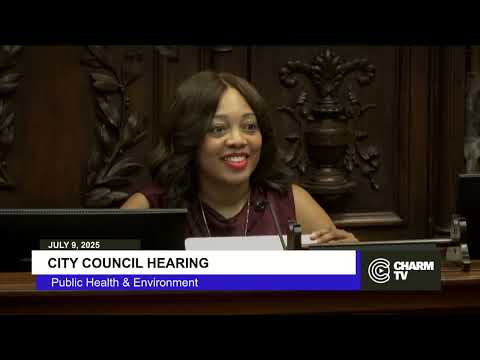
City leaders listening at the hearing acknowledged both the calls to expand harm reduction and the neighborhood concerns. Councilwoman Felicia Porter said the city must balance community safety and harm-reduction efficacy and signaled continued oversight as the administration develops and funds programs.
Ending: The draft strategic plan and upcoming listening sessions will be the next opportunity for residents and providers to offer input; no votes or ordinances on mobile clinics or paraphernalia law changes were taken at the hearing.