Get Full Government Meeting Transcripts, Videos, & Alerts Forever!
Get email alerts on the Employee Benefits topic
No spam. Unsubscribe anytime.
New Berlin staff urge move to self-funded health plan to avoid projected 30% premium spike
Summary
At a June 10 Committee of the Whole meeting, human resources staff outlined a plan to shift the city's employee health insurance to a self-funded model to blunt a projected more-than-30% premium increase for 2026; the committee was asked to allow staff to continue vendor negotiations with a decision targeted for August.
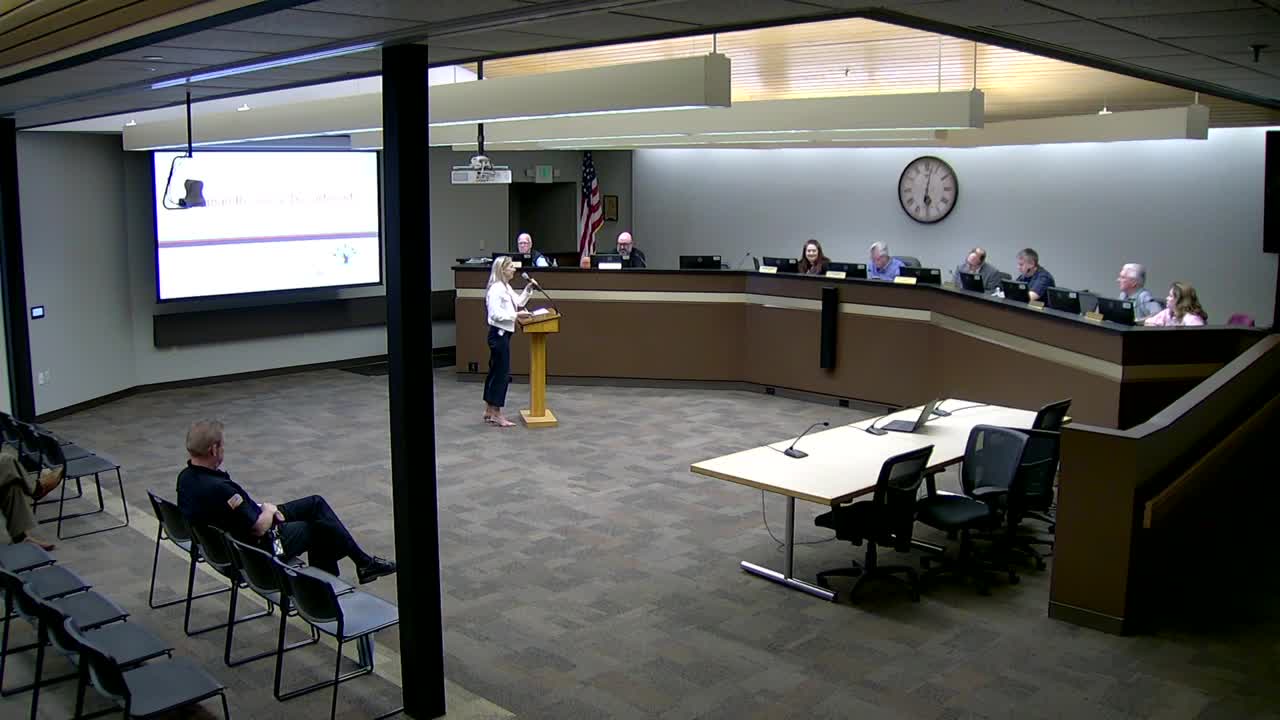
Melissa, a presenter from the human resources department, told the Committee of the Whole on June 10 that the city is considering moving its employee health insurance from a fully insured product to a self-funded plan to avoid an expected sharp premium increase for the 2026 renewal.
"We have to pull the trigger in August if we're gonna go self funding in order to get it implemented by January 1," Melissa said, summarizing the timetable and the implementation work required.
The presentation framed the change as a budget-driven response: HR projected the city's 2026 renewal could exceed a 30% premium increase if the carrier enforces standard loss-ratio targets, compared with a 20% increase currently budgeted. Melissa said the city's claims experience drives the projection: the plan has about 20 members with more than $50,000 in annual claims rather than an expected roughly 12, and one member's claim last year approached $600,000.
Melissa said self-funding would give the city direct access to plan data, more flexibility in plan design and the ability to target high-cost drivers such as specialty prescription drugs. She described stop-loss insurance as a required backstop and noted two primary risks: a high-cost, individual claimant being assigned a "laser" (a higher employer liability for that person) and short-term cash-flow exposure while stop-loss reimbursements are processed. "Maybe a 125,000 [specific stop-loss attachment point] where the city is on the hook for the first 125,000 of those claims, then the stop loss comes in," she said as an example of how risk would be structured.
Committee members asked how employee cost-sharing and benefits would change. Melissa said the goal is to keep out-of-pocket exposure for employees "equivalent" to the current plan and that the city would use vendor quotes to shape premium and deductible choices. She described administrative steps already underway: engaging third-party administrators for claims (UMR was mentioned as a likely TPA), preserving network continuity where possible, and seeking separate pharmacy solutions to contain drug costs.
Melissa also walked through related HR activity: the city has hired 23 regular employees so far this year (compared with 46 for all of 2024), recorded 13 resignations to date (45 in 2024), one retirement so far this year (12 in 2024) and 79 seasonal hires to date with additional seasonal hiring expected this fall. She said HR's applicant-tracking (NeoGov) and training portal (CIVMEC/CIVMIC) work is proceeding and that staff will continue to coordinate with finance on budgeting for any transition.
On next steps, Melissa said vendor conversations are ongoing, stop-loss quotations typically arrive last and therefore staff will not have full pricing for that component before the August decision deadline. She told the committee staff's intent is to minimize disruption for employees beyond potential new ID cards or different online portals and that the administration is aiming to keep the eventual premium increase well under the projected 30% fully insured increase.
The committee did not take a formal vote on a policy change; members requested the insurance slides and the broker packet. Melissa said staff will return for further discussion and asked that the committee make time in August to consider a recommendation to the common council.