Get Full Government Meeting Transcripts, Videos, & Alerts Forever!
Get email alerts on the Intergovernmental Agreement topic
No spam. Unsubscribe anytime.
Committee approves 6-year agreement to use Milwaukee'developed workforce-tracking software
Summary
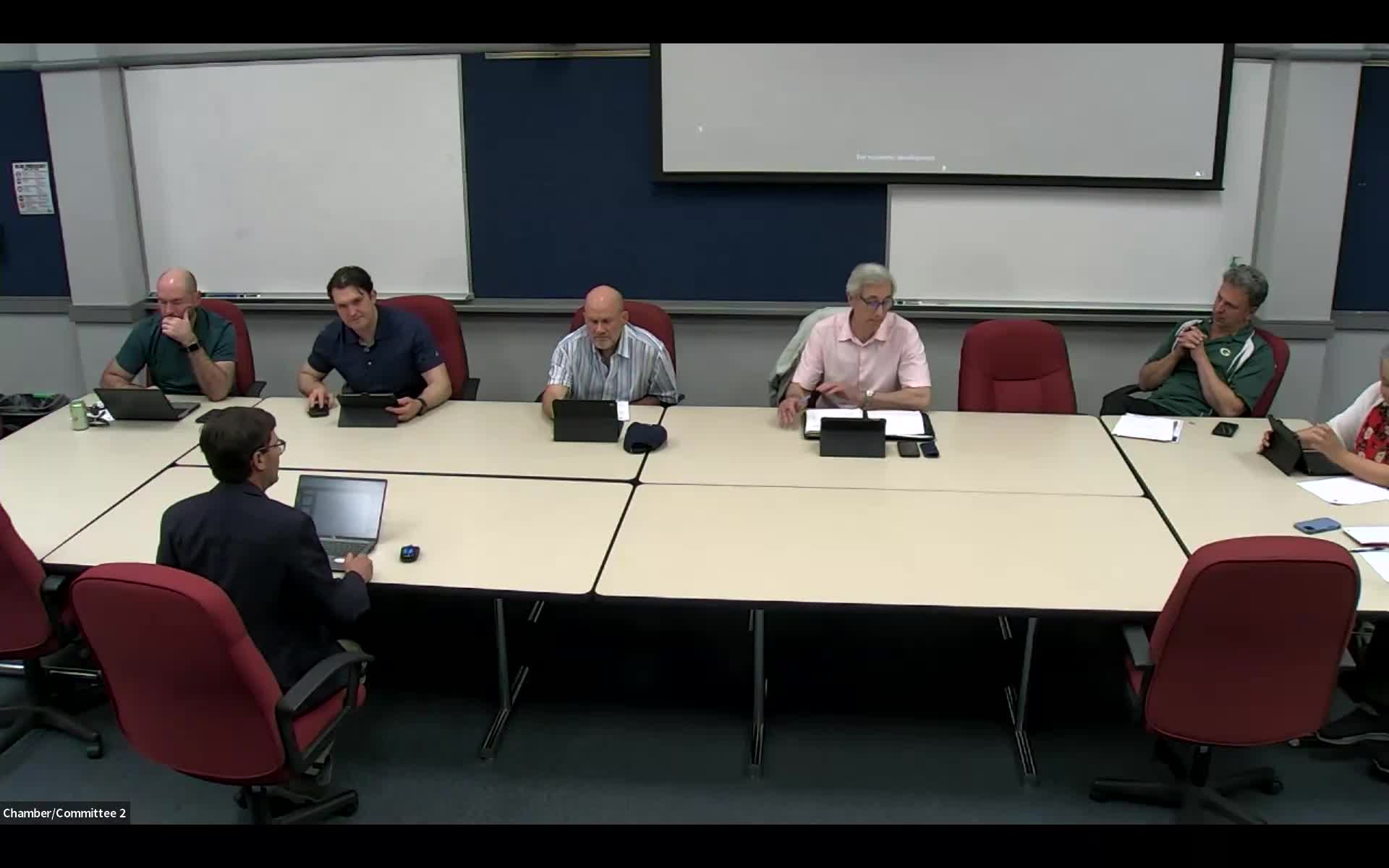
The Financial Affairs Committee voted 8-0 on June 3 to approve a six-year intergovernmental agreement that will allow Wauwatosa to use workforce-tracking software developed by the City of Milwaukee.
The Financial Affairs Committee on June 3 approved a six-year intergovernmental agreement to use workforce-tracking software developed by the City of Milwaukee, a measure staff said will reduce software costs and share an existing municipal platform.
John Regine, Finance Director, told the committee the city has experienced slow response and high costs from its current vendor, and that the Milwaukee system now offers a municipal-built alternative. Regine said the agreement would give Wauwatosa access to vendor listings already entered into Milwaukee's system, saving the city time and reducing duplication, and would cut software costs roughly 25% to 50% compared with current arrangements. Regine described the proposed contract as a six-year agreement and said the term was chosen in part to qualify for a potential innovation grant from the state that requires multi-year commitments.
During public comment, Vijay Ermance of 2749 North 70th Street asked about support and whether the agreement included 24/7 assistance; Regine said support in the agreement covers the city's working hours and that only city staff would have access to the administrative support line. Regine added Milwaukee's IT team committed to consider reasonable modification requests specific to Wauwatosa.
Alder McClough questioned the six-year term; Regine said the state innovation-grant rules require a minimum six-year commitment to qualify. Committee members also asked about per-project costs; Regine described current per-project costs at roughly $2,500 to $7,500 and later said project costs could range up to $15,000 depending on project scope, while noting developers typically reimburse those costs through tax-increment or project financing mechanisms.
Alder Phillips moved to approve the intergovernmental agreement; Alder Morgan seconded. Members noted Milwaukee still must take the agreement through its council process. The committee voted in favor, 8-0.
Regine framed the agreement as an example of municipal collaboration that could reduce future redundancies and seed other shared tools between local governments.