
Casper council agrees to update stormwater study to explore utility fee
Get AI-powered insights, summaries, and transcripts
Subscribe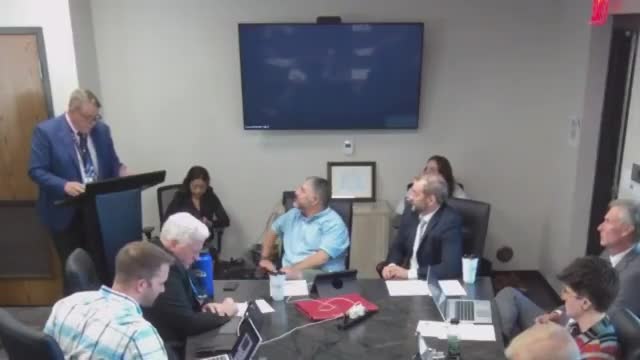
Summary
City staff will contract with CPI to update a 2016 stormwater study to quantify current needs, funding options and potential utility billing after council signaled consensus to move forward; staff requested about $35,000–$40,000 to complete the update.
City staff told the Casper City Council on July 8 that they will move forward with a contracted update to past stormwater studies to quantify infrastructure needs and options for a possible stormwater utility fee.
The study contract would update a 2016 analysis and the 2013 stormwater management master plan to reflect current costs, impervious-area mapping and potential billing designs; staff asked for about $35,000–$40,000 from direct distribution to fund the update and said the city GIS department will assist with impervious-area calculations.
Tom (staff) said the city has extensive stormwater infrastructure — “5,000 feet of pipe where we have 7,000 inlets, 2,500 manholes” — and that, unlike water and sewer, Casper currently has no enterprise fund to maintain stormwater assets. He noted a 2013 master plan that identified $46,000,000 in needs and said an updated study would present current cost estimates and funding options.
Tom said a common funding approach is billing based on impervious area and described how other cities calculate bills: “this would be another line item on your monthly bill. So on your monthly bill, you have sanitation, you have water, you have sewer, then you'd have stormwater.” He and staff cited a prior estimate that an average home could pay about $5 per month (about $60 per year), which the 2016 estimate suggested would generate roughly $2,000,000 annually in revenue.
Council members asked about timeline, billing cadence and political timing. One councilor said the study’s results should remain relevant for decades but cautioned that cost estimates require periodic updates: “The costs aren't always relevant,” Tom said, adding that scope and priorities can shift if large new developments appear. Another councilor urged delaying any implementation of a fee until after local tax measures are settled, suggesting fiscal-year 2028 as the earliest for consideration; others said gathering updated data now was prudent.
Staff said the study would not itself create a fee; it would return options and recommendations to council for further policy decisions. Potential offsets for the study cost were discussed, including contributions from solid waste because of shared street-sweeping functions.
Council members present signaled consensus to proceed with completing the updated study and returning with options; no formal recorded vote to adopt a utility or to commit the full study funding was recorded during the discussion.
Background: staff and a consultant (CPI) prepared the original 2016 analysis. Presenters said updated GIS mapping allows billing based on impervious surface (roof, driveway, sidewalks) so each parcel is billed in proportion to its contribution to runoff. Staff emphasized that properly conveyed stormwater protects the North Platte River and that curb-and-gutter repairs are functionally linked to stormwater system health.
Next steps: staff will finalize scope and fee with CPI, identify a funding source for the update (requested $35,000–$40,000 from direct distribution), and return to council with a completed study and policy options for any future fee implementation.