Get Full Government Meeting Transcripts, Videos, & Alerts Forever!
Get email alerts on the Claims And Insurance topic
No spam. Unsubscribe anytime.
Board disallows supplemental claim from attorney in sheriff investigation; supervisors debate representation rights
Summary
The Chippewa County Board moved to disallow a second notice of claim from attorney Richard Hodgson related to prior legal fees; supervisors debated whether denying the claim raises questions about representation rights and insurance coverage.
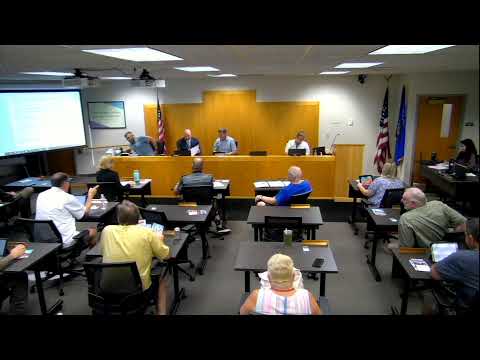
The Chippewa County Board of Supervisors voted 11-6 to disallow a second notice of claim filed by attorney Richard Hodgson that sought additional fees related to prior representation of Sheriff Travis Hakes.
The board heard that Hodgson had earlier filed a notice of claim on June 12, 2024, seeking $27,753.37 for legal services representing the sheriff related to a county investigation; that claim had been disallowed by resolution 42-24. A supplemental notice filed March 28, 2025 sought roughly $9,000 and ongoing accrual at $350 per hour for efforts to collect on the original claim.
County insurance carrier WIMIC and outside insurance-defense counsel reviewed the supplemental claim and recommended disallowance; county counsel told the board that following that advice was his recommendation. Several supervisors raised constitutional and fairness questions about representation for an official under investigation, with Supervisor Henick and others arguing a principle that individuals have the right to counsel. Others, including Supervisor Shoebridge and Supervisor Flynn, emphasized fiscal and insurance considerations and supported following the insurer’s recommendation.
Board discussion noted practical insurance mechanics: if the county follows insurer counsel and denies payment, the insurer could decline coverage if the county acts otherwise. A supervisor confirmed the county’s self-insured retention (similar to a deductible) is about $300,000, meaning the insurer’s coverage applies after that threshold. After debate, the board called the vote and disallowed the claim. The resolution directs certified-mail notice of disallowance and preserves the county’s defenses.