Get Full Government Meeting Transcripts, Videos, & Alerts Forever!
Get email alerts on the Economic Development topic
No spam. Unsubscribe anytime.
Main Street Alliance offers data tools and partnership to address vacant and underutilized storefronts in St. Helens
Summary
Representatives of the St. Helens Main Street Alliance presented a data tool and proposed a partnership with the Planning Commission to inventory vacant and underutilized storefronts, suggesting a mix of incentives (loans, matchmaking) and enforcement to revive downtown commercial activity.
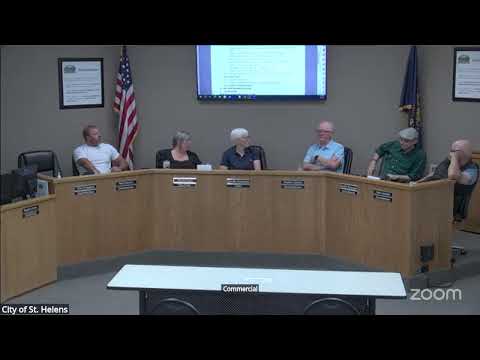
Representatives of the St. Helens Main Street Alliance told the Planning Commission the organization can help the city collect detailed, parcel‑level data and support targeted efforts to address vacant and underused storefronts in the downtown and riverfront districts.
Erin Salisbury, president of the St. Helens Main Street Alliance, and Marcy Sanders, who also spoke for the group, explained the Main Street approach and described a new Main Street America data tool that maps properties in the designated Main Street district and allows volunteers and staff to log building status, use type, owner contact information and other variables. Salisbury said the tool is “shareable” and the alliance can provide logins and help populate the inventory.
The Main Street representatives recommended a two‑pronged approach: incentives (for example, low‑interest loans as used in Astoria) paired with enforcement mechanisms or fees for prolonged vacancy. Commissioners and Main Street members discussed examples such as vacancy registration, graduated fees for prolonged vacancy, targeted small grants for façade and ADA improvements, and an inventory-based strategy to prioritize “low‑hanging fruit.”
Main Street representatives said the district is large and that the new tool will require volunteer time to populate and maintain; they offered to walk the district and collaborate with planning staff. They stressed that each property often has a unique story — owners, financing and code constraints differ — and that municipal action should combine data, outreach, incentives and, where necessary, enforcement.
Why it matters: A validated inventory and partnership could help the city prioritize public investment and code enforcement, match property owners with prospective tenants, and target grants or incentives to properties likely to yield visible downtown improvements.
Commissioners asked Main Street to share the tool and to coordinate on data collection. Planning staff said the city’s building official would follow up on code and health‑and‑safety matters and that a transportation/parking plan is already listed in the city’s proposed transportation systems plan grant work.