
Boulder parks staff weigh fee and membership changes, including reservoir access and third‑party subsidies
Get AI-powered insights, summaries, and transcripts
Subscribe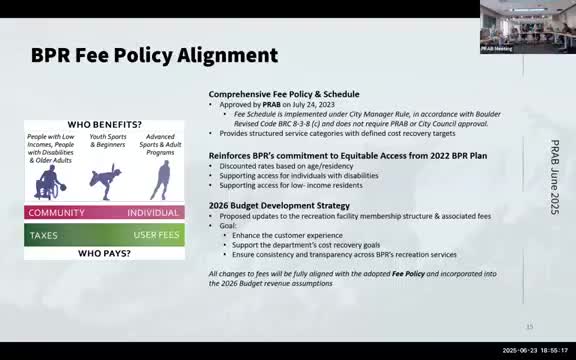
Summary
Parks & Recreation staff presented market analysis and membership scenarios intended to increase cost recovery while preserving equity programs; staff said changes could include separating reservoir access and reassessing third‑party entry subsidies.
City of Boulder Parks & Recreation staff told the advisory board they are reviewing membership structure and fee policy to increase revenue and meet cost‑recovery goals while maintaining financial assistance for low‑income residents and partner programs.
Staff said the goal is to balance revenue generation with equitable access. “We are very committed to equitable access,” Stacy, a department staff member, said, noting the department’s financial aid program and age‑based discounts.
What staff presented - The department is updating a fee policy adopted in 2023 and the 2024 fee schedule and said it will finalize membership structure work in the third quarter for possible implementation in early 2026. - Megan, a recreation staff member, said the department’s average current recovery per facility entry is below target: staff estimated a roughly $2.67 gap between current average recovery and the $9.46 per‑visit level they estimate would meet a 67% cost‑recovery target for facilities. - Staff flagged that third‑party entries (for example, entries tied to insurance programs such as SilverSneakers) are heavily subsidized under existing contracts and contribute to the skew in who is paying full price.
Reservoir and outdoor facilities - Staff said the Boulder Reservoir’s business model is different from recreation centers and that fee levers — including separate access charges for the reservoir or a “premier” pass that bundles all facilities — will be explored. “We want to bring you some levers… for instance, should the Boulder Reservoir be able to be accessed without having access to everything?” Megan said. - The board asked about using fees to discourage motorized recreation at the reservoir; staff said rate design could be a tool but that any change would follow broader community engagement and a future master plan.
Equity and program impacts - Staff warned that low cost‑recovery programs are often mission‑aligned offerings that serve vulnerable populations; cutting those solely for revenue would conflict with parks and recreation goals. - The department plans community outreach later in the year and said any fee changes will include communication and phased implementation to avoid abrupt service loss.
Process and timeline - Staff said they will present membership‑structure options in Q3, refine proposals with community input and align fee changes with implementation of new recreation management software. - Staff emphasized they will not present fee proposals that intentionally reduce current revenue targets.
Ending: staff will return with concrete membership options, benchmarking and a community engagement plan before moving to formal adoption of fee changes.