Get Full Government Meeting Transcripts, Videos, & Alerts Forever!
Get email alerts on the Land Use Zoning Amendments topic
No spam. Unsubscribe anytime.
Council reviews zoning text amendments to clarify food‑truck rules, bike‑parking and alley definitions
Summary
Planning staff presented amendments to the Concord Development Ordinance to remove a notarization requirement for plats, restrict food trucks in public parking downtown except for city/county events, allow Parks & Rec‑permitted park vending, and add administrative flexibility for bicycle parking at schools.
City planning staff presented a package of Concord Development Ordinance amendments Tuesday to clarify administration of plats and plans, refine food‑truck rules in the Center City zoning district, adjust bicycle parking requirements for schools, and correct the alley definition used in development review.
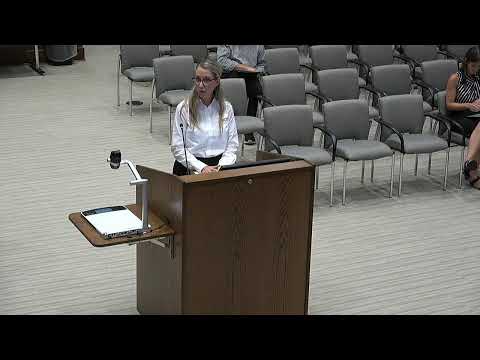
Kevin, the planning presenter, told council the amendments are mainly clarifications intended to improve administration. He said the proposal would remove a long‑standing notarization requirement for certificates of conformity to enable electronic recording of plats and construction plans.
On food trucks, Kevin said staff moved and clarified language about where food trucks may operate. “We will no longer allow food trucks in designated public parking spaces, publicly owned lots, or own public spaces unless it's an event held by the city or county,” Kevin said, adding that food trucks would still be permissible in private surface parking lots with the required temporary permits and that food trucks at churches, schools or hospitals have been administered similarly to multifamily developments and are being memorialized in the code.
Kevin also described a new provision allowing food trucks at city and county parks subject to Parks & Rec permission and documentation. On bicycle parking, staff proposed giving the planning administrator discretion to waive or modify bicycle parking counts and locational requirements where staff and school representatives show the standard requirements are excessive or infeasible; Kevin said some previous school projects produced “an outlandish number of spaces” and that administrators may now reduce the required number and modify the 50‑foot locational rule when warranted.
Finally, staff proposed updating the alley definition to reflect a 24‑foot effective width (including curb and gutter) rather than the 20‑foot phrasing in the code, which staff said matches longstanding administration. Planning & Zoning (PNZ) approved the top two bullets of the text amendment unanimously and without discussion, according to staff.
Council members asked clarifying questions about who serves as the administrator (the planning director or designee) and confirmed that schools will be able to request relief through the administrative process. The transcript does not record a final vote on the amendment in the excerpt provided; staff requested a motion to approve or deny later in the meeting process.