Get Full Government Meeting Transcripts, Videos, & Alerts Forever!
Get email alerts on the Animal Control Investigation topic
No spam. Unsubscribe anytime.
Town attorney: independent investigation finished in long-running animal control case; council told personnel steps will follow
Summary
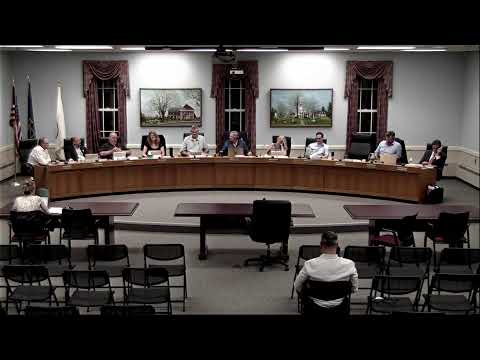
Town Attorney Jeff D'Onofrio told the Cheshire Town Council on July 8 that an independent investigation into the town's animal control operations has been completed and that any personnel action will follow the town's collective-bargaining and legal procedures.
Town Attorney Jeff D'Onofrio told the Cheshire Town Council on July 8 that an independent investigation into the town's animal control operations has been completed and that any personnel action will follow the town's collective-bargaining and legal procedures.
The update traced the case from the town's seizure of 28 dogs at 7 Edith Place in November 2022 through a sequence of civil and bankruptcy proceedings the attorney said delayed a final resolution. "In Connecticut to get legal custody, lawful possession, as well as the right to lawful ownership, you have to file an action in superior court," D'Onofrio said, summarizing why the town filed an action under the applicable statute shortly after the seizure. He said delays included the former owner's incarceration and a Chapter 13 bankruptcy filing that produced an automatic stay, which the town later sought relief from in order to pursue ownership issues.
Nut graf: The town attorney said the litigation and related matters are no longer active and the town has been complying with a consent order from the Department of Agriculture (DOAG). D'Onofrio said the independent investigator he retained completed interviews last week; the town has conferred with labor counsel and will follow the collective-bargaining agreement and Connecticut law before any disciplinary steps. "The investigation was completed last week. The last interview was completed last week," he said.
D'Onofrio described three legal goals the town established when it seized the dogs: remove the animals from peril, obtain lawful ownership so they could be placed for adoption, and protect the town from potential liability claims. He told the council the superior court litigation was resolved and bankruptcy approval for the settlement was obtained before the dogs were transferred to adoptive placement with the Connecticut Humane Society.
He also explained why much of the work and strategy were kept confidential during the litigation and investigation. "Rule 1.6 . . . a lawyer shall not reveal information relating to representation of a client unless the client gives informed consent," D'Onofrio said, citing the rules of professional conduct and FOIA exceptions for strategy in pending litigation.
Public comment at the meeting reflected frustration with the pace and transparency of the town's response. Jean Melendez, who identified herself as a local resident, asked why the town council had not received more information earlier: "Somebody is responsible. We voted for the town council. . . . Someone needs to do something," she said. Melendez also said she and others had submitted Freedom of Information Act requests and expressed dissatisfaction with the records they had received.
Jim Block, another resident, said he appreciated the attorney's explanation but emphasized that voters hold the council accountable for town operations. "We do not vote for the town attorney. We vote for you ladies and gentlemen sitting up here," he said. Tony Bagliore, who described himself as an animal rescuer, asked whether staff had been placed on leave during the investigation; D'Onofrio answered that suspension is itself a form of discipline and must meet the collective-bargaining agreement standard of "just cause." Andrea Karen, speaking for Desmond's Army, asked whether the investigator's report included findings and recommendations; D'Onofrio said the investigator both "makes findings and reaches conclusions."
D'Onofrio said the investigation was retained by the town manager after the litigation was withdrawn, and that he had appointed an investigator with no prior ties to Cheshire to ensure impartiality and to conduct interviews rather than rely on documentary hearsay. He explained the need for a solid, firsthand record in any subsequent personnel proceedings governed by the collective-bargaining agreement: "When you're doing an investigation that involves personnel for a town, you're investigating the performance of public employees . . . you need an impeccable investigation that's built not on hearsay, but on firsthand statements from witnesses."
Council members said they want the findings released when legally possible and acknowledged the constraints described by the town attorney. Several members said a redacted report should be made public after any legally required personnel steps are completed so that the public can understand the outcome. Councilor Malone said he defers timing to the town attorney but supports releasing results "in the near future." Councilor Veloper said he supported release as long as legal requirements were met.
D'Onofrio said he had conferred with labor counsel on next steps earlier the same day and repeated that there is no draft written report yet to share publicly. He said confidentiality during the process was essential to avoid undermining due process and to prevent legally vulnerable actions that could be overturned.
Ending: The council did not take any formal action at the meeting; members said they expect a written investigative report and to be briefed when legal constraints allow. D'Onofrio said the town would follow the collective-bargaining agreement and Connecticut law if any discipline or other personnel decisions become necessary.