Get AI Briefings, Transcripts & Alerts on Local & National Government Meetings — Forever.
Odessa officials outline phased citywide rollout-cart conversion, vow clearer public outreach
Summary
City staff told the Odessa City Council that rollout-cart trash service has been completed in Mission Dorado and that further phased conversions (starting east of Fadri and north of Yukon) will proceed over years; council members pressed for better public communication on placement, costs and timelines.
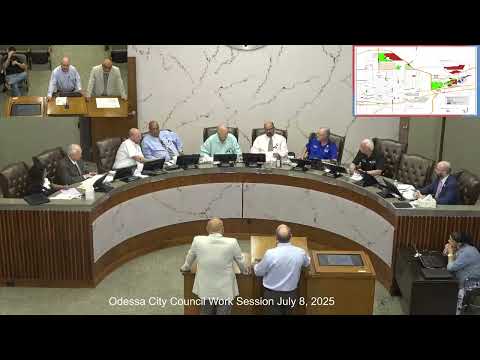
City staff told the Odessa City Council on July 8 that the city has completed a pilot conversion in Mission Dorado and will expand rollout-cart trash service in phased sections, starting with areas east of Fadri and north of Yukon.
Assistant City Manager Aaron Smith said, “Everything east of Fadri is now rollout cart service,” and described a phased plan that will move gradually through neighborhoods based on staffing and equipment availability.
Council members and staff said the conversion is intended to reduce illegal dumping, limit loose trash blown through neighborhoods, extend vehicle life by reducing wear on collection trucks and better align costs with service levels. Smith told the council the city currently has about 3,300 carts in stock and that the base monthly utility charge for rollout service is roughly $23; additional carts cost about $8.20 per month and the city’s per-cart procurement cost is about $55.
Why it matters: the transition affects where residents place carts (front of house versus alleys), how quickly neighborhoods will be converted, and public expectations. Council members pressed staff to publish clear maps, timelines and a list of frequently asked questions so residents know whether carts will be collected in front of a home or in the alley, whether commercial customers will be affected, and where to direct questions.
Officials said placement will generally follow the improved surface that collection trucks can safely access: “If the garage faces a street, that’s where you would pick it up,” a staff member explained, adding that there will be “one-offs” where specific neighborhood layouts require exceptions. Council discussion repeatedly returned to concerns about older neighborhoods without garages and the need to avoid placing trucks on unimproved alleys where possible.
Multiple council members and the mayor said the city has not done enough to control the narrative as conversions proceeded. One councilmember noted extensive social-media complaints and local TV coverage after Mission Dorado’s short-notice start and urged a proactive communications campaign. The council and staff agreed to publish a map showing where rollout service will and will not occur, produce Q&A materials and direct residents with specific questions to a named contact: Aaron Smith, assistant city manager.
Staff described expected timing as dependent on hiring and equipment purchases. Smith said the next targeted “green” section could be completed within about three years if approved and resourced; estimating citywide conversion timelines ranged in council remarks from roughly eight to 15 years depending on capacity. Staff cautioned that the schedule is contingent on future council approvals, staffing and equipment deliveries.
Council members also asked staff to emphasize that commercial accounts are not being converted to residential rollout carts and that bulk pickup remains available; drivers record bulk pickup requests for crew follow-up, staff said. Officials noted the conversion may reduce tipping-fee expenses over time by cutting illegal dumping, but added that trash rates (an enterprise fund) and property taxes are not the same budget line.
The council directed staff to improve public outreach and to publish clear, shareable information about the program, including who to contact with questions. No ordinance or formal vote to require additional changes to policy was taken during the workshop.
Members pressed staff for follow-up details, including a public schedule of phased routes and confirmation of which neighborhoods will see rollout carts first. Staff said they will return with materials and continue phased implementation work.