Get Full Government Meeting Transcripts, Videos, & Alerts Forever!
Get email alerts on the Comprehensive Plan topic
No spam. Unsubscribe anytime.
Ellensburg begins 10-year comprehensive plan update; consultants outline timeline, climate and housing work
Summary
City staff and SCJ Alliance consultants reviewed the required 10-year periodic comprehensive plan update, timelines for adoption, required state reviews, and planned community outreach, with particular attention to housing, climate, transportation and economic analysis.
At a July 7 study session, Ellensburg Community Development Director Dan Carlson told the city council and the public that the city is launching its statutorily required 10-year periodic comprehensive plan update and introduced consultant project manager Kirsten Peterson of SCJ Alliance, who outlined the update's scope, schedule and community engagement approach.
Kirsten Peterson said the comprehensive plan is “essentially a 20-year vision by and for the community,” and walked the council through required and optional plan elements, upcoming state deadlines, and a phased adoption timeline that includes environmental review and a formal state review period.
The periodic update is mandatory under the state Growth Management Act and must incorporate recent state legislative changes, Peterson said. She told the council the city's deadline for completing the periodic update is the end of 2026 and that the project team aims to have a draft ready for broader review by about June 2026 and adoption by December 2026. Peterson said the adoption process will include environmental review (an EIS where required), a 60-day Washington State Department of Commerce review and public hearings before the planning commission and the council.
Why it matters: the comprehensive plan sets long-range land-use and policy direction that underpins zoning, capital project lists and eligibility for state grants. Peterson noted that identification of projects in the plan can be necessary to qualify for funding such as Transportation Improvement Board grants.
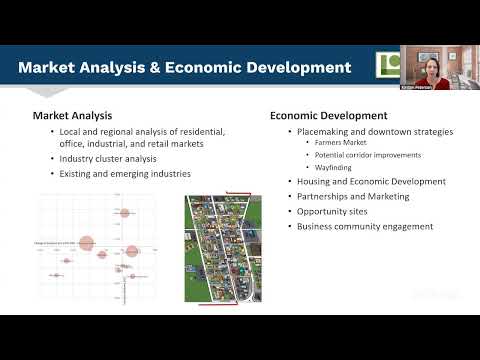
What consultants will do: SCJ Alliance will serve as prime contractor for the plan text; subcontractors include Wheeland Consulting to perform market and housing analyses, Fair and Pierce for transportation support, and Cascadia for the climate element. Peterson said the team has coordinated internal timelines so outreach, technical analyses, and chapter drafting proceed in parallel.
State law and recent legislation: Peterson and Carlson flagged multiple statutory and legislative drivers the update must address. They said the plan will incorporate the state's Growth Management Act requirements, new state mandates on climate planning, and recent housing legislation that requires planning for housing across income bands and limits certain local requirements (Peterson said, for example, that owner-occupancy requirements are no longer allowed). The consultants also noted updates to transportation metrics, including a shift toward multimodal level-of-service standards and expanded consideration of “active transportation” (pedestrian and bicycle facilities) and ADA transition planning.
Annual versus periodic updates: Carlson explained the difference between the periodic update (mandatory every 10 years) and the city's annual amendment process (optional, allowed once per year). He said annual amendments let the city consider development proposals and comp-plan changes together but do not replace the mandatory periodic review.
Community engagement: Peterson emphasized a robust public participation program, coordinated with the city’s public participation plan (agenda item 9f), and said the team will use open houses, stakeholder interviews, existing events, translation/interpretation where appropriate, and documentation showing how public input was incorporated into plan decisions. She said the consultants will supply materials that city staff can take to community events such as the farmers market.
Technical topics highlighted: the consultants described planned work on housing (market analysis, mix of housing types, and middle housing options), transportation (project lists, multimodal impacts, coordination with WSDOT on state facilities and interchanges, and updates to the six-year transportation improvement plan), and climate (auditing existing policies, assessing vulnerabilities such as wildfire, flooding and drought, and integrating climate strategies into other plan chapters). Peterson said Cascadia will lead climate-related analysis and policy development.
Questions from attendees: Delano Palmer asked about identifying “nonexistent industries” that could diversify the local economy; Peterson deferred detailed recommendations pending the market analysis by Wheeland Consulting and noted land availability and existing economic-development capacity are key constraints. David (surname not specified) asked the council and staff to explain how population forecasts are coordinated with Kittitas County; Peterson and Carlson described a countywide allocation process and the Office of Financial Management projections that feed allocations, and noted the requirement to plan for housing across income bands under recent state law.
Next steps/directions: Carlson stated the city's next council meeting will include a recommendation on the docket of annual amendment items and that staff and consultants will continue to advance the periodic update work program, including the public participation plan to be discussed on the agenda. No formal actions or votes on the comprehensive plan were taken at the study session.
Taper note: The study session closed for a 20-minute break after the presentation and a question-and-answer period; consultants and staff said they will return with subsequent materials and schedules as the update moves into drafting and review phases.