Get Full Government Meeting Transcripts, Videos, & Alerts Forever!
Get email alerts on the Transportation Access topic
No spam. Unsubscribe anytime.
Committee backs resolution urging state action to protect volunteer drivers from commercial insurance rates
Summary
The Health and Human Services Committee unanimously approved a resolution to send to the county board urging state lawmakers to prevent volunteer drivers from being charged commercial insurance premiums.
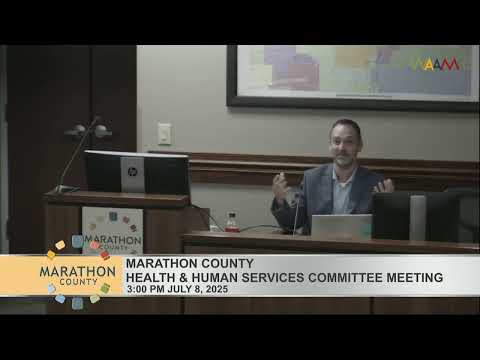
The Marathon County Health and Human Services Committee voted unanimously on July 8 to forward a resolution asking the governor and Legislature to act so volunteer drivers cannot be forced to pay commercial insurance rates.
Laurie Muskemons of Conservation, Planning and Zoning introduced the resolution, which came from the county’s Transportation Coordinating Committee. Muskemons said volunteer drivers provide essential trips for elderly residents and people with disabilities and that some insurers have begun classifying volunteer drivers as commercial operators, producing premium increases “of hundreds of dollars more every year.”
Jenny McKenzie, who runs transportation services at North Central Healthcare, told the committee the volunteer pool has shrunk since the COVID-19 pandemic. “When I started this job… we had anywhere from 35 to 40 drivers. As of right now, I have five drivers that drive on a regular basis,” McKenzie said. She described turning away a Marathon County resident who needed a dialysis trip because no volunteer was available in that area.
Muskemons made the motion to approve the resolution; another committee member seconded it. The chair called for the vote and said it passed unanimously. The committee will forward the resolution to the county board for consideration and transmission to state officials.
Why it matters: voluntary drivers provide rides for medical appointments and other essential services in rural areas where public transit options are limited. Committee members framed state-level legislative change as the appropriate remedy because insurance classifications and rate rules are set at the state level.
Less-critical details: Muskemons referenced Minnesota as a model for provisions that distinguish volunteer drivers from commercial ride-hail operations. The resolution’s packet appears on the committee agenda (page 69).