Get Full Government Meeting Transcripts, Videos, & Alerts Forever!
Get email alerts on the County Budget topic
No spam. Unsubscribe anytime.
Marathon County begins earlier, committee-level review of 2026 budget; rates and fees highlighted
Summary
County officials told the Health and Human Services Committee the county will expand committee involvement in the 2026 budget cycle and reviewed a mandatory/discretionary program document and an updated rates-and-fees appendix, noting some fee changes reflect state rules rather than cuts.
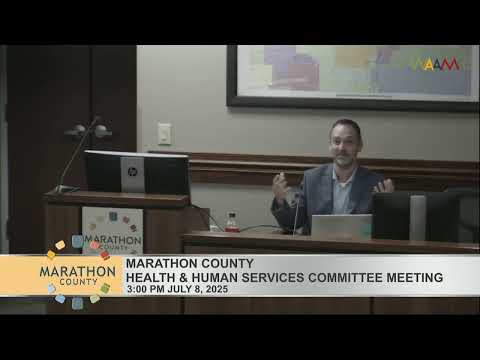
Marathon County officials told the Health and Human Services Committee on July 8 that the county will expand committee-level review of the 2026 budget and expects to involve standing committees earlier and more often in setting program and service priorities.
County Administrator Leonard said the process mirrors past cycles but gives the county board and standing committees “more opportunities both early and throughout the process to really provide guidance to administration, as we build the budget, working with department heads.” The review will focus on three questions: which programs are required by state law, at what level to provide services, and at what cost.
Why it matters: committee-level engagement is meant to let board members shape the administrator’s preliminary budget before the administrator presents a full proposal to the county board in September. Chair John Robinson said the budget presented in September becomes the county board’s budget and that “there are two opportunities for you to have input”: during development and after the administrator’s introduction.
Officials emphasized the interplay of levy, restricted sources and fees. Robinson and Administrator Leonard warned that cutting programs that carry state or formula-driven revenue can lower future aid. Leonard and staff pointed to an expanded rates-and-fees appendix in the budget packet and said some fees — such as certain court fees — are set by state statute, while others are candidates for local adjustment to recover rising costs.
Committee members asked about a large apparent change in retail food-service fees listed in the packet. Health department staff explained the table columns were titled confusingly: the 2024 column showed the full prior rate, a subsequent column showed the county increase and another column showed the state increase; the total appears in the far-right column. Staff clarified the apparent drop was a labeling issue and that a typical example would be a move from $378.30 to $402, not a cut to $11.
Officials also reviewed workforce and compensation issues. Leonard said county pay scale data dated from early 2022 and recommended updating the compensation grid to respond to labor-market pressures. He said departments that can recover costs through user fees — for example health department licenses or on-site wastewater monitoring — should consider doing so to avoid shifting costs to the property-tax levy.
The committee was reminded that some decisions remain contingent on state and federal rollouts — for example, Medicaid administration and highway-aid recalculations — and that reserves are one-time funds. Leonard said staff will present a working-capital reserve policy to clarify what funds are restricted and what is flexible.
Less-critical details: HR Finance will take up underlying budget assumptions at its next meeting. Administrator Leonard and Committee Chair Robinson urged supervisors to bring questions early to departmental briefings. The committee scheduled its next meeting for Aug. 6 at 3 p.m.