Get Full Government Meeting Transcripts, Videos, & Alerts Forever!
Get email alerts on the Capital Improvements topic
No spam. Unsubscribe anytime.
Council approves $300,000 for street lighting; schedules remaining CIP funding decisions for Aug. 19 after neighborhood testimony
Summary
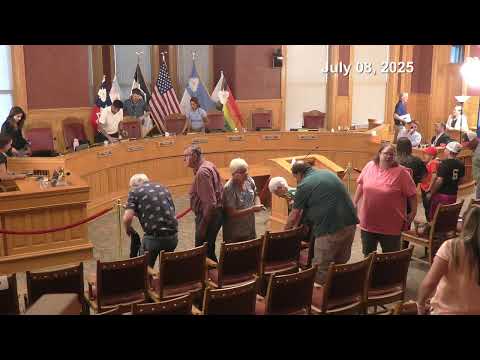
Salt Lake City Council voted July 8 to authorize use of $300,000 for street lighting and to remove debt service for a second tranche of public‑lands GO bonds from the CIP key‑changes document, while deferring all other project allocations to an Aug. 19 adoption vote.
Salt Lake City Council voted July 8 to close public hearings for the fiscal year 2026 Capital Improvement Program and to approve two technical changes to the CIP key‑changes document: removal of debt service for the second tranche of public lands general obligation bonds, and authorization for the administration to use $300,000 for street lighting. The council instructed that all other CIP funding allocations be discussed in scheduled briefings and returned for a project‑specific adoption vote on Aug. 19.
The motion to close the hearing and adopt the two changes was moved by Council Member Dugan and seconded by Council Member Lopez Chavez. Council members voted unanimously to approve the adjustments and set the Aug. 19 date for final funding allocations.
The council heard public testimony from about 13 registered speakers during the CIP public comment period. Speakers represented multiple neighborhoods and urged funding for a range of local projects, including neighborhood traffic‑calming, street and trail rebuilds, shade and streetscape improvements, playground and park conversions, and bicycle parking. Notable requests and details included:
- Rachel Taylor (Sunnyside East resident) asked the council to fund a CIP application to transform roughly 2.5 acres near the Bonneville Golf Course driving range into a nature park, saying the area was closed by a fire marshal order in 2019 and estimating cleanup costs of roughly $140,000 plus a $2,600,000 land‑transfer valuation for park conversion. Taylor said new water access would allow native plant programs to establish plantings without ongoing irrigation.
- Jennifer Robinson (West Point community) urged support for Rose Park Lane improvements to complete a Jordan River Trail connection, reduce illegal overnight commercial truck parking, and add sidewalks and infrastructure to support local traffic and recreation.
- Peter Karim and supporters asked the council to reconsider funding for a shade and activation project at Third South and Main (the Cliff Building corner), noting the downtown corner’s safety concerns and asking reconsideration of an approximately $230,600 funding request.
- Nicholas Wilkinson (Beacon Heights trustee, Sugar House Community Council) requested funding for a Nevada Street rebuild, citing an overall condition index in the low teens, recurring potholes, standing water and inadequate drainage, and noting Nevada Street serves multiple schools and requires a full rebuild before safety and ADA upgrades will be durable.
- Several residents—Matthew Morris and Kelby Gopal from Glendale, Mary Jo Tedesco (university area), Kim Paterzo (Sugar House), Jeff Bear (Liberty Wells), and others—testified in support of traffic‑calming and livable‑streets projects, citing speeding, pedestrian safety, fatal collisions, and years of unmet neighborhood requests. Jeff Bear told the council his neighborhood has requested traffic calming for 18 years and described a recent fatal hit‑and‑run involving a 67‑year‑old motorcyclist.
- Evan Sugden spoke in favor of a “bike spa” (secure bicycle parking) proposal at the Milk Block; Salt Lake City Transportation Engineering had indicated a $58,000 budget to construct a bike parking facility at that location.
- Tina Hernandez urged the council to fund a HAWK (high‑intensity activated crosswalk) signal at Zenith Avenue and Richmond Street after reporting multiple near‑misses while walking with her young child.
Council members acknowledged both the volume of requests and the constrained CIP budget. Council Member Flee described the CIP process as a unique, transparent way for neighbors to propose major capital projects but warned there is never enough money to fund every worthy request. Council members said roughly $44 million in improvements were recommended out of about $66 million requested, and noted $12.2 million was allocated to transportation projects in the current recommendation, with other amounts directed to parks, bridges and paving.
The council’s approval does not finalize individual project funding beyond the two technical changes; project‑level allocations remain scheduled for briefing and final action on Aug. 19.