Get Full Government Meeting Transcripts, Videos, & Alerts Forever!
Get email alerts on the Public Safety Nuisance Enforcement topic
No spam. Unsubscribe anytime.
Council reviews proposed civil enforcement for unruly parties, shifting fines to property owners
Summary
Administration briefed council on proposed amendments to Chapter 11.14 to allow non‑sworn police personnel to document large unlawful gatherings and to replace a police service fee with a $1,000 civil fine assessed to property owners after prior warning.
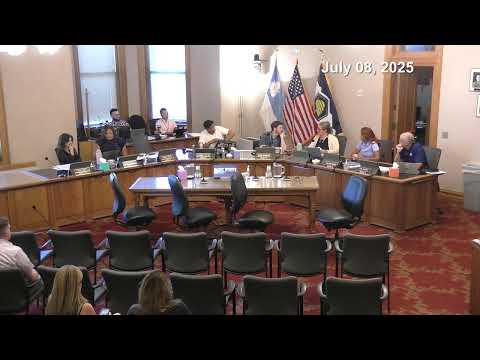
Salt Lake City officials on July 8 presented proposed amendments to Chapter 11.14 (parties, gatherings, or events) that would create a civil enforcement tool aimed at unruly, often large, residential gatherings and allow non‑sworn members of the police department to document incidents for civil fines.
The administration told the council the ordinance targets gatherings of three or more people near a residence when officers observe one or more law violations or disturbances — for example, excessive noise, underage drinking, fighting, littering or obstruction of public ways. The proposal would authorize non‑sworn members of the police department (for example, the civilian response team) to document incidents so sworn officers can focus on higher‑priority calls. Under the draft, the previously eliminated police service fee for parties would be replaced with a $1,000 civil fine issued to the property owner after a prior warning.
Michael Sander, council policy analyst, summarized the proposal: “The administration is bringing forward this proposed ordinance today that introduces a civil enforcement tool to address unruly parties, gatherings, and events … The proposal would authorize non sworn members of the police department, such as the community responders, to respond to and document these incidents, which would allow sworn officers to focus on higher priority calls.” Deputy Chief Bill Manzanaras and other police speakers described operational goals to reduce the burden on sworn officers and to hold property owners accountable when identifying the individual host is impractical.
Council members raised concerns about over‑enforcement and unintended housing consequences. Council member Lopez Chavez asked how the policy would avoid regulating family gatherings or outdoor permitted events; the administration and police said the focus is on large, disruptive gatherings and listed observable behaviors that would trigger action. Several council members asked about training and who would be authorized to document incidents; police representatives said the draft contemplates sworn and non‑sworn police department members (the civilian response team) performing documentation duties but that non‑sworn staff would not be sent to make direct contact at doors for safety reasons.
Elected officials also asked how the city would avoid penalizing homeowners where neighbors’ subjective complaints — for example, music — do not amount to unlawful conduct. Council members asked for clarity on whether the city permits private‑property events (staff said the city does not permit private house parties; permits generally apply to public spaces like streets or parks) and whether additional civilian response team positions or budget amendments would be needed to sustain the program. Police said increased PCRT staffing would likely be necessary and that the proposal is intended to complement, not replace, sworn officer responses.
What’s next: staff will prepare the ordinance language and policy questions for a formal meeting scheduled for August 12; council members requested additional detail on training, documentation standards and non‑sworn responder roles before final action.