Get Full Government Meeting Transcripts, Videos, & Alerts Forever!
Get email alerts on the Zoning Mixed Use topic
No spam. Unsubscribe anytime.
Salt Lake City Council adopts mixed‑use zoning consolidation with three‑month effective date
Summary
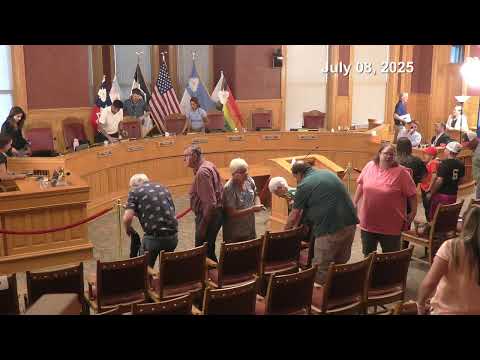
Salt Lake City Council adopted a package of mixed‑use zoning consolidation ordinances on July 8, 2025, approving geographic step‑backs for portions of Sugar House and directing staff to initiate several follow‑up legislative reviews.
Salt Lake City Council adopted a package of mixed‑use zoning consolidation ordinances on July 8, 2025, approving geographic step‑backs for portions of Sugar House and directing staff to initiate several follow‑up legislative reviews. The council set the ordinances to take effect three months after adoption.
The ordinance package, moved by Council Member Dugan and seconded by a colleague, includes a 10‑foot front step‑back after 30 feet of height in a Sugar House area bounded roughly by McClellan to 1300 East and 21 South to I‑80 for MU‑8 and MU‑11 zones, and a separate 10‑foot front step‑back after 85 feet for other MU‑8 and MU‑11 locations. The motion also directed the administration to begin: an interior‑block study for potential down‑zoning, an update to the Central Community master plan as it relates to State Street, a review of on‑street parking policies and ordinances related to new development, and changes to standards for new construction and major additions adjacent to contributing structures in historic districts.
Council debate focused on the ordinance’s effective date. Council Member Petro urged a longer delay, saying, “We have got to decide if the housing crisis is real or not,” and argued a four‑month implementation window would avoid harming projects in the financing pipeline. Council Member Lopez Chavez said one at‑risk project, described in the hearing as the Grove (the former Northwest Pipeline/Public Safety Building in District 4), relies on low‑income housing tax credit (LIHTC) financing with a November 15 deadline and warned a short implementation window could imperil a project she said would bring mixed‑income housing and retail. Lopez Chavez said the council had miscommunicated with the applicant and asked for more time or a different approach.
Council Member Dugan and other supporters argued the consolidation simplifies multiple legacy MU zone rules and will help create housing near transit and commercial corridors. The council chair noted the measure “creates more flexibility for housing, including tools to support affordable units,” and described three months as a workable compromise after reviewing timelines discussed in committee and staff briefings. Council Member Young, while praising the package as a “thoughtful and balanced compromise,” recorded a no vote on the three‑month effective date.
The council did not adopt the four‑month friendly amendment offered by Petro; the motion as moved by Dugan carried with the three‑month delay. The record later reflects Council Member Mano voted yes and Council Member Young voted no on the effective‑date element.
Next steps specified in the adopted motion require the administration and planning staff to return with the results of the specified studies and ordinance drafting for the council’s further consideration and implementation work.
Details on which parcels and projects will be affected, and the administrative timetable for the follow‑up reviews, will be set in staff reports and subsequent briefings to the council.