Get Full Government Meeting Transcripts, Videos, & Alerts Forever!
Get email alerts on the Federal Economic Policy topic
No spam. Unsubscribe anytime.
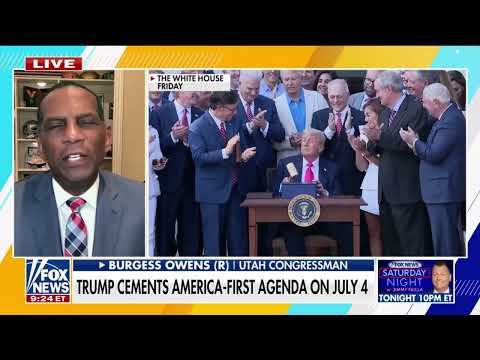
Rep. Burgess Owens says ‘one big, beautiful bill’ touches faith, family, free market and education
Summary
Republican Congressman Burgess Owens, in a televised interview, defended his vote for a large, unspecified federal bill, saying it addresses cultural pillars and that results will be evident within a year.
Republican Congressman Burgess Owens said he voted for a large, unspecified federal bill because it "touches every single one" of what he called the cultural pillars that drive the nation: faith, family, the free market and education.
In a short televised interview, the lawmaker described the measure as "one big, beautiful bill" and said supporters will know within a year whether it is working. "Either this is working in the next year or it's not," Owens said, adding that he is "excited about moving this thing forward."
Why it matters: Owens framed the legislation as a broad approach to restore optimism and patriotism and as a corrective to what he described as fear-based messaging from Democrats. He said the bill is intended to put the nation "back on the path to prosperity," a claim he offered as justification for his vote.
Details and context: Owens did not name the bill during the segment, and the interviewer did not identify additional legislative specifics such as bill number, enacted provisions or a legislative timeline. Owens asserted the measure advances cultural and economic goals but did not provide concrete policy details or outcomes tied to specific provisions during this interview.
Discussion versus action: The interview contains Owens's public explanation for casting a vote in favor of the bill; the transcript records that he "voted for the mega bill." There was no recorded legislative vote tally, amendment, or formal outcome presented in the interview.
What to watch: Because the congressman said results should be visible within about a year, follow-up coverage would require identification of the bill, its specific provisions, and empirical indicators cited by supporters and critics to evaluate whether the measure is producing the promised effects.