Joint committee hears split testimony on making virtual instructor‑led driver education permanent
Summary
Witnesses for and against bills to make online instructor‑led driver education a permanent option (H.3661 / S.2411; opponents warned against self‑paced courses such as S.2345) debated whether virtual delivery preserves safety while increasing access.
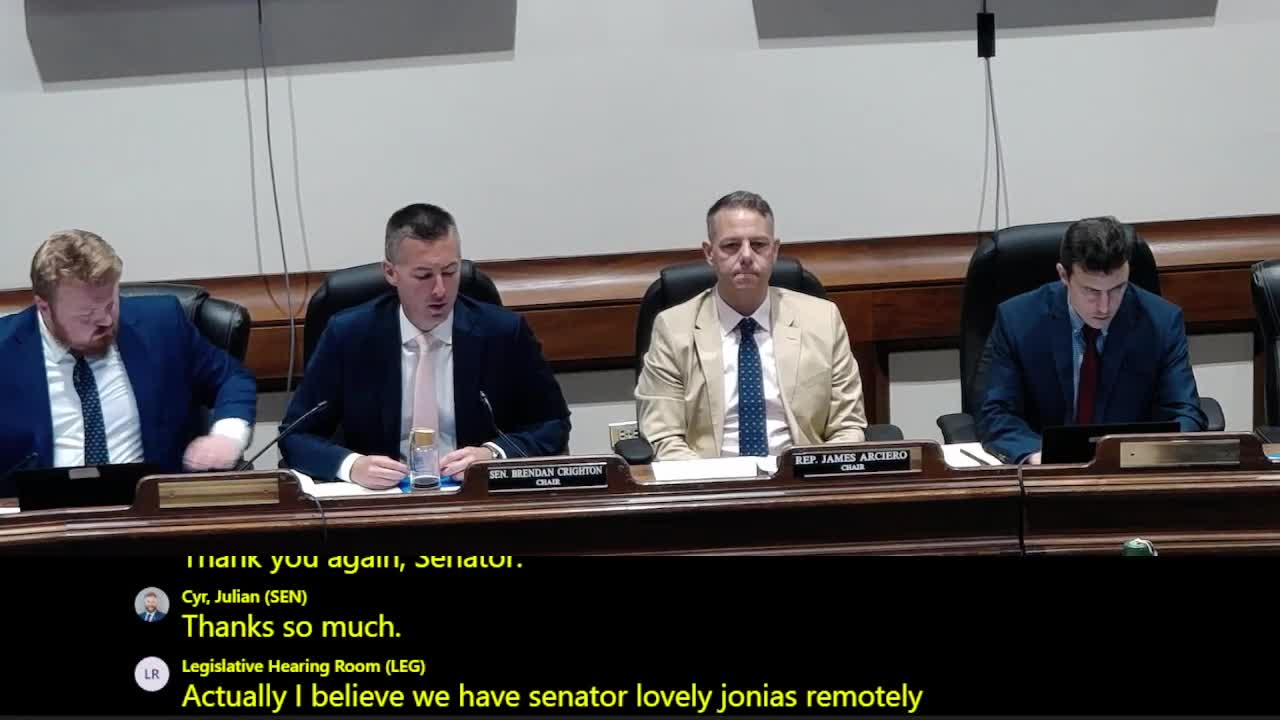
The Joint Committee on Transportation heard sharply divided testimony on bills that would make virtual instructor‑led driver's education a permanent option in Massachusetts (House Bill 3661; Senate Bill 2411). Stakeholders and driving‑school operators debated whether online delivery can match in‑person instruction for safety outcomes and whether guardrails are adequate to prevent low‑quality or self‑paced automated courses.
Proponents including AAA Northeast, several commercial driving school operators and entrepreneurs said virtual, instructor‑led classes increase access and equity for students who cannot reach a physical classroom because of transportation, work or caregiving responsibilities.
"Providing students with an option to take driver's ed virtually is an important step in ensuring equal access for all learners," Christina Hayman, senior manager of government affairs for AAA Northeast, told the committee. "The in‑person and online average scores are nearly identical, and online classes provide an alternative for families who cannot travel to a classroom." (Christina Hayman)
Mark Frost, a licensed AAA driving instructor, described classroom controls used in his online classes: camera‑on requirements, roll call twice per module, live quizzes, instructor calls on students by name and removal for repeated disengagement.
Business operators also argued virtual options preserve professional standards while expanding reach. Brandon Dufour, CEO of The Next Street, said the company has adopted camera‑on rules, active participation requirements and remote audit capabilities that can help the RMV monitor compliance.
Opponents, primarily independent driving school owners and several long‑time instructor witnesses, said in‑person instruction produces better engagement and safer drivers. Jason Emanuelson (Alert Driving Academy), Joseph Evans (East Coast Driving School, retired state trooper), Jake Cooney (CMSC driving school) and others urged lawmakers to retain in‑person requirements or to reject provisions that would permit self‑paced, automated online courses.
"When we bring students into our classroom... they learn to sit without their phone for 45 minutes to an hour," said Joseph Evans, a retired state trooper and driving‑school owner who opposed the bills. "The online negatives... they're disengaged." (Joseph Evans)
Opposition emphasized several specific concerns: automated or self‑paced courses that have no licensed instructor present; student disengagement or device misuse during virtual class; and the RMV's prior decision to sunset online options for quality reasons. Several witnesses urged clearer statutory guardrails, such as the amendments many presenters supported: a requirement that online providers maintain a physical office/classroom, at least three years of consecutive operation in Massachusetts, RMV good standing, live instructor presence and camera‑on enforcement.
Proponents countered that the online option need not replace in‑person classes and that removing it could reduce overall participation in driver's education, potentially increasing teen crash rates. They cited attendance improvements and similar test scores in some provider data.
Why it matters: changes would affect how junior operator education is delivered, potentially changing access for rural and working families and affecting public safety outcomes for new drivers. The committee did not take a vote; both sides asked lawmakers to adopt specific language to preserve instructor oversight while expanding access.