
Committee hears wide support for 'Road to Opportunity' bill to end debt‑based license suspensions
Get AI-powered insights, summaries, and transcripts
Subscribe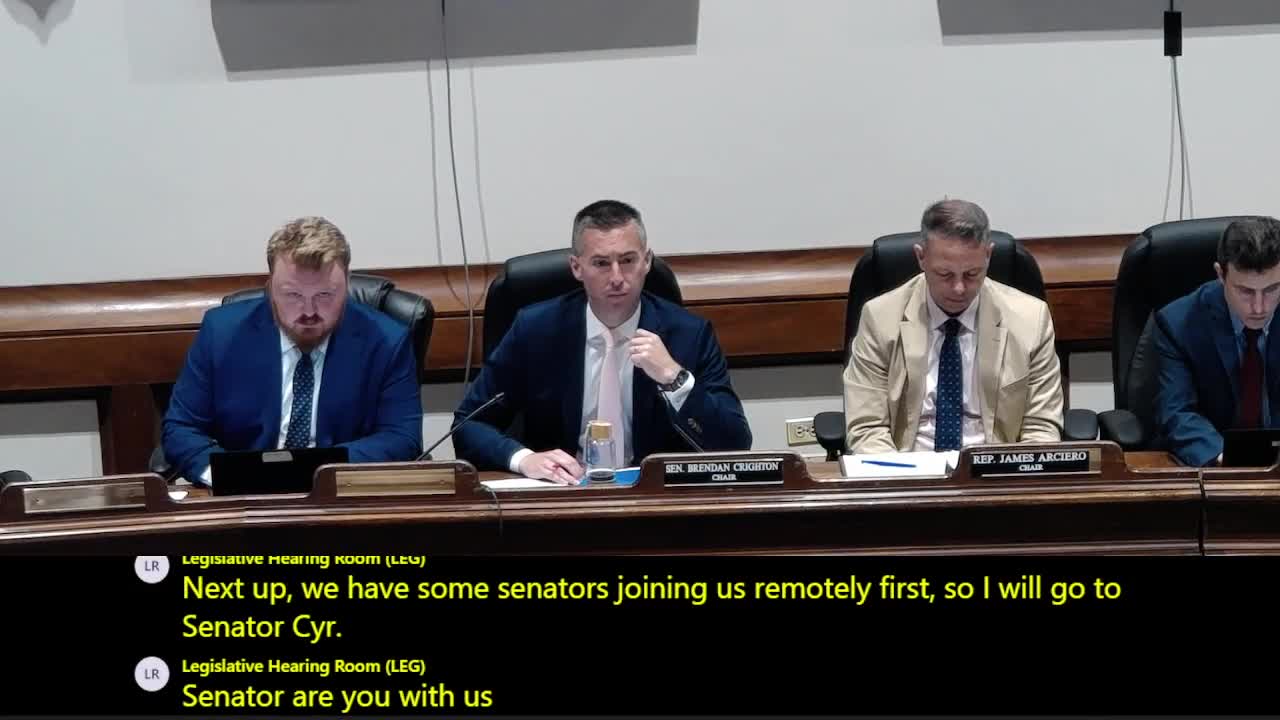
Summary
Witnesses including state and municipal officials, the attorney general's office, legal and civil‑rights groups, and affected residents urged the Joint Committee on Transportation to report favorably on legislation (S.2368 / H.3662) that would end automatic driver's license suspensions for unpaid fines and fees.
State lawmakers heard broad testimony in favor of the Road to Opportunity Act (Senate Bill 2368, House Bill 3662) during a joint public hearing of the House and Senate Joint Committee on Transportation, with witnesses saying the bills would remove a major barrier to work and reduce racial and economic disparities.
Supporters told the committee the bills would end automatic license suspensions and registration holds that are triggered solely by unpaid fines and allow people to seek waivers or reductions based on financial hardship while preserving public‑safety related suspensions.
"There is quite a bit of harm in the debt based license suspensions that we currently have in Massachusetts," Senator Julian Cyr told the committee in his opening testimony for the measure. "A suspended license prevents individuals from working, caring for their families, getting to school, meeting essential needs, such as medical appointments, grocery shopping." (Senator Julian Cyr)
Attorney General Andrea Joy Campbell's office, represented by Assistant Attorney General Colin Harnsgate, said the office supports the bills and offered figures it said underscore the scale of the problem: "Since 2020 alone, nearly 3,000,000 licenses have been marked for non renewal by the registry of motor vehicles for an unpaid debt," Harnsgate said, and described fines ranging "from a few hundred dollars to tens of thousands of dollars with no possibility of creating a payment plan." (Colin Harnsgate, Assistant Attorney General)
Civil‑rights and legal services groups urged action. Eva De Charleroi of the ACLU of Massachusetts said the bills would stop using licenses "to punish poverty," and Caroline Cohn of the National Consumer Law Center noted the bills would generally preserve underlying debt while allowing people to continue driving legally while making payments or applying for reductions. Diana Williams of the Committee for Public Counsel Services said court data show driving with a suspended license makes up thousands of criminal charges each year and disproportionately affects Black and Hispanic residents.
Multiple individual witnesses described personal consequences of suspensions for unpaid tolls, EZPass collections, or fees. Sandra Tavares said identity theft and subsequent unpaid toll debt left her unable to renew her license and unable to work some evening shifts: "This has significantly impacted me... I was on hold for 8 hours" when trying to resolve it. Jeffrey Scully, a rideshare driver, said EZPass debt accumulated while he lacked a stable address and that he was facing approximately $10,000 in collections that prevents him from renewing his license.
Advocacy groups and business organizations also testified in favor. Pete Wilson of Transportation for Massachusetts and Maha Aslam of Livable Streets Alliance highlighted workforce and equity arguments. The Fines and Fees Justice Center and the Responsible Business Initiative for Justice argued debt‑based suspensions reduce employment and state revenue and do not improve fine collection. Mary Mergler of the Fines and Fees Justice Center said studies show lost tax revenue and administrative costs can exceed collections from such fines.
Opposition or caution was limited in the hearing record; instead, multiple witnesses urged the committee to add payment plans, notice and email/text reminders, and an indigency waiver process. Several witnesses described specific operational changes they said would be possible if the legislature acted, including RMV notification by email and text and creation of hardship review processes.
Why it matters: testimony tied the issue to jobs, economic mobility and racial equity. Witnesses said an inability to drive legally because of unpaid civil fees can lead to job loss, eviction risk, and criminal charges for driving while suspended. Supporters cited reforms in other states and research indicating that ending debt‑based suspensions does not reduce revenues and often lowers government costs.
The committee did not take a vote at the hearing. Supporters asked for a favorable report so the bills can proceed to the next stage of the legislative process.