
NVTA planning committee recommends approval of regional BRT action plan
Get AI-powered insights, summaries, and transcripts
Subscribe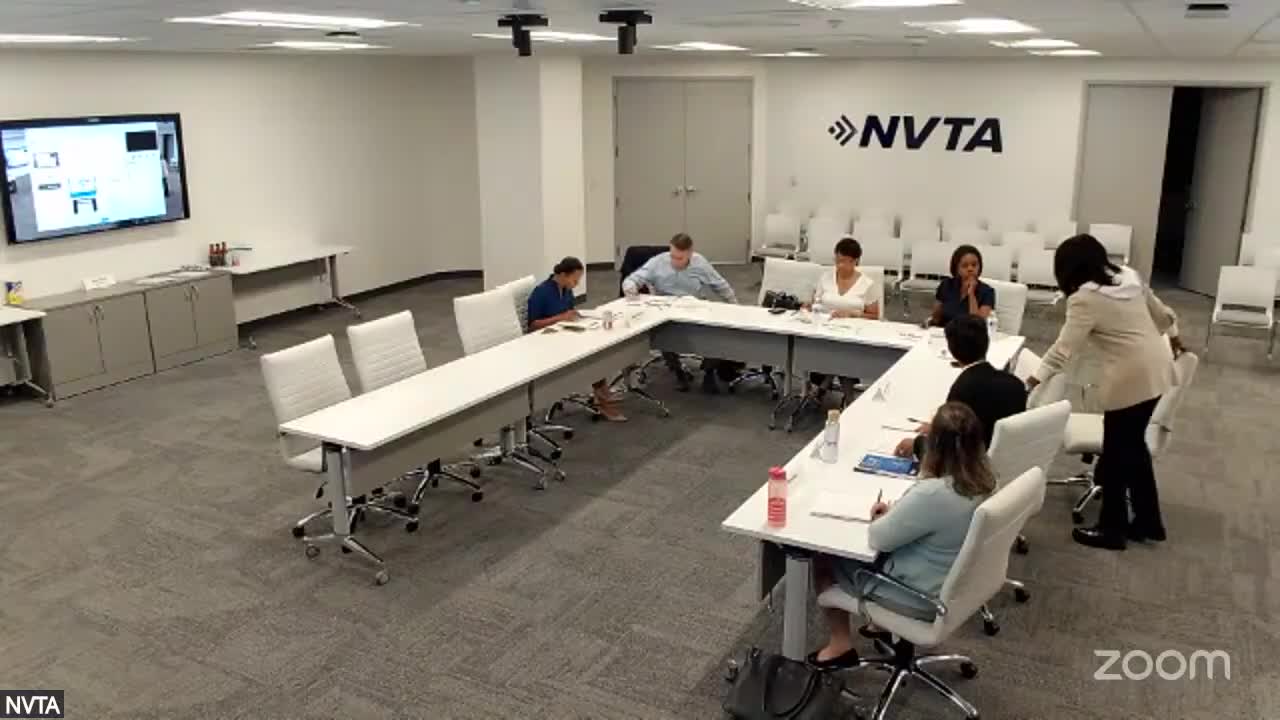
Summary
The Northern Virginia Transportation Authority Planning & Programming Committee voted to recommend the BRT Action Plan, a regional blueprint for 27–28 bus rapid transit lines, to the full Authority. The plan sketches ridership, funding needs and next steps but is not an operational design.
The Planning & Programming Committee of the Northern Virginia Transportation Authority recommended approval of a regional Bus Rapid Transit (BRT) Action Plan at its Wednesday, July 2 meeting, voting to forward the plan and its recommendations to the full NVTA for final action.
The BRT Action Plan lays out a regional vision for roughly 27–28 BRT corridors across Northern Virginia, outlines preliminary ridership and cost evaluations and recommends next steps for funding, coordination and local project development. Committee members approved staff-recommended edits and asked staff to present the revised document to the full Authority for approval.
Srinath Budhuri, senior manager for NVTA’s planning and programming team, said the document is a “blueprint” rather than an operational plan: “It’s the starting point. It’s the foundation.” He emphasized that detailed design, lane changes and operational decisions would occur later at the local-jurisdiction level if and when a corridor moves forward for implementation.
Odalia Levin, project manager with Cambridge Systematics, summarized outreach and analysis results that informed the plan. Levin said the team received 587 completed surveys and more than 1,500 public comments; 72% of survey respondents reported they would be very likely or extremely likely to use the system. The consultants’ high‑level modeling estimates total system ridership by 2045 of more than 47 million annual trips, and that about 27,000 daily trips could shift from driving to transit, yielding potential reductions in congestion, emissions and crashes.
Committee discussion focused on coordination, funding and next steps. Staff described multiple collaborative working groups with jurisdictions and agencies across the region and invited participation from Maryland and District partners to ensure cross‑border consistency. The plan calls for additional technical work at the corridor level, the development of a funding framework to support federal and state grant applications, and guidelines on bus priority, off‑board payment, mobility hubs and zero‑emission vehicle storage and maintenance.
NVTA staff noted existing investments in five BRT corridors already underway in the region (examples cited included Metroway in Arlington/Alexandria; Richmond Highway in Fairfax; and Route 7 linking Tysons to points west) and said many lines evaluated fall into competitive ranges for NVTA funding criteria. Staff also referenced federal funding programs such as the Capital Investment Grants (CIG) program (Small Starts/New Starts) and state funding through SmartScale as potential sources, while noting that more regional advocacy and coordination will be required to access those resources.
After discussion, the committee moved and seconded a recommendation that the full NVTA Board approve the BRT Action Plan with the edits presented. The committee recorded a voice vote in which members answered “aye”; staff reported no opposition or abstentions and characterized the motion as passed. The committee packet and the public engagement materials will be updated and shared with jurisdiction staff, and staff said detailed technical reports and a full public‑engagement summary would be published and provided to local staff for review.
Committee members also received brief reminders about related NVTA business: a call for projects for FY30–31 with project applications due Aug. 1 (portal closes at 5 p.m.) and governing‑body resolutions of support due Oct. 31; and an update on SmartScale and regional advocacy work, including references to HB 2313 and ongoing efforts to improve Northern Virginia’s outcomes in the state funding process.
The Planning & Programming Committee’s recommendation will go to the full Authority at its next meeting for final approval.