Get Full Government Meeting Transcripts, Videos, & Alerts Forever!
Get email alerts on the Bus Rapid Transit topic
No spam. Unsubscribe anytime.
TAC recommends NVTA approve regional BRT action plan
Summary
The Technical Advisory Committee voted unanimously June 18 to recommend that the Northern Virginia Transportation Authority (NVTA) approve a regional Bus Rapid Transit (BRT) action plan that lays out a long-term blueprint, survey findings and next steps for jurisdictions seeking NVTA funding.
At its June 18, 2025 meeting, the Technical Advisory Committee recommended that the Northern Virginia Transportation Authority approve a regional Bus Rapid Transit action plan after a presentation by NVTA staff and a unanimous voice vote.
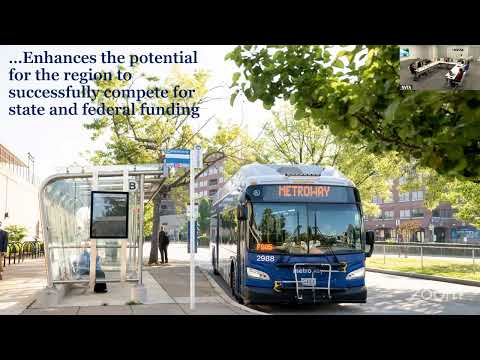
The action plan is a high-level blueprint intended to guide incremental development of an integrated regional BRT system, align local projects with a larger regional strategy and improve competitiveness for state and federal funding. NVTA staff emphasized the plan is not a detailed design or operating plan but would enable later, more detailed engineering and operational work.
NVTA staff said public feedback and technical analysis support the plan’s potential impacts. The staff presentation cited 587 completed surveys, more than 1,500 open-ended comments, and a forecast of about 47,000,000 annual riders by 2045 for a fully implemented regional system. Staff reported that 72% of respondents said they were likely to use the system, 31% left generally positive comments and about 5% left generally negative comments. The analysis also indicated many candidate BRT lines could be competitive for NVTA funding when compared with other project types.
“Think big, start small, build momentum,” NVTA staff presenter Keith Jasper said, summarizing the planning approach. Jasper and staff described five recommended focus areas for NVTA: funding, additional evaluation, knowledge transfer (capturing lessons learned from elsewhere), development of practical design guidelines and an ongoing program of outreach and consensus-building with jurisdictions and the business community.
Committee members asked how the plan would be kept current and how multi-jurisdictional funding requests would be handled. Jasper said alignments, station locations and termini are not fixed and the plan should be periodically reviewed — likely when NVTA next updates its long-range project list. He said NVTA expects funding requests that span jurisdictions to include governing-body resolutions from each affected jurisdiction and clear identification of the operating transit agency or agencies.
Staff recommended jurisdictions consider incorporating BRT corridors and related facilities into their comprehensive plans and local transit plans when appropriate, and to verify that descriptions in NVTA’s project list match the BRT corridors in the action plan so projects are eligible for future programming. Jasper said local jurisdictions would lead project development and service design; NVTA’s role is to provide regional coordination, evaluation and funding.
After discussion, the TAC chair moved that the TAC recommend NVTA approval of the BRT action plan, including the staff-recommended next steps and recommendations. The motion was seconded and approved by voice vote; no opposition was recorded.
The committee was told the TAC endorsement would be forwarded to NVTA’s other statutory committee and to the NVTA planning and programming standing committee, with the goal of NVTA authority action in July.
Next steps identified by staff include further technical evaluation, development of practical guidance (for example, station footprint sizing and branding/wayfinding), continued public outreach, and coordination with state and federal funding processes.