
Commission debates oyster‑ground application off Willoughby Beach as Corps and city raise beach‑renourishment conflicts
Get AI-powered insights, summaries, and transcripts
Subscribe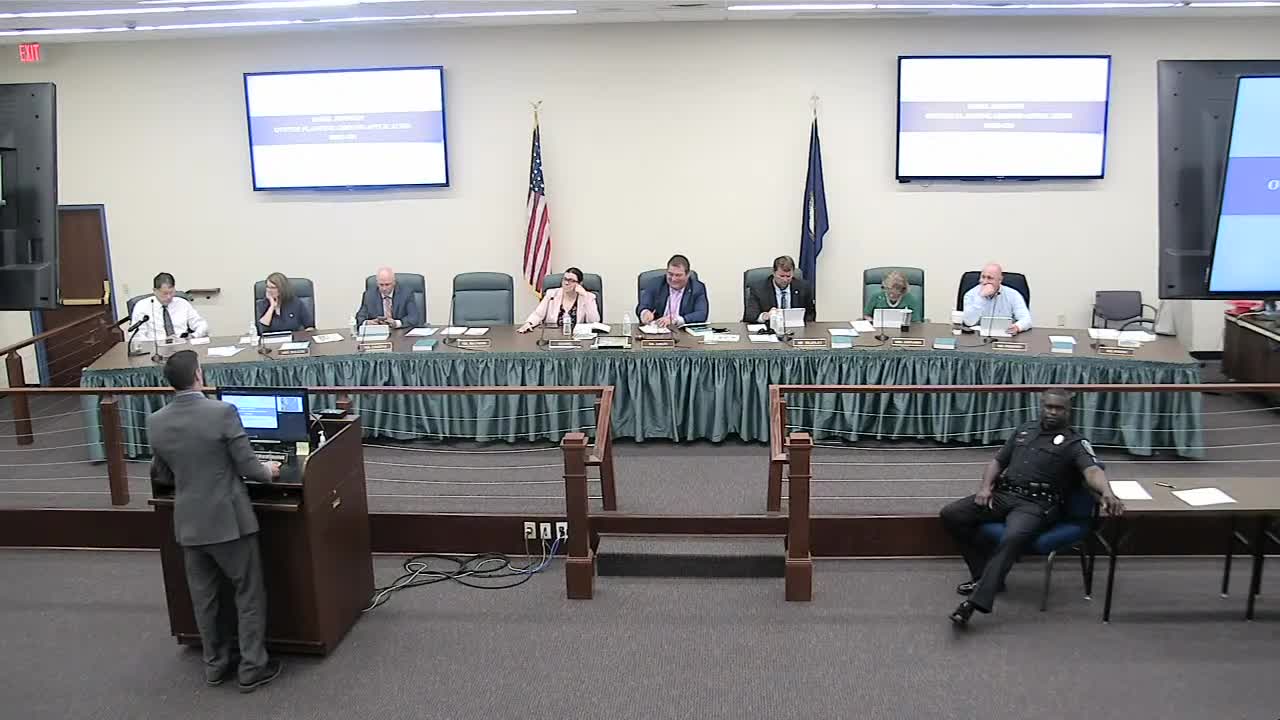
Summary
An application for about 250 acres of oyster planting ground off Willoughby Beach drew protests from the City of Norfolk and the U.S. Army Corps of Engineers, which said planned beach‑renourishment pump‑out locations could conflict with lease sites. Commissioners debated multiple motions but did not reach a straightforward approval.
An application to plant roughly 250 acres of oysters offshore from Willoughby Beach in the City of Norfolk prompted a contested public hearing June 24 and significant pushback from the city and the U.S. Army Corps of Engineers.
VMRC staff presented application 2021016 (applicant Mark Johnson), a proposed on‑bottom planting ground roughly 430 feet off the Willoughby shoreline. Staff reported written protests from the City of Norfolk and the U.S. Army Corps, and identified no existing submerged aquatic vegetation or historical leases inside the proposed footprint. The City and Corps said the lease area overlaps planned pump‑out locations for Corps beach‑renourishment projects and would interfere with an authorized federal shore‑protection project.
Robert Pruse, chief of technical support for the Corps’ Norfolk District, said contractors will anchor dredges and run submerged pump‑out lines from the dredge to the beach as they construct the nourishment template, and those lines and pump‑out anchor locations could cross any lease the commission approves. “This entire area could be open to the dredge operation,” the Corps witness said, adding that any Corps permission to alter or impair the federal project would require a separate evaluation (a Corps 4‑0‑8 review) and could include hold‑harmless terms.
Margaret Kelly, assistant city attorney for Norfolk, told commissioners the city has performed frequent, costly beach renourishment and monitoring since the federal project was authorized and that sand for renourishment is expensive and limited. She warned that placing a large oyster lease in an area that may require nearshore sand placement would create practical and legal conflicts, and that the city should not be put in a position to litigate over damages to the municipal project.
Applicant Mark Johnson told the commission he intended on‑bottom planting and would remove or forgo harvest if required; he said he had paid for a survey and expected to proceed. The Corps, the city and several nearby residents described ongoing beach‑stabilization activity and said shells, if moved shoreward, could increase cleanup costs and affect public beach use.
Commission deliberations were prolonged and several motions failed. A motion to deny the application was put forward and then failed (vote in transcript recorded as two in favor, five opposed). Commissioners discussed alternatives — reducing the acreage, shifting the footprint westward, or tabling for further coordination — but each path raised procedural and technical questions: resizing the footprint inside the already‑advertised survey would require a new survey, another public comment window and additional applicant costs; shifting pump‑out locations is contractor‑dependent; and Corps staff said the proposed pump‑out and dredge operations were not fixed coordinates and could vary by contractor and project year.
At the time the meeting record ends, commissioners had debated a proposal to reduce the requested footprint; staff advised that any reduction inside the advertised footprint would require a resurvey and new public notice. The applicant expressed concerns about additional survey costs but indicated willingness to negotiate. The commission did not adopt a final, uncontested modified footprint during the session and the matter remained unresolved at the meeting’s close.
Why it matters: the case highlights a recurring conflict between shoreline protection (authorized federal and municipal renourishment projects) and proposed shellfish aquaculture on state bottoms. Both use public trust‑owned water and bottom and are high‑stake, infrastructure‑sensitive activities; the Corps and city argued the public‑safety and public‑property interests in beach protection outweigh a new lease in the disputed area. The commission must weigh competing public interests, legal authorities and practical constructability when considering oyster assignments in active nourishment corridors.