Get Full Government Meeting Transcripts, Videos, & Alerts Forever!
Get email alerts on the Surveillance Alpr topic
No spam. Unsubscribe anytime.
Residents urge Piedmont to review automatic license-plate reader policies after local protests
Summary
A school board member and other residents asked the council to review policies, contracts and MOUs related to Piedmont’s 58 automatic license-plate readers to ensure the data is not used to support civil immigration enforcement.
At public forum during Monday’s council meeting, residents asked Piedmont officials to review the city’s governance of automatic license-plate readers (ALPRs), saying surveillance data could be used to infer vehicle occupants’ movements and associations.
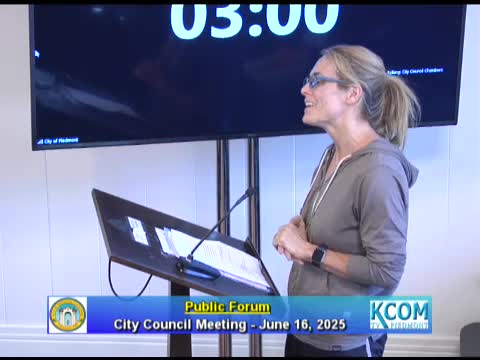
Susie Struble, a member of the Piedmont Unified School District board, read a letter from a group of residents asking the city to clarify policies, practices, contracts and memoranda of understanding related to the city’s 58 ALPR cameras. Struble said the surveillance system collects images and plate reads for all vehicles entering Piedmont and captures time and location information that can reveal movement patterns and associations. She said recent local protests and broader, well-documented instances in which federal immigration enforcement used local surveillance data raised community alarm.
Struble asked the city to “conduct a thorough review of all ALPR-related governance documents, identify gaps, identify any conflicts, look for inconsistencies in policies, practices, contracts and MOUs, and update them as needed.” She praised the “thoughtful and consistent leadership” of Chief Bowers and the police team, and urged the council to ensure local practices do not support civil immigration enforcement in a way that would violate state law or community trust.
City staff received the comment during the public forum period; the speaker requested follow-up. The council did not take action on the request during the meeting. City officials have said questions about ALPR use and jurisdictional limits will involve city staff and the city attorney to identify whether proposed changes are within local authority.