
Organizer proposes $125,000 relocation campaign to repopulate Dixie Fire areas; board asks for formal application and oversight
Get AI-powered insights, summaries, and transcripts
Subscribe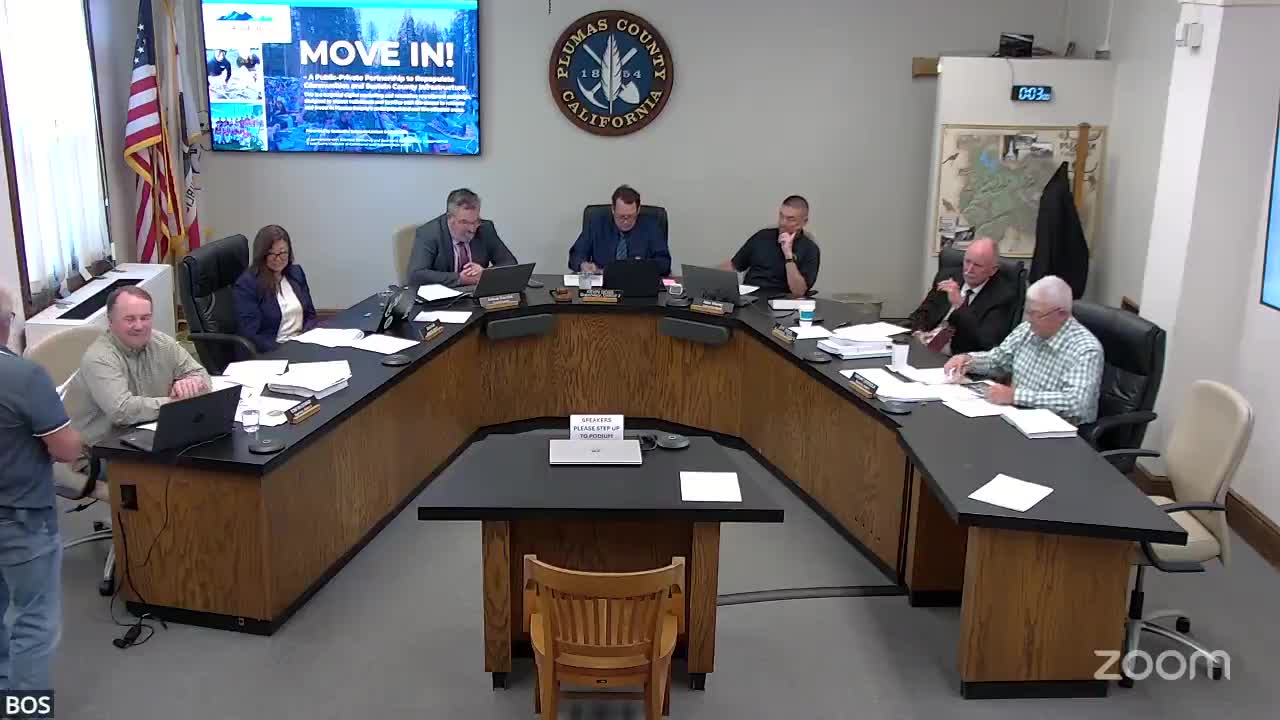
Summary
Samantha, a presenter and local organizer, asked the Plumas County Board of Supervisors on June 17 for $125,000 from PG&E/Dixie Fire settlement funds to launch a pilot relocation marketing campaign that would recruit 10 families and provide incentives, advertising and a concierge to integrate new residents into the county.
Samantha, a presenter and local economic-development organizer, asked the Plumas County Board of Supervisors on June 17 to fund a pilot “move-in” relocation campaign using PG&E/Dixie Fire settlement funds to recruit families and small businesses to live in Plumas County, especially in fire-impacted communities.
Her proposal requested $125,000 total in year one: $62,500 for a county-run digital marketing campaign and lead capture system (about $4,500 per month in advertising), $50,000 for direct move-in incentives (10 households at $5,000 each), and $12,500 for administration and compliance (a 10% fee). She also proposed community “incentives” from local businesses (gift cards, memberships) and a paid local concierge to help new residents integrate, with a three-year minimum-stay requirement tied to repayment of the incentive if the household left early.
The program is modeled on established rural recruitment platforms (Samantha cited MakeMyMove.com as a reference model) and on relocations run in other U.S. communities. Samantha said the pilot is expected to recruit roughly 10 households and that the county could recover an estimated $247,500 in local taxes and school funding over time from those moves; she described a claimed “payback period” as short as six months depending on household size and school funding formulas. “By repopulating Plumas County with people that we want to live here, you are protecting your infrastructure investment,” Samantha said.
The presentation included examples of digital marketing tactics, two short testimonial videos produced by other rural relocation programs, and a proposed program checklist: website and lead capture, targeted ads to remote workers and entrepreneurs, virtual relocation tours and a concierge role to remain engaged for at least three years. Samantha said local partners—including chambers, realtors and the Alamanor/Almanor Foundation—have offered letters of support and in-kind assistance and that the Almanor Foundation would manage funds if the county authorized the program.
Board members and members of the public questioned details and urged at least three changes before any county money is committed: 1) confirm whether an award of county PG&E settlement funds fits the board’s previously adopted Dixie Fire spending priorities; 2) provide a formal application and transparent oversight and reporting plan that would be consistent with county grant procedures and any oversight committee the board establishes for Dixie Fire funds; and 3) evaluate whether to contract with an existing national platform (Samantha cited vendor fees of $20,000–$60,000 for MakeMyMove.com) or to build a county-managed solution.
County staff and several supervisors said the board’s adopted priorities for the PG&E/Dixie Fire settlement currently place replacing county infrastructure losses (public safety facilities, town halls, libraries) first and that decisions about other recovery priorities are to be made after the county completes a fiscal-year review and an oversight process. Margaret Newman, the county’s controller, emphasized the procedural point: “I do not believe that this item is on the agenda to ask for money today,” and said requests for public funds would need to return in the proper format for board consideration.
Residents and local stakeholders who spoke during the discussion generally supported the concept. Business and community leaders said recruitment would help employers, hospitals and schools retain staff and customers; others urged the program to address housing quality, insurance costs and the safety perception of living in wildfire-prone areas.
The board did not vote to allocate funding at the June 17 meeting. Supervisors directed staff and the presenter to return with a formal written request that aligns with the board’s Dixie Fire funding priorities and with clear eligibility, accountability, audit and reporting requirements. The board also asked staff to describe how the proposed pilot would coordinate with the county’s housing council, the Alamanor Foundation and other local partners.
Why it matters: County leaders have already committed resources to rebuilding roads, public-safety facilities and utilities after the Dixie Fire. Officials said recruiting families and remote workers can increase the local tax base and help sustain rebuilt infrastructure and local services but that public funding for recruitment must fit the board’s adopted priorities and an open, auditable grant process.
What’s next: Samantha and her partners were asked to submit a formal application, budget and oversight plan for board and staff review; county staff said the board expects any request for PG&E/Dixie Fire settlement money to follow the priorities and transparent awarding process the board adopted in May.