Get Full Government Meeting Transcripts, Videos, & Alerts Forever!
Get email alerts on the Land Use Rezoning topic
No spam. Unsubscribe anytime.
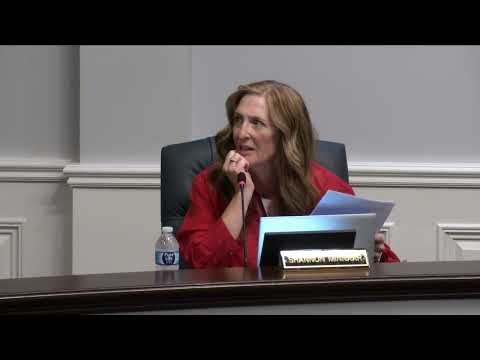
Land use committee forwards Michigan Road PUD with commitments barring TIF and drive‑thrus
Summary
The Land Use and Special Studies Committee voted July 7 to forward Ordinance Z-697-25, a planned‑unit development application for Michigan Road, to the full Carmel City Council with two written commitments: the petitioner will not seek tax increment financing and drive‑through service will be prohibited on the property.
The Land Use and Special Studies Committee on July 7 voted to forward Ordinance Z-697-25, a rezoning and planned-unit development (PUD) application for property on Michigan Road, to the full Carmel City Council with a positive recommendation. The committee accepted two written commitments from the petitioner: that the developer will not seek tax increment financing (TIF) from the City of Carmel or Hamilton County, and that drive‑through service will be prohibited on the property.
John Dobosiewicz, an attorney for the petitioner with Nelson & Frankenberger, told the committee the drive‑through prohibition was included as a commitment so the council’s final action would not require the ordinance to return to the Planning Commission for ratification. "The commitment however would be that notwithstanding those provisions that are in the zoning ordinance or the PUD that drive thru service shall be permitted prohibited on the real estate," Dobosiewicz said during the meeting.
Why it matters: the project would create a large multifamily and retail development on Michigan Road in west Carmel. Committee discussion focused on the scale of the housing component, the timing and size of park impact fees the development will trigger, longer-term tax revenues, and whether the site might instead be pursued for industrial or biotech uses.
Key approvals and next steps: committee members voted to send Ordinance Z-697-25 to the full council for consideration later the same evening. The transcript records a committee vote giving a positive recommendation; no roll-call tally was provided in the land use meeting transcript. If the council adopts the ordinance, the petitioner indicated the next steps would include returning to the Planning Commission with a Detailed Plan and Development Landscape Standards (DPADLS) application and then pursuing demolition and construction, with construction anticipated to begin in 2026.
Project size, fees and revenues: petitioner materials and committee discussion estimate roughly 360 dwelling units (the ordinance lists a maximum of about 364.6 units). Based on the committee exchange, park impact fees at the rate anticipated to apply on Jan. 1, 2026 — $6,029 per dwelling unit — would produce an estimated $2.17 million in park impact fees, payable at issuance of the improvement location permit. The petitioner also provided preliminary tax‑revenue estimates: roughly $1,138,000 per year in property taxes from the multifamily/retail development and about $396,000 annually in Local Income Tax (LIT) from residents; the petitioner cautioned that meaningful city property tax revenue would not arrive until an allocation area expires and tax distributions begin (the petitioner stated that property tax revenue to the city would not be collected until 2031 under the allocation schedule discussed).
Zoning and alternatives: committee members debated whether the site, currently I-1 zoning in much of the area, could or should attract higher assessed‑value industrial or biotechnology users instead of a large multifamily project. Speakers referenced recent GMP/biotech and industrial projects in neighboring jurisdictions and noted that Carmel has limited I‑4 industrial land. Committee discussion included both technical comparisons of assessed value per square foot for different building types and larger planning questions about whether the Michigan Road corridor needs a master plan or different zoning to attract high‑value industrial users.
Infrastructure and planning context: several council members urged broader planning for Michigan Road, saying the corridor lacks a unified master plan and that future changes (including possible state relinquishment of the highway) should be considered. Planning staff noted a prior budget quote of about $95,000 to do a corridor master plan; an estimate given during the meeting for a full corridor master plan and engineering study was roughly $200,000–$250,000. Committee members raised concerns about existing stormwater infrastructure and numerous detention ponds in the area and encouraged council and staff to pursue a corridor study and inter‑jurisdictional coordination with neighboring municipalities.
Voices on record: proponents pointed to design commitments in the Michigan Road overlay and the petitioner’s willingness to pursue a PUD rather than a simpler variance process. Opponents and some committee members pressed for a broader discussion of economic development alternatives and corridor planning. Several councilors noted the project was not adjacent to single‑family neighborhoods and that no formal remonstrations had been filed in the record.
Votes at this meeting: the land use committee voted to forward Ordinance Z-697-25 with a positive recommendation to the full council. The meeting transcript records a motion and second and the committee chair calling the vote; the transcript does not include a roll‑call vote tally in the land use meeting record.
What remains unclear from the record: the transcript and packet included multiple, slightly different statements about park impact fee schedules (fee steps and effective dates) and about some estimated assessed‑value figures for comparable industrial projects. Committee discussion recorded alternative fee schedules depending on permit timing and cited different increments that would apply if permitting occurs before or after the ordinance fee-step dates. The petitioner’s estimates of assessed value and tax revenue incorporated assumptions about Senate Enrolled Act 1 deductions; the precise net fiscal impact on the city in early years was described as contingent on the timing of tax allocation area expiration and state‑level assessment changes.
The council will consider final action on Ordinance Z-697-25 at its business meeting later the same evening, after the land use committee’s positive recommendation.