
Inyo County fire officials warn of above‑normal fire potential for summer 2025
Get AI-powered insights, summaries, and transcripts
Subscribe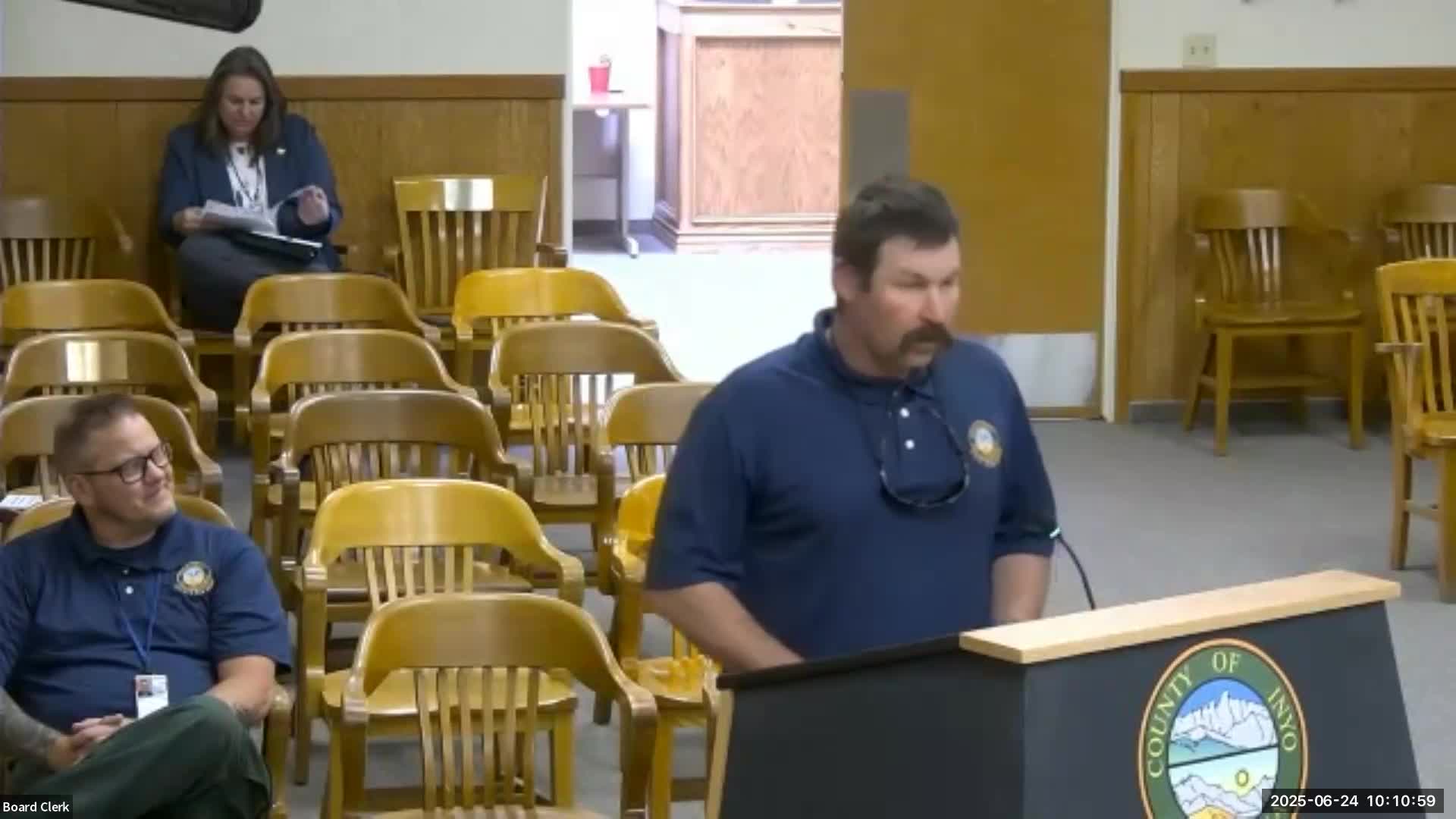
Summary
Interagency fire managers and a National Weather Service meteorologist told the Inyo County Board of Supervisors that drier‑than‑normal fuels, earlier snowmelt and warmer‑than‑average temperatures make above‑normal fire activity likely in the Eastern Sierra this summer.
County and federal fire officials and a meteorologist told the Inyo County Board of Supervisors on June 24 that the Eastern Sierra faces above‑normal fire potential for July through September.
The interagency fire management team described staffing and equipment availability for the summer season and identified ongoing gaps—especially in dispatch positions—while the meteorologist outlined fuel moisture, snowpack and large‑scale climate drivers behind the seasonal outlook. Officials said lower than average precipitation this past winter, accelerated snowmelt this spring and generally warmer temperatures have left many fuels drier than normal, increasing the region’s fire risk.
Why it matters: The Eastern Sierra includes communities and infrastructure spread across roughly 2.5 million acres of federal lands in Inyo and Mono counties. Above‑normal fire activity can strain local suppression resources, affect public safety, recreation and travel, and lengthen the fire season into fall without sustained winter rains.
Fire managers reported their current operational picture: most engines serving Inyo County will be staffed for the season, some Mono County engines remain understaffed, crews (including a hotshot crew in Bishop) are staffed, and aircraft positions are filled in Independence and Bishop. The BLM/Forest Service interagency unit is relying on temporary or contract dispatchers from other agencies and has explored remote dispatching to fill shortages. Officials said the organization had vacancies at multiple ranks and that some retirements are expected this summer.
A meteorologist from the Southern California predictive services unit summarized the climate and fuels indicators used for seasonal forecasting. He said northern Pacific sea surface temperature patterns and warm waters in the Atlantic basin favor a continued hot signal across the interior West. Seasonal climate models indicate above‑average temperatures for much of the region and near‑normal precipitation chances for July–September, a combination that increases lightning‑start risk when intermittent monsoonal moisture produces thunderstorms followed by hot, dry days.
On fuels, the briefing showed persistent dryness in 100‑ and 1,000‑hour dead fuel moisture for the Eastern Sierra, though live fuels (for example high‑elevation sage) retained near‑normal moisture in some places. The speaker noted that lower than average snowpack and an earlier meltout increase receptivity in mid and higher elevation fuels later in the season.
Board members asked about the triggers for restrictions and stages of preparedness. Fire management said decisions on formal restrictions (for example a Stage 2 closure) rest with the forest supervisor and BLM field manager, who weigh resource availability and regional incident activity; a drawdown of resources statewide (preparedness level 5) is the typical condition that leads to the most severe restrictions. Officials said they did not anticipate that level imminently but said July is an early period for such conditions to emerge.
The presenters outlined operational responses and public‑facing actions the agencies take before and during the season, and gave contact information for fire‑weather support. Board members and presenters also discussed longer‑term staffing solutions for dispatch, including consolidation with neighboring units, and emerging data and modeling tools (the presenters noted growing use of machine learning in weather modeling).
Looking ahead: Officials recommended continued public preparedness and close coordination among county, BLM and Forest Service managers. They also said staffing and dispatch remain the most acute operational shortfalls to watch this season.