
Butte County weighs expedited sediment removal at 5‑Mile Basin amid permitting risks
Get AI-powered insights, summaries, and transcripts
Subscribe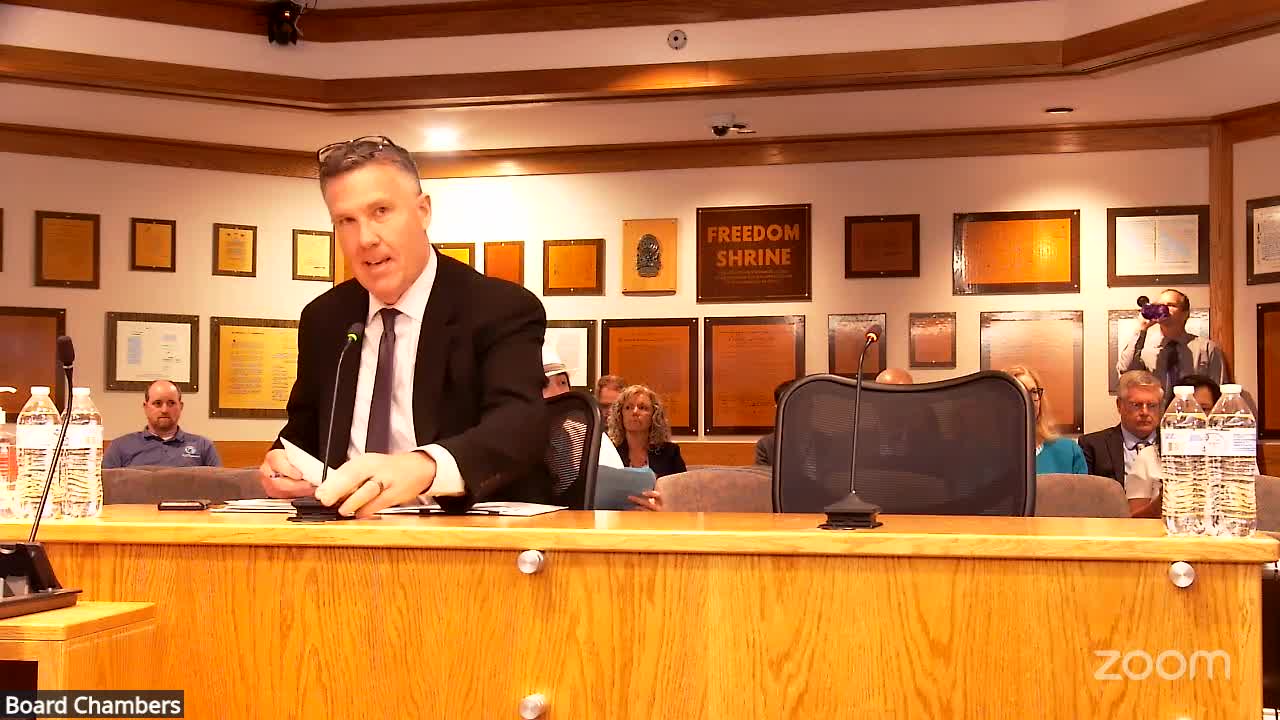
Summary
Butte County public works presented an accelerated plan on June 24 to remove sediment from the 5‑Mile Basin this summer and fall after post‑fire erosion sharply reduced flood capacity, asking the Board of Supervisors for direction on expedited contracting and interagency outreach.
Lede Butte County public works presented an accelerated plan on June 24 to remove sediment from the 5‑Mile Basin this summer and fall after post‑fire erosion sharply reduced flood capacity, asking the Board of Supervisors for direction on expedited contracting and interagency outreach.
Nut graf Director of Public Works Joshua Pack told the board the county faces a narrow window to perform substantive removal before the rainy season; staff favors a two‑phase approach that aims to begin field work around Aug. 15, 2025, but warned that state and federal permits and environmental review are unlikely to be complete in time. The board signaled informal support to pursue faster procurement options while staff continues seeking regulatory approvals and city support.
Body Joshua Pack, director of public works, said the department has selected a consultant and is proceeding with advanced survey work and early regulatory engagement. Pack said staff’s current planning divides the effort into an immediate Phase 1 (work possible in 2025) and a longer Phase 2 for a sustainable long‑term solution. He said crews need the upgraded topographic survey because the Park Fire and subsequent atmospheric rivers altered basin conditions.
Pack summarized prior modeling results: a pre‑fire county study estimated about 67,000 cubic yards of material had been deposited in the basin; post‑fire modeling and winter storms showed the basin had lost most of its freeboard during a 10‑year event and in places came “perilously close to overtopping” infrastructure. He added the second year after a major wildfire often presents increased erosion risk because root structure has decayed and vegetation has not reestablished.
On funding and legislative support, Pack said congressional staff had pursued an earmark of about $5.6 million to support a long‑term project and Assembly Bill 1000 was drafted to expedite CEQA in this case but appeared unlikely to advance. He said staff has also engaged state and federal partners, and that prior emergency work after the Park Fire informed realistic options for emergency contracting and environmental protection measures.
Pack described three delivery options if the board wants action this construction season: (1) design‑bid‑build (standard, too slow); (2) job‑order contracting (uses prequalified contractors; requires board approval for orders above $500,000 unless waived); and (3) emergency contracting (fastest but requires an emergency legal basis and carries risk if permits are not in place). He said, “I am not overly confident that we are going to get the necessary permits and approvals from our partners in time to deliver a project this construction season,” and warned of potential legal, environmental and reputational risks if work proceeds without final approvals.
Board members pressed practical and jurisdictional questions. Supervisors and staff discussed whether the City of Chico should assume responsibility for the drainage service area (CSA 24) through a LAFCO reorganization; Pack and county counsel explained CSA 24 predates LAFCO processes and that roughly 90% of parcels in CSA 24 currently lie within city limits, but transfer would require negotiations and possibly a LAFCO action. Pack said he has asked the City of Chico for formal support or partnership and had not yet received a firm commitment.
Several supervisors said they were more comfortable using county public works staff and existing county authorities than shifting responsibility to the city without cost‑sharing. Multiple board members expressed urgency about reducing flood risk before the next winter and favored moving forward on an expedited contracting path that balances legal risk and public safety.
Outcome and next steps Rather than adopt a formal resolution, the board gave staff informal consensus—with multiple “head nods” on the record—to pursue job‑order contracting and related expedited procurement as a near‑term pathway while continuing regulatory outreach and seeking formal support from the City of Chico. Pack said staff will return with more detailed survey results and cost estimates and will continue to coordinate with state and federal partners and Paradise Irrigation District where projects interconnect.
Ending Pack told the board he expects a more detailed survey report in the next two weeks that will provide updated quantities and refine the amount of work feasible before winter; he emphasized the county will continue to pursue a longer‑term solution for periodic maintenance and funding mechanisms if short‑term removal proceeds.