Get Full Government Meeting Transcripts, Videos, & Alerts Forever!
Get email alerts on the Employee Benefits topic
No spam. Unsubscribe anytime.
Council declines to review Aptus Financial student-loan assistance contract after hours of debate
Summary
After extended debate, the Arkansas Legislative Council voted not to review a proposed contract with Aptus Financial (Aptus) for services to help state employees navigate federal Public Service Loan Forgiveness processes; proponents said the service was low-cost to the employee-benefits cash fund, opponents cited fiscal priorities.
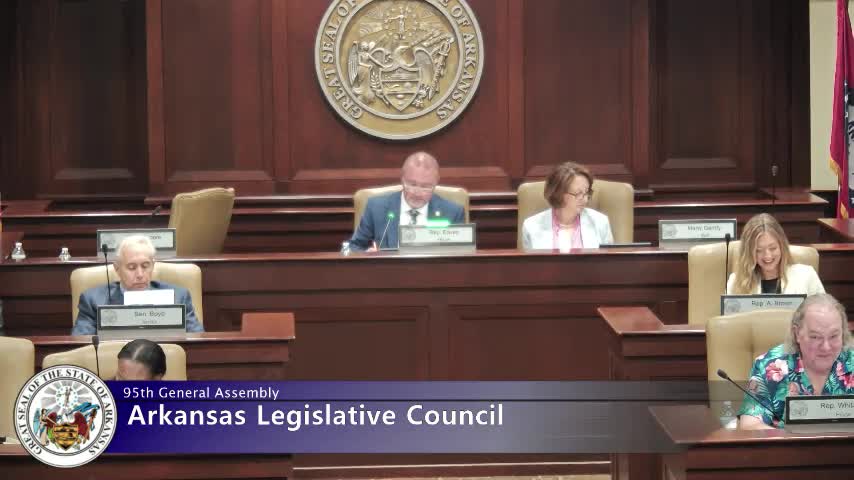
The Arkansas Legislative Council declined to review a contract with Aptus Financial to provide student-loan navigation services for state employees after extended debate and a roll-call review motion failed on June 19.
Why it matters: The contract was presented to the personnel subcommittee and recommended for review; it would have allowed employees access to consultants who help navigate the federal Public Service Loan Forgiveness (PSLF) and related repayment options. Proponents, including members of the House and Senate, said the service is low-cost to the state employee benefits cash fund and helps recruit and retain public employees. Opponents said the state had recently approved a $140 million pay increase for employees and questioned using employer-paid funds for third-party consultants.
Representative Roseanne Warren, reporting the personnel subcommittee’s work, said the committee reviewed a contract between the Employee Benefits Division and Aptus Financial that would provide services to state employees to help navigate the Public Service Loan Forgiveness program. Representative Pilkington, who said she had paid for a private consultant herself, urged approval and described the program’s complexity: “I spent $500 of my own money to hire a consultant to do this.”
Representative Kavanaugh and others argued against using state-provided funds and said employees could use payroll deduction if they wanted consultant services. Senator Davis and others countered that the contract would be paid from a state-employee cash fund, not from general-tax receipts; Davis said, “We are not using tax dollars for this contract. This contract is being paid out of a cash fund that state employees pay into. It is not tax dollars.” The Employee Benefits Division staff told the committee their estimate of eligible employees varied; different members cited figures ranging from about 3,000 eligible to approximately 7,200 or roughly 30% of the state workforce depending on definitions.
A motion to have the council review the Aptus contract and to split the chambers for a roll-call vote passed the threshold to force a roll-call; after debate the roll call on whether to review the contract failed and the item was not reviewed. An agency representative noted the agency could bring the contract back to the council at a later date.
Outcome: The council did not approve review of the Aptus Financial contract at the June 19 meeting. Several members said they hoped the agency would return the contract for future consideration.