Get Full Government Meeting Transcripts, Videos, & Alerts Forever!
Get email alerts on the Tax Increment Financing topic
No spam. Unsubscribe anytime.
LaSalle County staff reviews TIF portfolio; county receives reimbursements from most districts
Summary
County staff presented an inventory of LaSalle County's tax-increment financing (TIF) districts, noting 37 total districts and intergovernmental agreements with 31; committee members pressed for clarity on missing agreements, reimbursements and surplus timing.
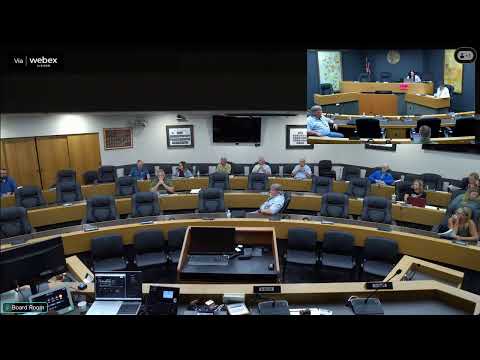
Julie, a county staff member, briefed the LaSalle County Finance and TIF Committee on the county's current tax-increment financing portfolio during the July 8 meeting. "TIF districts are created as [an] economic development tool used to spur development or redevelopment of old and abandoned properties," Julie said, and she explained how tax increments are tracked once a TIF base is established.
The county currently has 37 TIF districts and intergovernmental agreements with 31 of them, Julie said. The committee focused questions on why six districts have no county agreement, and on how reimbursements and surpluses are recorded. "The reports ... show the start and the end years of the TIF districts, the number of parcels, the extension of the increment and the amount of reimbursement to the county per intergovernmental agreement," Julie said.
Committee members asked about specific districts. Julie said some municipalities never negotiated agreements at the TIF formation stage and gave Oglesby as an example. She identified Utica as a very small district and said a Peru industrial district had recently had joint review board activity but that the county had no agreement in place with the Peru Mall 1 district. On Ottawa-area TIFs that were recently extended, Julie said the extension terms will change payouts once the extension begins and that signed agreements may already exist for some extensions.
On county receipts and surplus treatment, Julie told the committee that reimbursements to the county are listed in the report and that surplus funds flow into fund 28. "Surplus goes to fund 28, but surplus can be used for anything; if it's capital, it can only be used for capital improvement," she said. Julie also said amounts on the reports can change throughout the tax cycle because of corrected bills, trustee redemptions, PTAB decisions and trustee pickups at tax sale; she told the committee most surplus is received after the final distribution and typically arrives in January through March.
Committee members requested continued tracking and clearer documentation for individual TIFs, including which districts lack intergovernmental agreements, which agreements cover extensions, and whether recent extensions will produce signed reimbursement agreements.
Julie provided the committee with a multi-page packet that lists active and dissolved TIFs, start and end years, parcel counts, extension amounts, and reimbursement totals per agreement. Committee members asked that staff continue to note changes in extensions and reimbursements as the tax season progresses.
Looking ahead, members discussed the county's leverage if a municipality asks for an extension but did not include an intergovernmental agreement at formation; Julie said the county can negotiate when municipalities seek an extension. Several members asked that staff flag TIF districts nearing expiration so the county can monitor extension notices and joint review board activity.
The committee did not take a formal vote on TIF policy or agreements during the meeting; the presentation was an informational report and the committee asked staff for follow-up detail.