Council approves Michigan Road PUD after commitments, amid infrastructure concerns
July 08, 2025 | Carmel, Hamilton County, Indiana
This article was created by AI summarizing key points discussed. AI makes mistakes, so for full details and context, please refer to the video of the full meeting. Please report any errors so we can fix them. Report an error »
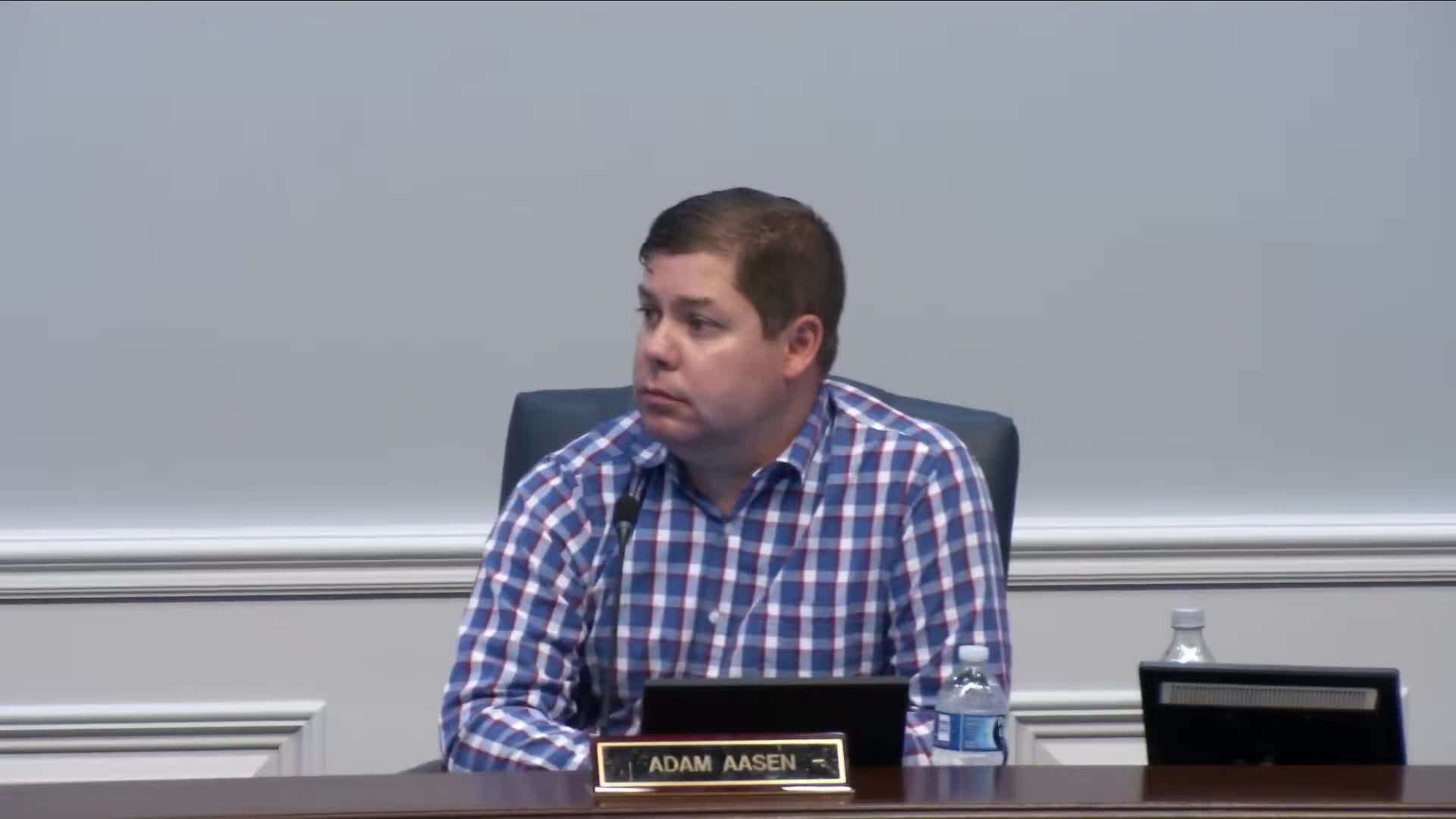
The vote followed a presentation by John Davosiewicz of Nelson & Frankenberger, who represented the petitioner and said the developer, Edward Rose & Sons, had added two commitments: no request for tax-increment financing and no drive-through uses for the commercial frontage along Michigan Road. The council then voted 5-4 to adopt the ordinance with those commitments.
Councilors and staff said the project—proposed as multifamily housing with street-level commercial—would redevelop an underused industrial corridor but raised unresolved questions about traffic on US 421, stormwater and whether the city had pursued higher-value industrial or life-science uses for the area. Councilor Rich Taylor warned the council that the city could be missing opportunities to attract higher-paying employers; Councilor Tom Snyder and others emphasized public-safety and infrastructure shortfalls on the corridor.
“While this may not satisfy the desires of everybody, what this does do is put just under $2,200,000 into the parks capital improvement account by the middle of next year,” Councilor Snyder said during debate. “For all the downsides ... I cannot overcome the $2,200,000 going to our parks department.”
Opponents argued the plan conflicted with the city’s long-term transportation expectations for the corridor and would place new residential density adjacent to an industrial area and a state-controlled highway without coordinated state improvements. Councilor Taylor cited state rules affecting assessed value and tax revenue and said the site’s county TIF allocation and recent changes in Indiana law mean the city would not receive normal property-tax revenue from the new units for several years.
Supporters said the development follows the city’s overlay and comprehensive-plan goals for the corridor, preserves green space and would bring private investment to a part of Carmel that has had little compatible redevelopment. Councilor Menard, the council’s plan-commission representative, said the project aligned with the Michigan Road overlay and noted the petitioner’s long-term ownership record in Carmel.
The ordinance was introduced as Z-697-25 and returned from the Land Use and Special Studies Committee with a favorable 3–1 committee vote. After the council adopted the two developer commitments at the meeting, the final roll-call voice vote showed ayes from Councilors Joshi, Snyder, Locke, Menard and Worrell and nays from Councilors Green, Taylor, Austin and Ayers.
Action on the PUD does not create any immediate capital project beyond the developer’s commitments; councilors asked staff to study corridor-level transportation, stormwater and public-safety needs tied to the project and to consider whether incentives or planning should be used to attract higher-value commercial uses to nearby vacant or underused parcels.
The petitioner’s attorney stated the developer would not pursue TIF from either the city or Hamilton County and would not allow drive-through businesses on the Michigan Road frontage—commitments the council added as formal amendments before the final vote. The council did not adopt a specific plan for using the resulting park fees beyond the standard parks capital process discussed in council meetings.
The measure carried amid continuing calls from multiple councilors for a corridor study, shared planning with neighboring jurisdictions and clearer economic-development strategy before major new residential approvals in the US 421/Michigan Road area.
Don't Miss a Word: See the Full Meeting!
Go beyond summaries. Unlock every video, transcript, and key insight with a Founder Membership.
30-day money-back guarantee
Sponsors
Proudly supported by sponsors who keep Indiana articles free in 2025

