WPPI Energy outlines power supply, transmission and member services to Two Rivers officials
July 08, 2025 | Two Rivers, Manitowoc County, Wisconsin
This article was created by AI summarizing key points discussed. AI makes mistakes, so for full details and context, please refer to the video of the full meeting. Please report any errors so we can fix them. Report an error »
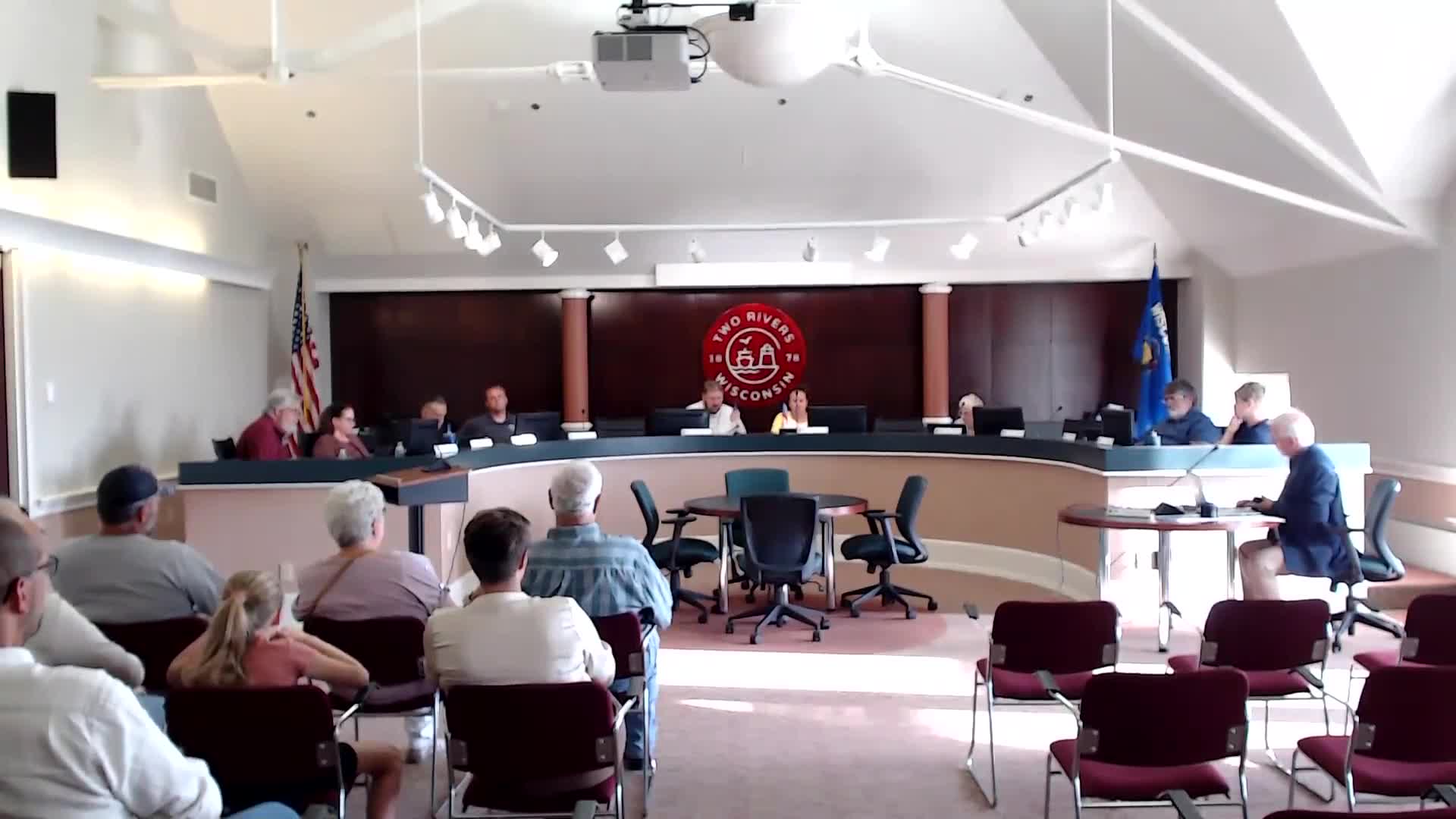
Hanrahan said WPPI, a public power joint action agency with 51 members, is forecasting roughly 400 megawatts of new resource need to be addressed between now and about 2033 and is pursuing a mix of renewables and dispatchable resources. "We're going to be looking at, and updating our portfolio quite substantially," Hanrahan said.
The presentation, introduced by City Manager Greg (last name not specified) and Electric Utility Director Brian Dellen, emphasized three areas: power supply, services WPPI provides to member utilities, and advocacy work. Hanrahan said WPPI’s portfolio includes natural gas, coal, nuclear, solar, wind and some hydro; the agency’s annual budget is about $500 million, largely driven by power-supply cost.
Hanrahan outlined two coal-fired resources that will change operations in the coming years — the Boswell plant in north-central Minnesota and the Elm Road Generating Station in Wisconsin — noting co-owners have signaled fuel changes by 2035. He said WPPI issued requests for proposals last year and will solicit again, "talking with folks about renewables and natural gas units," and that some negotiations with project partners are underway.
On transmission, Hanrahan described a large Midcontinent Independent System Operator (MISO) transmission build-out across the Midwest and noted WPPI’s strategy of investing in transmission—including ownership stakes in the American Transmission Company and other projects—to reduce members’ long-term costs. "As an owner, we're tied to the same return that the other owners make on their investment. The difference is we use those dollars to lower our overall costs," he said.
Hanrahan also described member services WPPI offers at lower cost than a single utility could achieve, including a meter-tech subscription program and a GIS mapping service for electrical system assets. He said 2 Rivers already subscribes to the meter-tech program and that GIS services have drawn rapid uptake among members.
Council members and staff asked about the relative cost of different resources, grid reliability during outages, battery storage prospects and hydroelectric resources. Hanrahan said renewables are currently the cheapest resources on an energy-cost basis, and that WPPI uses a rate-stabilization fund to soften price shocks from major outages or high market prices.
On policy, Hanrahan said WPPI, its members and national groups worked to preserve tax‑exempt financing in recent federal budget discussions, and he described state-level legislation establishing a collaborative process to examine advanced nuclear projects in Wisconsin. He invited council members to WPPI’s 45th-anniversary event in September at Lambeau Field.
The briefing ran roughly a half hour; it was an informational presentation and no formal council action was taken on the topics Hanrahan presented.
View the Full Meeting & All Its Details
This article offers just a summary. Unlock complete video, transcripts, and insights as a Founder Member.
30-day money-back guarantee
Sponsors
Proudly supported by sponsors who keep Wisconsin articles free in 2025

