
Randolph County accepts 2024–25 tax settlement; officials outline collection rates, delinquencies and audit practices
Get AI-powered insights, summaries, and transcripts
Subscribe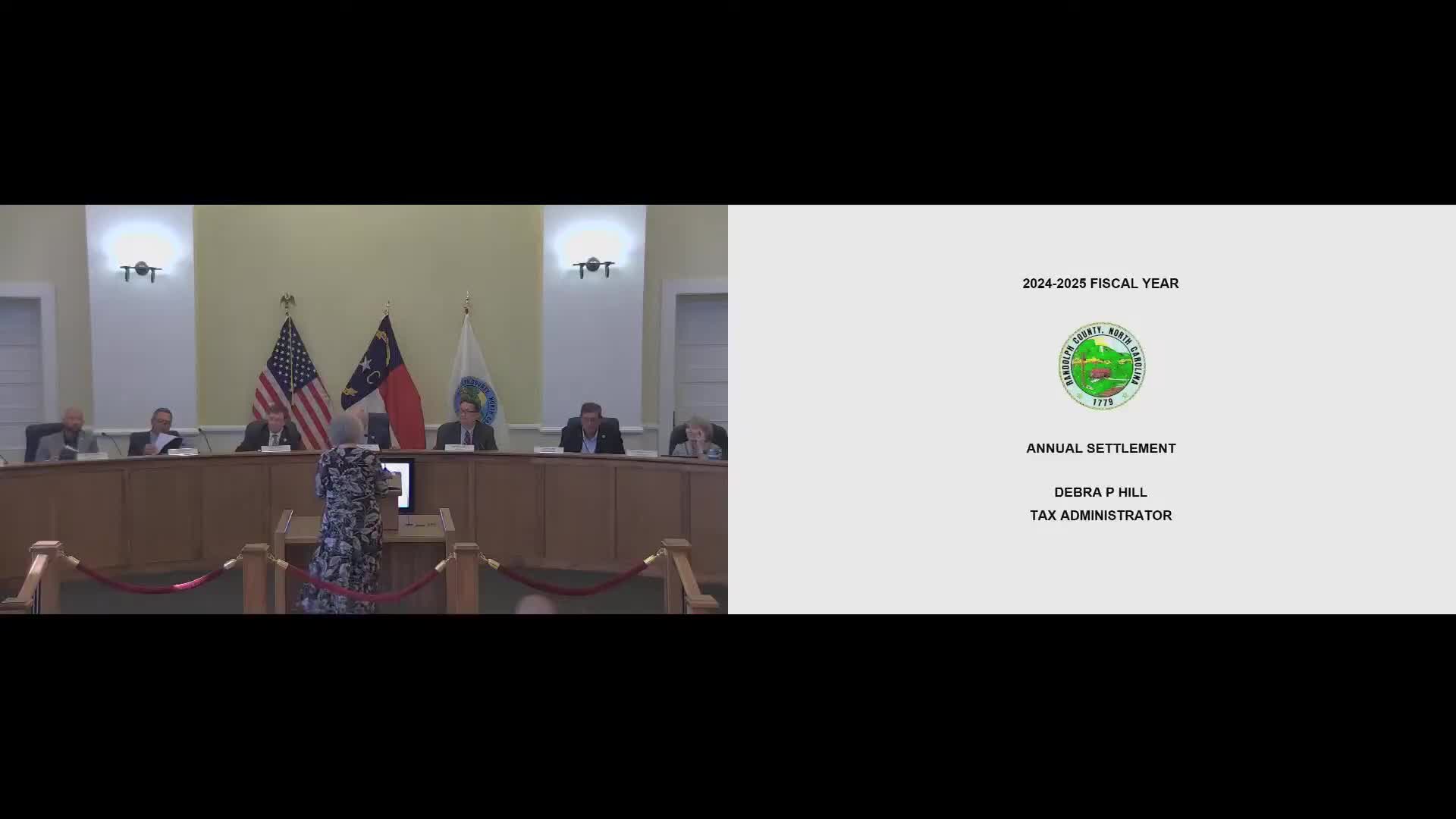
Summary
The Board approved the tax collector's annual settlement and charge to collect for the 2024–25 fiscal year; staff reported a 99.12% overall collection rate and described delinquency, foreclosure and business/farm audit practices.
The Randolph County Board of Commissioners voted to accept the tax administrator’s annual settlement report for fiscal year 2024–25 and formally charged the tax collector to collect taxes for the coming year.
The county’s tax administrator, Deborah Hill, briefed commissioners on collection performance and current delinquencies. "The 2024–25 overall collection rate for all districts was 99.12," Hill said. She reported the county’s own tax collection rate was 99.06 percent and that delinquent taxes remaining for 2024 totalled $1,266,973.27, with delinquent taxes across all years at $3,160,008.59; $95,127.63 of that total is in bankruptcy.
Why it matters: Commissioners rely on the tax office’s settlement to authorize collection tools and foreclosures. Hill said staff pursued 51 foreclosures last year; 16 properties sold at courthouse steps, and the county collected $153,101.79 from foreclosures and related fees.
Discussion highlighted collection tactics and audit practices. Hill described aggressive collection tools available under state law, including wage garnishment and bank attachments, and said the tax office had used deputy assistance to deliver delinquency notices directly at some properties. She also explained the county’s use of a third-party firm to perform compliance reviews of business personal property and farms, saying such reviews help ensure businesses list depreciable equipment properly. "We hire a third party company... they do the leg work... but nothing is billed or refunded until it's verified and looked at by one of our staff members, and I sign off on it," Hill said.
Residents and a commissioner raised concerns that auditing farm equipment can create a competitive disadvantage for local farmers compared with neighboring counties; Hill said the county includes farms because they operate as businesses and that she is "treating them fair and equal the same as all other citizens." She added the assessor will research neighboring counties’ treatment of poultry houses and equipment.
Action: The board adopted the statutory charging language directing the tax administrator to collect the taxes listed in the tax records and declared the taxes a first lien on taxpayers’ real property; a motion to accept the settlement was made and seconded and passed by voice vote.
Ending: Hill told commissioners staff will continue enforcement and collection efforts and follow up on outstanding large business personal property bills; she noted collection work continues after fiscal-year close and encouraged timely payments to avoid compounded delinquencies.