
Newsom, county and federal officials outline rebuilding blueprint six months after Southern California fires
Get AI-powered insights, summaries, and transcripts
Subscribe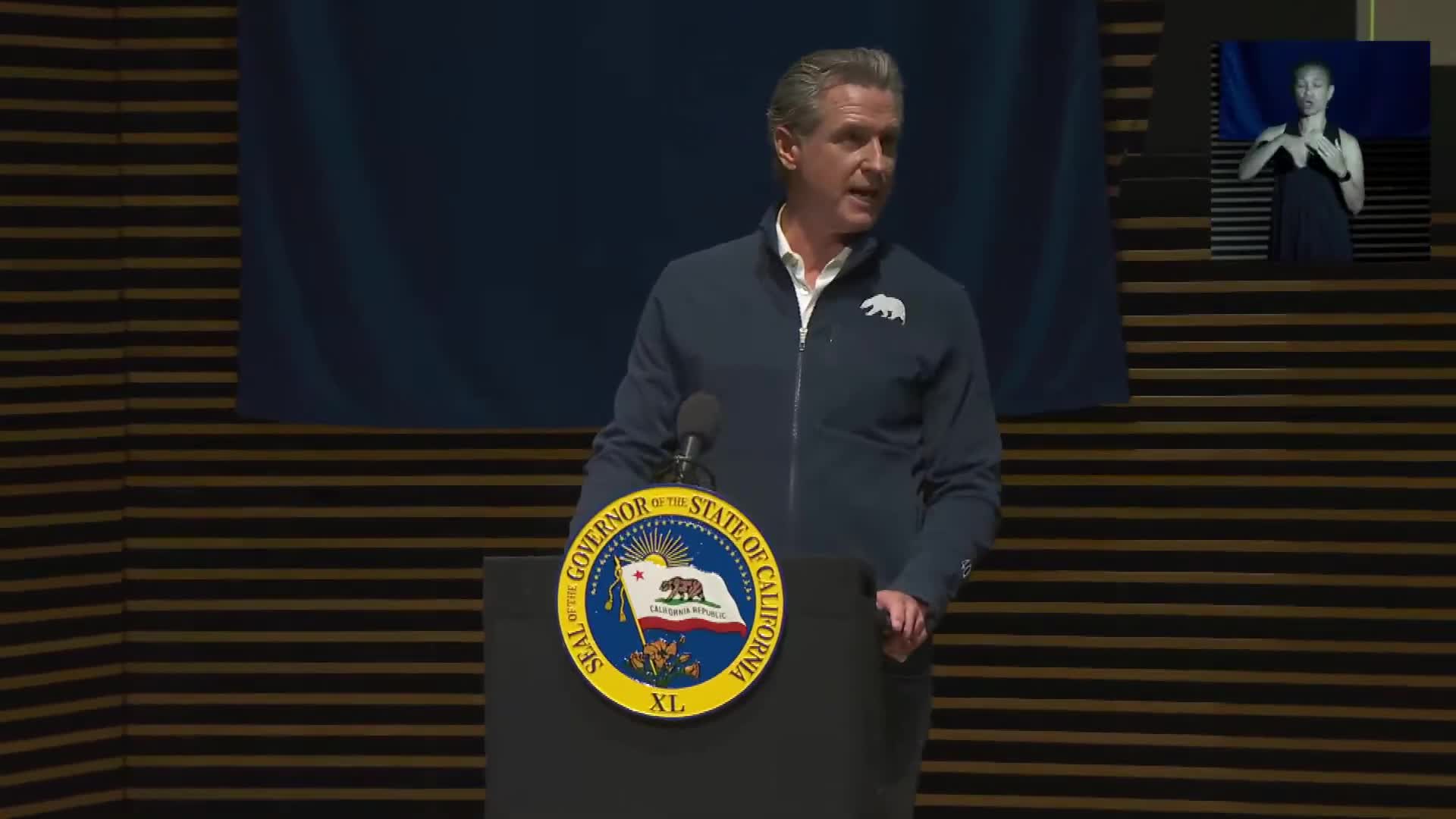
Summary
State, county and federal leaders said debris removal is nearly complete and outlined financing, permitting and workforce measures to speed rebuilding; Governor said he will sign a new executive order to ease some permit and code requirements and an AI permitting pilot will begin in mid‑July.
Governor Gavin Newsom and Los Angeles County leaders on July 7 gathered at Pasadena City College to mark the six‑month anniversary of the winter wildfire complex and lay out next steps for recovery, saying debris removal is largely complete and announcing new steps to speed rebuilding.
Why it matters: county and state officials said the pace of cleanup and the scale of federal and state funding have been historically fast, but many homeowners, renters and small businesses remain underinsured or uninsured and face permit and supply‑chain bottlenecks that could slow reconstruction.
Newsom said debris removal has moved “at historic pace,” and officials offered the following figures during the event: roughly 12,048 homes were destroyed in the affected burn areas; about 96% of household debris had been removed; federal resources for cleanup and recovery include more than $2 billion already invested, some $3 billion in SBA loans, roughly $370 million in direct assistance, and a $2.5 billion state allocation approved in a special session for relief in the burn scars. “We advanced a lot of innovative strategies and created the first of its kind digital disaster recovery center,” Newsom said, describing online tools for survivor engagement and data reporting.
Los Angeles County Supervisor Kathryn Barger described a six‑pillar “LA County Forward” blueprint for rebuilding that she said prioritizes making reconstruction financially possible, accelerating permitting and inspections, expanding access to builders and materials, rebuilding utilities, mobilizing the workforce and restoring community services. “Rebuilding our communities is not and will not be the sole burden on our survivors,” Barger said, adding the county has approved deferrals of permit fees in unincorporated areas and will pilot faster permit review and self‑certification for licensed professionals.
Federal and congressional leaders at the event urged additional national assistance. U.S. Senator Alex Padilla warned that California is entering another peak wildfire season and said preparedness remains urgent: “Fire season is now year round in California, but peak fire season is just beginning.” Congress members present backed a governor request for supplemental federal funding; Congresswoman Judy Chu said FEMA had delivered more than $140 million in direct aid to survivors and urged continued federal support, while Representative Brad Sherman cited 11,000 SBA loans totaling about $3 billion and said the delegation supports Newsom’s $40 billion supplemental disaster package.
Permitting, codes and an executive order: Newsom said he would sign a new executive order at the end of the event that responds to city and county requests, including waivers for some non‑life‑safety code updates, additional CEQA (California Environmental Quality Act) adjustments and measures to allow more flexible “like‑for‑like” reconstruction beyond a 110% footprint in some cases. The governor also described a pilot for an AI‑assisted plan‑check tool — which state and philanthropic partners are funding — with an initial deployment slated for July 15 to accelerate plan approvals.
Insurance and gaps: Officials acknowledged persistent gaps for people who are uninsured or underinsured. Newsom said the state’s insurance commissioner is investigating claims and that the administration is pursuing both state policy changes and federal supplemental aid to cover gaps. Rep. Sherman said current grants and loans still fall short for many homeowners, noting the need for more federal assistance for uninsured households and small businesses.
Investigations and legal exposure: Multiple speakers said independent investigations into the fires’ origins and the emergency response are underway and expected to report in August; Newsom cautioned that any finding of utility liability could stress the state wildfire fund created after PG&E’s bankruptcy and said the state is “stress testing” potential impacts on utilities and rates.
Workforce and supply chains: Officials emphasized workforce development through community colleges and state programs, bulk purchasing of materials, and preapproved designs to reduce construction delays. Pasadena City College and other community partners were cited as training and logistical partners. Newsom and Barger also noted coordination with nonprofit rebuilding groups such as Habitat for Humanity and local foundations that are providing preapproved plans and other support.
Points of tension: Speakers criticized federal political actions that they said have disrupted National Guard availability and faulted proposals to cut FEMA funding. Several officials urged Congress not to politicize disaster aid and reiterated that additional federal support is still needed to address gaps for survivors.
What remains unresolved: Officials did not provide a complete count of households still displaced, the exact timetable for final approvals for all outstanding parcels, nor a full breakdown of how the $2.5 billion state allocation and federal grants will be targeted to underinsured homeowners vs. renters and small businesses; several speakers said those details are still being worked out.
The event concluded with Newsom saying he would sign the announced executive order immediately after the press conference and with county and federal partners committing to continue coordinating recovery efforts.