Get Full Government Meeting Transcripts, Videos, & Alerts Forever!
Get email alerts on the Care Worker Wage topic
No spam. Unsubscribe anytime.
Care workers press legislature for $25 enhanced minimum wage to ease staffing crisis
Summary
SEIU, 1199, AFL-CIO and care workers testified to the Joint Committee on Healthcare Financing in support of S.877, urging a legislated enhanced care-worker minimum wage (proposed around $24.25–$25) indexed to inflation to recruit and retain direct care workers across home care, mental health, DDS and group-home settings.
Speakers from labor unions, care agencies and direct care workers testified before the Joint Committee on Healthcare Financing in support of S.877, an "enhanced care worker minimum wage" bill that would set a floor for pay in home- and community-based services and certain human-service contracts.
Why it matters: Testimony described widespread staffing shortages across the direct care continuum—home care, group homes, community mental health and crisis response—that advocates linked directly to wages and working conditions. Witnesses argued that improved pay is necessary to retain staff and prevent service interruptions for vulnerable clients.
Union leaders and members described the urgency. Dan Hoffer, political director for SEIU Local 509, said vacancy rates in some group homes reached 30 percent during the pandemic and remain elevated; he called for an "enhanced care minimum wage" modeled on approaches in California and Minnesota. Thomasina Levesque, a Community Health Link worker, testified that many care workers "have to take on second and even third jobs" and that establishing a $25 minimum wage would be "a critical step toward retaining and recruiting people to this field."
Representatives from SEIU 1199 said members in home care earn as little as $20 per hour in some places and detailed bargaining fights with large private operators. Zhu Yun Zhang, a 25-year home health worker at Elara (described in testimony as a private equity-owned agency), recounted rising living costs and that even a $2 per hour bargaining demand was met by a 5-cent offer from her employer.
Labor allies urged the legislature to use rate regulation processes to ensure provider Medicaid rates support the wage floor. Rebecca Gutman of 1199 outlined the bill mechanics proposed by supporters: regulatory amendments requiring the Executive Office of Elder Affairs (or the Department of Aging and Independence) and MassHealth to set provider rates sufficient to allow payment of the mandated wage, with a 180-day rulemaking window for home care agency rules.
Support from labor coalitions: Chrissy Lynch of the Massachusetts AFL-CIO called the bill a necessary response to "an epidemic of corporate greed" that has prioritized resources away from frontline workers; she asked the committee to "swiftly and favorably report" the bill.
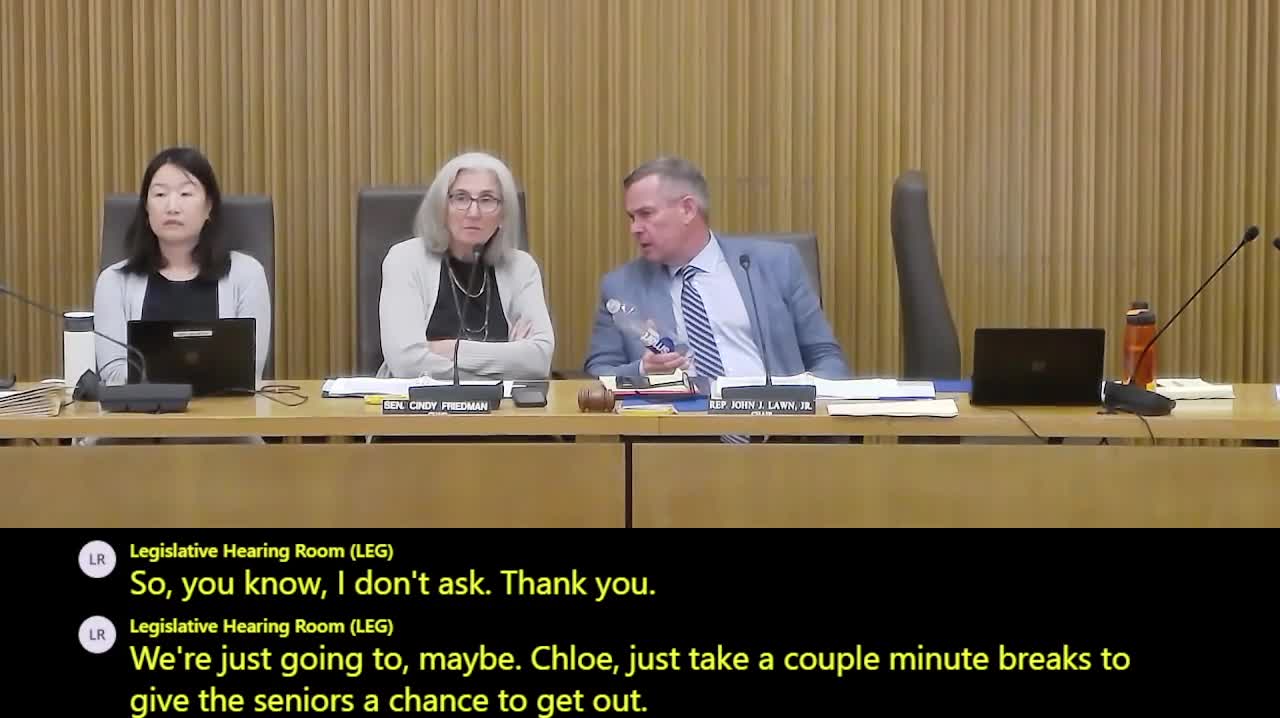
Committee process: Witnesses answered committee questions about funding sources and comparisons to other states. Chairs noted the fiscal constraints facing the state and asked advocates for comparative analysis on how other states balance wages and benefits. No vote or formal committee action occurred during the hearing.
Ending: Advocates said increased wages would stabilize care delivery, reduce turnover, and protect clients who rely on community-based supports; they urged the committee to advance S.877 with rate-setting and indexing provisions.