
Atherton council study session eyes residential permit parking, short-term lot changes after library overflow
Get AI-powered insights, summaries, and transcripts
Subscribe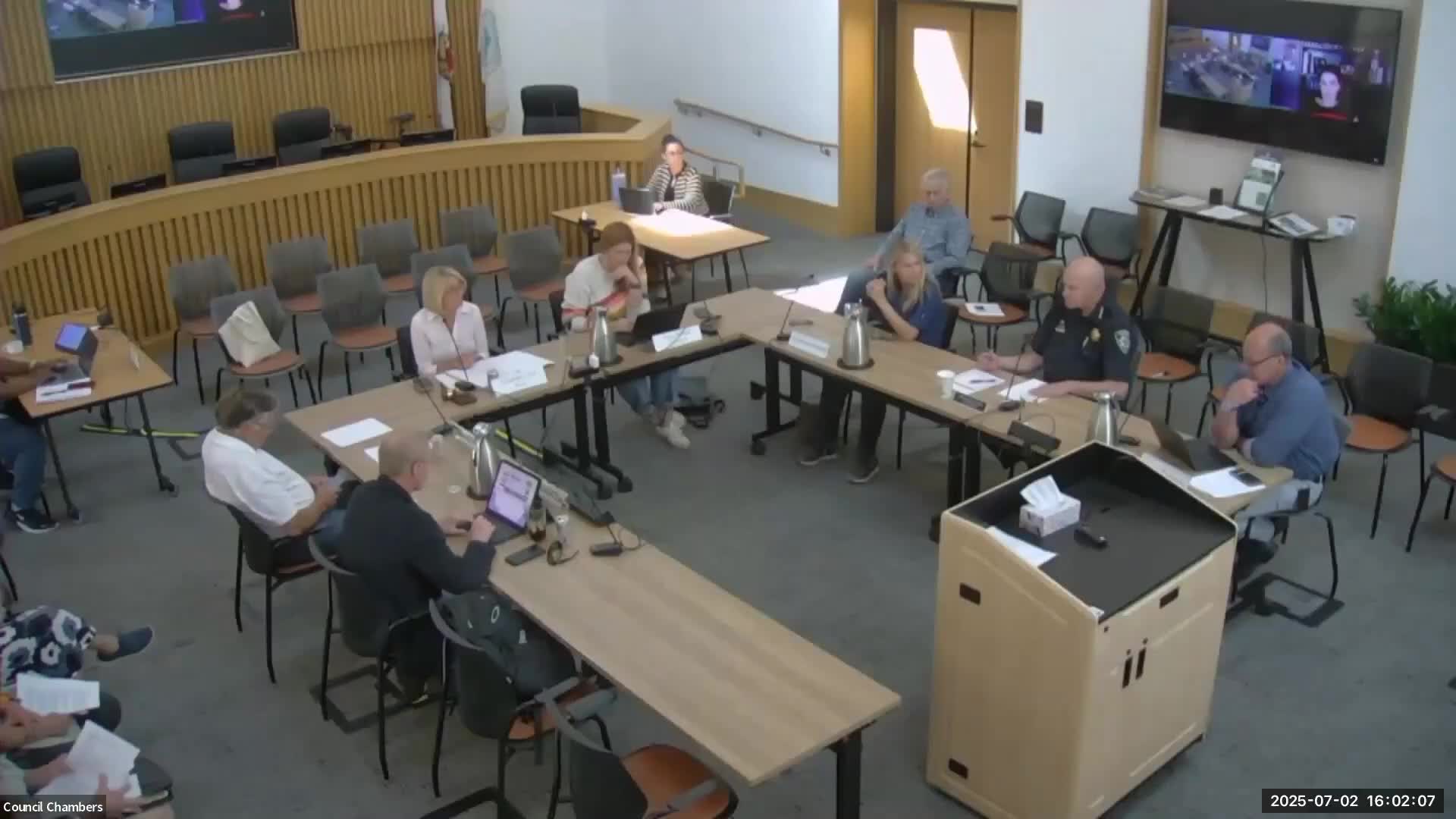
Summary
At a July 2 special study session the Atherton Town Council heard a police report on repeated parking congestion around the Town Center and library, directed staff to draft a residential permit parking resolution and pursue short-term parking and circulation fixes while commissioning a broader circulation study.
Atherton Town held a special study session July 2 to consider neighborhood parking and circulation problems around the Town Center and library after repeated overflow during popular library programs.
Chief Stephen McCauley, Atherton’s chief of police, told the council the neighborhood surrounding the Town Center and library has experienced "significant parking congestion, particularly during popular library programs like story time." He said the Transportation, Bike & Pedestrian Committee recommended considering a resident parking-permit program for Maple Avenue and that the town will undertake a comprehensive circulation and parking study this fiscal year.
The report outlined steps the town has already taken to reduce congestion: speed studies, speed humps installed at resident requests, voluntary program shifts by the library, bilingual outreach asking patrons to carpool or use alternate parking, and staff efforts to redirect vehicles during busy programs. McCauley said some immediate operational tactics are being used "to redirect traffic away from" the neighborhood and that the town’s traffic unit is monitoring the situation.
Council members and several staff described possible near-term measures that would not require long construction: restriping a swath near the train station to gain an estimated 10–14 spaces, converting a mulched area off Fair Oaks to add 3–4 spaces, using compact-space layouts to net about 20 spaces in total, and consolidating materials in the courtyard to free staff parking spots. Staff cautioned that some potential spaces lie on Caltrain right-of-way and would require Caltrain permission.
Vice Mayor George Widmer and others discussed the town operations yard (referred to in the meeting as the courtyard). Staff said the yard supports large trucks, roll-off bins and equipment and would need maneuvering and environmental work if relocated; a relocation could take years and likely require environmental cleanup around an on-site fuel tank. Staff described options including moving the courtyard to the park with a separate entrance or finding off-site property, but said each option has tradeoffs including neighbor impacts, safety and cost.
Public comment was lengthy and strongly in favor of a residential permit program. Multiple residents described blocked driveways and near-miss incidents during Tuesday and Thursday story-time programs and urged faster action. Julie Quinlan, a Maple Avenue resident, told the council residents "need the residential parking now" and urged a permit program that allows verified residents, guests and short-term worker placards. Grace Ferando and several other speakers described medical and safety concerns; Ferando said "A change needs to happen before someone is hurt." Thiago Moreno and others said they were willing to try permits temporarily and to rescind them later if they did not help.
Council members discussed practical permit features raised in public comment: limited hours (examples discussed included 9 a.m.–6 p.m. or 10 a.m.–6 p.m.), guest permits or temporary placards for caregivers and service providers, and an initial education-first enforcement approach that could escalate to tickets if noncompliance continues. McCauley described the town’s existing resident-permit practice on two other streets and said permits can be issued and controlled with vehicle placards; he said enforcement may need to be more assertive initially.
Staff recommended a set of parallel actions: 1) draft a resolution for neighborhood permit parking (including time windows and permit rules), 2) continue operational measures with the library (program shifts, signage advising overflow parking at Holbrook Palmer Park), 3) restripe and reconfigure parking areas to gain short-term spaces and 4) scope and fund a circulation and parking study that will analyze pedestrian connections (including Station Lane/Dinkelspiel improvements) and longer-term site changes such as relocating the courtyard. McCauley said staff would meet with neighbors about details and return a resolution for council consideration; the council asked staff to bring the resolution back at the next regular meeting if feasible.
No formal vote or ordinance was taken at the session; staff were directed to prepare a resolution and implementation plan for council consideration that would include permit parameters, signage, temporary operational steps and a schedule for the circulation study. Officials emphasized safety as the driving priority and described a mix of education, short-term operational fixes and longer-term planning as the intended path forward.
Residents will see near-term changes that staff can implement without significant capital work (signage directing library patrons to overflow parking at Holbrook Palmer Park, targeted restriping, and staff parking adjustments) while a permit program and circulation study move forward under a council resolution to return for formal approval.