Get Full Government Meeting Transcripts, Videos, & Alerts Forever!
Get email alerts on the Cooling Station Homelessness topic
No spam. Unsubscribe anytime.
Gastonia mayor faults staff, lead agency after planned cooling station was not opened; fire officials say Salvation Army building was cleared
Summary
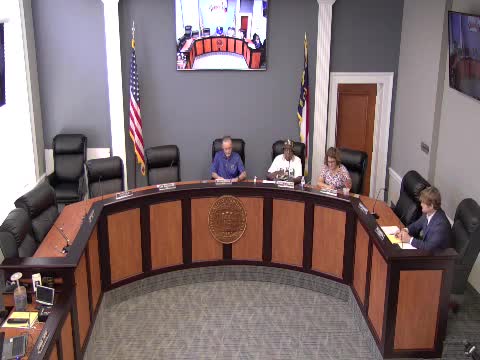
An emergency Gastonia City Council meeting focused on why a planned cooling station for unhoused residents did not open on a hot day. Mayor Franks criticized city staff and the lead homeless services agency, while council members and fire officials said the Salvation Army building had been cleared for use and volunteers had assembled.
Mayor Franks criticized city staff and the lead agency on Tuesday after a planned cooling station for people experiencing homelessness did not open, calling the failure “unacceptable” and saying the city manager ignored a council consensus to use a city‑owned building.
The dispute drew remarks from council members, fire officials and the city’s assistant city manager at an emergency meeting called by the mayor. No formal vote or ordinance was taken at the meeting.
The issue, the mayor said, began when volunteers and faith groups assembled to operate a temporary cooling station and were later told not to show up. “We can't take a vote today on what our city staff was to directed to do on Monday. Our city manager was informed of the wishes of the council. He decided to go against those,” Mayor Franks said. Franks said she would call repeated emergency meetings and that she planned to release text messages related to the incident.
Councilwoman Cheryl Littlejohn told fellow council members she had checked the building with fire officials and received a clearance. “I showed up at Chief Welch's office this morning. I have the fire and inspection report that they sent to the city of Gastonia last week, and they cleared that building last Friday,” Littlejohn said, adding that volunteers and local churches had prepared food and supplies.
Councilwoman Stepp urged cooperation and blamed a breakdown in communication rather than malice, saying the county historically handled cooling stations and that this year responsibilities had not been clear. “Communication broke down somewhere along this way, and we need to come to the table together, and we need to partner with one another,” Stepp said.
Assistant City Manager Quentin McFadden told the council he met with the mayor and discussed what opening the Salvation Army site would look like; he said the consensus was relayed to the city manager but declined to answer detailed questions immediately. “I think those questions will probably be answered, at a later date,” McFadden said.
Members of the council and participants described multiple local organizations and volunteers who assembled to help, including Tasha White, City Church and Saint Mark’s, and said some donated equipment and food were removed after the decision to close the site. The lead agency for homelessness response cited in the meeting is Health Net Gaston; council members said that agency had been the designated lead and that the council may consider changing the lead agency if failures continue.
Speakers described practical details discussed during the meeting: a person identified in the meeting as a county partner said the plan had been to open cooling sites from 10 a.m. to 6 p.m. on days when the forecast reached 90 degrees; council members said prior planning dating to January had been inadequate and that volunteers were not given consistent guidance. Council members also cited a prior January meeting in which they expected the lead agency to coordinate seasonal response.
Mayor Franks criticized what she called repeated excuses from staff and the lead agency and said the council — and she as the official responsible for all city residents — would press for accountability. Council members said the fire department and county partners should not be faulted and urged improved planning and clearer roles between city staff, county partners and nonprofit providers. No formal disciplinary action or change of lead agency was decided at the meeting.
The council agreed to continue raising the issue until the city establishes a reliable cooling‑station process; multiple members said they would revisit preparedness, communications and roles with county partners and nonprofit providers.
The meeting produced no formal motions or votes; council members emphasized that the public and volunteers who mobilized on short notice had provided tangible aid but that the city must prevent future coordination failures.