Get Full Government Meeting Transcripts, Videos, & Alerts Forever!
Get email alerts on the Native Culture topic
No spam. Unsubscribe anytime.
Piscataway Indian Nation offers songs, dances and history at Lexington Park
Summary
Hereditary Chief Mark Kayak and members of the Piscataway Indian Nation presented powwow dances, cultural teachings and a demonstration of regalia at a community event in Lexington Park, St. Mary's County, stressing the tribe’s long presence in the Chesapeake Bay region and the origins of stickball (lacrosse).
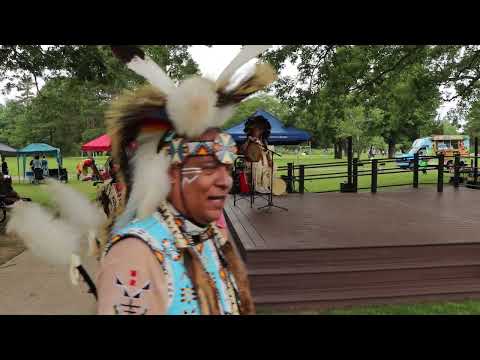
Mark Kayak, hereditary chief of the Piscataway Indian Nation, led a cultural presentation of songs, dances and teachings at Lexington Park in St. Mary's County, where performers explained aspects of tribal history, regalia and traditional dances and invited audience participation.
Kayak told listeners that the Chesapeake Bay region has been home to Piscataway people for millennia. “For 15,000 years, what is known today as the Chesapeake Bay region has been our home, and it's still our home now,” he said, and he welcomed attendees to the tribe’s traditional territory.
The presentation combined performance and explanation. Kayak described powwows as seasonal gatherings and invited the public to attend; he explained that the tribe historically defined its homeland by the range of its language and identified the language family associated with Piscataway as part of the Eastern Algonquian tradition. Performers demonstrated a grand entry, a grass dance and an older “war dance” style; audience members were invited to take part in social dances and brief interactive demonstrations.
Sherrod Gray, a dancer with the group, described elements of regalia and symbolism. “Those eagle feathers are honor feathers, and they represent warriors in battle,” Gray said while explaining beaded vests, porcupine roaches and eagle-bustle features and how some honors today are earned by deeds such as education or community service. The performers also demonstrated traditional bells and beadwork and discussed the time required to produce those pieces.
Kayak explained historic dispute-settling practices including stickball—an Indigenous game that many speakers tied to the modern sport of lacrosse—and described how matches once resolved conflicts between villages. The group also noted its own organizational history: the Piscataway singers and dancers were formed about 41 years ago to correct cultural misrepresentation, and the ensemble currently performs with roughly 20 members.
Speakers repeatedly framed the program as educational and community-focused. Kayak invited children and adults to participate in simple partner dances, and performers encouraged attendees to ask questions and learn about traditions rather than treating regalia as costumes. “We have survived, and we are still here today,” Kayak said, closing the presentation.
The event served primarily as a cultural demonstration and public education opportunity; no formal actions, votes or policy decisions were recorded during the presentation.