Parents and staff urge halt to Southwest interagency relocation, cite poor engagement and student risk
Loading...
Summary
Parents, staff and community advocates told the Seattle School District board July 2 that the planned relocation of the Southwest Interagency campus was executed with insufficient engagement and would harm students who rely on local services.
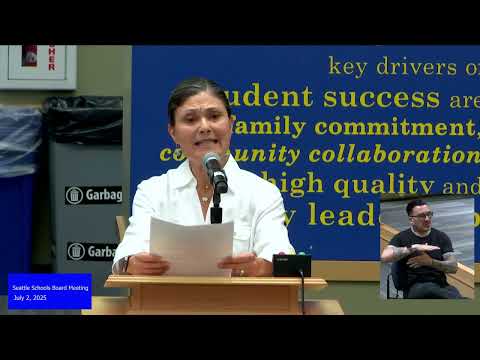
Parents, staff and community advocates at the July 2 public comment period urged the board to stop or reverse the planned relocation of the Southwest Interagency campus, saying the move was announced with little transparency and would harm students who rely on proximity and stable service delivery.
Family support specialist Brandon Sanchez said the Southwest campus relocation would force many Interagency students to travel farther south and lose the proximity and services they currently receive in West Seattle, including licensed behavioral health providers and family counseling. "Not only is this building safe, has kitchen, has security, the building that students are being relocated to doesn't have any of those abilities," Sanchez said.
Student‑and‑family advocate Demetrius Wheeler said the district did not engage families and staff in meaningful consultation and accused the district of suppressing community voices. "Interagency staff weren't consulted. We weren't allowed to communicate with our families," Wheeler said. He added that the changes fracture a system designed to meet students where they are and that a one‑year temporary move can be a life‑altering disruption for students.
Substitute nurse Lynn Oliphant and other Interagency staff described unanswered questions about who made the decision and why. Michael Grant, an out‑of‑district speaker who has worked with Interagency, called the proposed closure "secretive and irresponsible," citing the risk of disruption for some of the district’s most vulnerable students.
Speakers asked the board to prioritize West Seattle placement options, partner with community organizations such as Southwest Youth and Family Services to keep services local, and to halt relocation plans until the district undertakes transparent, in‑person engagement. Several witnesses said staff who advocated publicly for students were now facing internal investigations, which they characterized as retaliation.
Board members did not adopt any motions related to the relocation during the meeting; district staff acknowledged the testimony and said they would continue outreach. The speakers requested the board to reverse course or provide a more community‑centered alternative that preserves local services and minimizes travel for students and families.