Seattle Native education specialist says district lags on state-mandated curriculum
Loading...
Summary
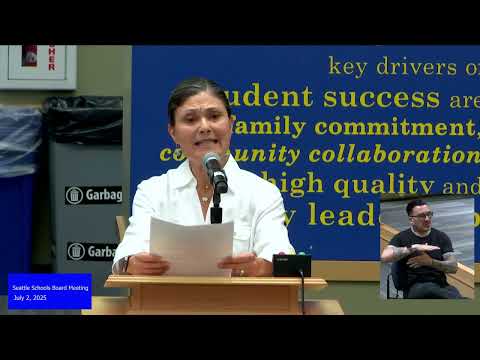
At a July 2 Seattle School District No. 1 meeting, Native American education curriculum specialist Shanna Brown told the board district data show roughly 30% implementation of the John McCoy “since time immemorial” curriculum and urged stronger district leadership, principal training and tribal partnerships.
Shanna Brown, Native American education curriculum specialist for Seattle Public Schools, told the board July 2 that data collected from 2019–2024 show the district is not meeting state expectations for implementation of the John McCoy “since time immemorial” curriculum.
"The data showed that SPS is out of compliance with RCW 28A.410.277," Brown said, presenting a report she said was compiled under the supervision of then-program manager Gail Morris.
Brown said the report found about a 30% implementation rate from 2019 through 2024 and recommended district actions to raise professional development, accountability, visibility and communication around the curriculum.
Brown outlined steps Native Ed has already begun: an optional principal session at an August School Leader Institute attended by 13 principals; in‑building professional development currently delivered to about 12–13 buildings per year; a planned implementation model at Lowell Elementary this fall; and renewed collaboration with the Suquamish Tribe and Muckleshoot Tribal College. "Native Ed has also initiated responsive efforts that I will outline," she said, describing the four priorities she brought to the board.
Brown told directors that attempts to get broader principal survey data had been limited by access: "Despite native ed's lack of access to principal professional development opportunities and unanswered request to conduct a formal survey of principals, I have been able to get some data this year (2025)." She said informal principal responses echoed the earlier report’s call for district‑wide communication and prioritized professional development.
Acting Superintendent Podesta thanked Brown for the presentation and for work to strengthen tribal partnerships. The board did not take a formal vote on the report; Brown and district staff framed the items as implementation steps and requests for continued district support ahead of the hiring of a permanent superintendent.
District staff and Brown emphasized next steps that they described as operational rather than board actions: extend principal professional development, pilot the Lowell model, and formalize partnerships with Suquamish and Muckleshoot partners so tribal roles are clear.
Brown closed by tying the curriculum work to district equity goals and urging the board and incoming superintendent to sustain the initiatives she outlined.
The board received the presentation and had no substantive motion tied to Brown’s report during the meeting.