Get Full Government Meeting Transcripts, Videos, & Alerts Forever!
Get email alerts on the Public Works Sewer Inspection topic
No spam. Unsubscribe anytime.
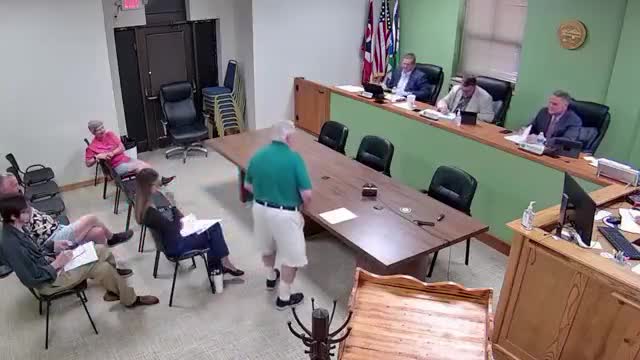
Hocking County commissioners require inspection of Bradford Drive sewer; payment arrangement left unresolved
Summary
The Hocking County Board of Commissioners voted July 3 to require an inspection of a sanitary sewer line at Bradford Drive and to file the inspection as a public-health record; who will pay for the inspection remained undecided.
Hocking County commissioners on July 3 voted to require an inspection of a sanitary sewer line related to the Bradford Drive project and to have the inspection entered into the county public-health record.
The requirement followed a presentation from a project representative about recent reviews by County Engineer Bill Shaw and the project contractor. The presenter said the existing primary sewer line meets code and EPA requirements but that the new line should undergo inspection before the county accepts or advances the project. Commissioners discussed whether the system would remain a private utility or become public and who should be billed for the inspection.
Commissioner Andrew Davidson, Commissioner Jason O'Brien and Commissioner Michael Wagors recorded unanimous votes in favor when the motion was called.
Speakers at the meeting described common inspection methods for sewer work, saying an air test and a physical pass (described in the meeting as running a small device or "rabbit" through the line) are typically used to verify that a line is clear and installed to standards. The presenter said he had coordinated with a consultant named Gary Silcock and with an engineer identified as Mr. Biter of Stemel Construction about the work and the inspection.
Commissioners and the presenter said the practical question left to resolve was who would receive the bill for the inspection. The presenter told the commissioners that paying now would avoid future costs if the county later took ownership, saying the choice was effectively "you pay now or pay later." No additional vote on payment allocation was recorded.
The board's action directs that the inspection occur and be entered into the public-health record; the transcript shows the board called roll and recorded three yes votes.