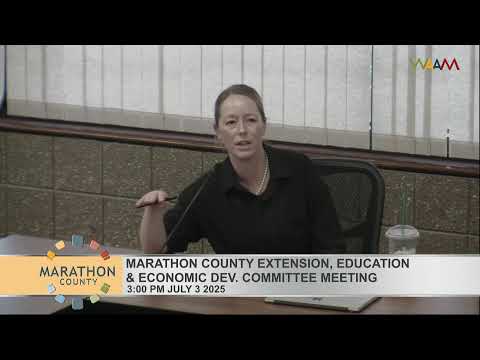
Committee begins 2026 budget guidance: focus on mandated vs. discretionary services, fees and UW Extension impacts
Loading...
Summary
Marathon County staff asked the Extension Education and Economic Development Committee to prioritize programs and provide early guidance for the 2026 budget, emphasizing distinctions between statutorily mandated services and discretionary programs, fee-setting limits, and implications for UW Extension and the county library.
County administrators told the Extension Education and Economic Development Committee on Thursday that early, committee-level guidance is needed to shape the 2026 Marathon County budget and that three policy questions should drive decisions: what services the county should provide, at what service level, and at what cost (fees).
“Committees are encouraged to look at the programs and prioritize them,” said HR Finance and Property Committee Chair Robinson via Webex, asking committees to consider mandated versus discretionary programs and to propose priorities that will inform the administrator’s draft budget.
Administrator Leonard said Marathon County’s budget is approximately $200 million, of which about $55 million comes from the tax levy; the remainder comes from sales tax, fines, fees, grants and other sources. Leonard told the committee staff will ask for guidance on program priorities and fee changes and that committees’ early feedback helps shape policy questions that ultimately drive budget decisions.
Leonard emphasized statutory limits on fee-setting and the distinct governance arrangements for certain partners: the county sets the levy for the county library but Chapter 43 of the Wisconsin statutes limits how the county board can direct a library board’s use of funds; UW Extension services are provided under an annual contract that each county negotiates and can be adjusted through contract negotiations.
Supervisor Limer asked how the committee should analyze “ripple effects” if a discretionary program were cut, noting partner dependencies such as extension’s agricultural programs that support county departments. Leonard said advance notice of proposed changes would allow staff and department heads to outline likely ramifications and that some fee additions (for example, a proposed maintenance fee for on-site wastewater treatment service) have been discussed previously and would require a resolution if the board chooses to adopt them.
Committee members discussed the county’s role in programming with nonprofit partners under contract, such as McDevco and the historical society, and asked staff to provide targeted information where committee members request deeper review. Leonard and staff said some program reductions could be offset by fee changes, but cautioned that personnel and fringe cost increases — especially compensation and health insurance — are primary drivers of rising costs.
The committee will continue to receive these budget-development items on future agendas and staff asked members to identify specific programs or questions for deeper review.