Get Full Government Meeting Transcripts, Videos, & Alerts Forever!
Get email alerts on the Zoning Variance topic
No spam. Unsubscribe anytime.
Cross Plains zoning board denies Statz request for reduced rear-yard setback for paver patio
Summary
The Village of Cross Plains Zoning Board of Appeals voted 4-1 July 1 to deny an area variance requested by Barry and Jolene Statz to install a paver patio that would extend into the rear-yard setback at 2830 Esser Street, citing ordinance limits on landscape features and concerns about creating enforcement precedent.
The Village of Cross Plains Zoning Board of Appeals voted 4-1 on July 1 to deny an area variance requested by homeowners Barry and Jolene Statz to install a paver patio with a reduced rear-yard setback at 2830 Esser Street.
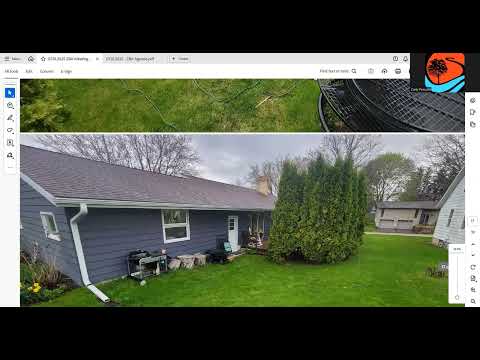
The Statzes told the board the project would fill a low, uneven area behind their garage, improve usable outdoor space and address recurrent water pooling that they say has run into a basement window well. "It's not a usable space because there's a lot of uneven grounds," Barry Statz said, adding that "during periods of excessive storm rainwater runoff ... it's causing water to collect into one of our window wells and run into our basement." Jolene Statz said the side yard is the family's only private outdoor area and that neighbors do not object.
Village staff reviewed the application and noted the proposal requires an area variance from section 84.29(g) of the Village of Cross Plains municipal code of ordinances because patio pavers are treated as a landscape feature under the zoning code and therefore must meet rear-yard setback requirements. The Statzes' site plan shows the proposed paver surface would extend to within roughly 10 inches (about 1 foot) of the rear property line; the board and staff discussed the way the retaining wall and backfill interact with the measurement used to determine the setback.
Board members considered the six statutory standards for an area variance, including whether unique physical conditions exist and whether strict compliance would make the property unusable for permitted purposes. Several board members said they were sympathetic to the drainage and usability concerns but were reluctant to grant a variance for a landscape feature because doing so could create a difficult enforcement precedent for other accessory features. The board referenced county-level guidance cited in the application packet that treats decks and similar minor accessory structures as generally ineligible for variances when they are not essential to reasonable use of the property.
A motion to deny the variance carried on a roll call vote that the board recorded as four members voting to deny and one voting to approve. The denial means the Statzes cannot install the proposed paver patio as drawn under the current interpretation of the village code.
Board members and staff discussed options the homeowners could pursue without a variance: using permeable aggregate or other landscape surfacing options that do not trigger the same setback rules for landscape features, pursuing drainage work (French drains and controlled piping to the street) in coordination with a landscaper or civil contractor, or asking village staff or the Village Board to consider an ordinance amendment in the future. Village staff advised the Statzes to continue consultations with the village planner and to explore alternative surfacing and drainage solutions that comply with current code.
The board received the Statzes' survey and site drawings, heard about neighbors' informal support, and reviewed the technical basis for the setback determination. The board stressed its role as a quasi-judicial body constrained to apply the ordinance and statutory variance standards rather than to rewrite policy on the spot.
The Zoning Board of Appeals did not adopt any change to the municipal code at the meeting and closed the hearing after the vote; the applicants were advised of alternate construction and administrative paths if they wish to revisit the proposal.